

These days, going to the hospital is more frightening due to tests than consultations.
A few weeks ago, I went to the hospital because my stomach felt bloated and I couldn't shake off the gas. The doctor said to me,
"Let's get a CT scan first."
CT? Isn't it expensive? Is radiation exposure okay? What if I get cancer from it?
When I got home that day, I told my wife, "The doctor suggested a CT scan, but I feel uneasy about it," and she calmly replied, "Everyone just gets it these days. What's the big deal?" But the thing is, now that I'm over 60, even a small test weighs heavily on my mind like a stone.
CT stands for Computed Tomography, which is a technology that takes 3D images of our body by shooting powerful X-rays from various angles. It shows much more detail than X-rays and allows for relatively clear identification of organs, blood vessels, tumors, and inflammation. Therefore, when someone falls in the emergency room, has severe abdominal pain, or even suspects a brain hemorrhage, the first thing they do is a CT scan.
Honestly, the most concerning part is this: "What if I get a CT scan to check my body condition and end up with a more serious illness due to radiation exposure?"
In fact, CT scans expose you to much more radiation than regular X-rays. A chest X-ray is about 0.1 millisieverts (mSv), while an abdominal CT typically ranges from 5 to 10 mSv, and a brain CT is about 2 mSv. Since we receive about 3 mSv of natural radiation in a year, getting a CT scan is like receiving a year's worth of natural exposure all at once.
However, when a doctor says, "Let's get a CT scan," it means that the diagnosis can be much clearer with that test. In other words, the benefits outweigh the risks, which is why they recommend it.
CT scans are generally cheaper than MRIs, but the cost can vary significantly depending on whether you have insurance. Without insurance, it can cost between $1,000 and $3,000 at the hospital. If you have insurance like Medicare or PPO, it usually covers about 80-90%. Getting a scan at an independent imaging center can also be much cheaper. In my case, I was able to get it done without worry because I have both Medicare and supplemental insurance, but if your insurance is inadequate or nonexistent, it's best to inquire about costs at the imaging center or hospital in advance.
When I asked if I could skip it, the doctor's response was quite persuasive."A CT scan is not just a test that is recommended casually. There are things that cannot be seen without it."
And crucially, the realistic statement that if I delay treatment without an accurate diagnosis and just take medication, my condition could worsen, made me nod in agreement.
The CT scan itself is really quick. An abdominal CT often involves taking a contrast agent, and for a vascular CT, the contrast agent is injected through an IV. Since there can be side effects from the contrast agent, you must inform them of any allergies beforehand.
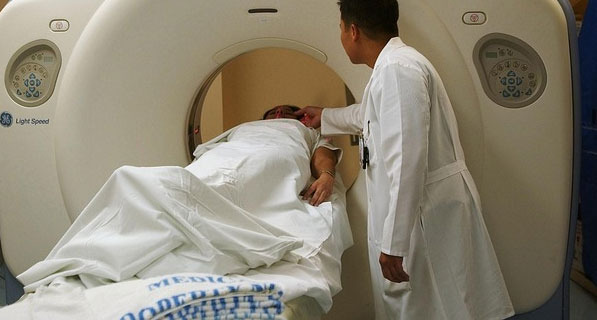
The machine looks like a donut, and when you lie on the examination table, you are gently pushed in. The machine rotates around you, shooting X-rays, and the computer reconstructs the images. The noise isn't loud, and it doesn't hurt at all. I felt embarrassed for being so tense as it ended so uneventfully.
It's easy to get scared, wondering what if something comes up from this test, or what if the radiation harms my body... But ultimately, I realized one thing. You shouldn't avoid illness out of fear; instead, you should understand it accurately and respond to it to be less afraid.
Getting a CT scan doesn't mean you'll immediately get cancer or anything like that. In fact, it often provides an opportunity to catch a serious illness early. If the doctor deems it necessary, not being overly scared and getting it checked out seems like a wise choice for my age.
Having come all the way to America and working hard, shouldn't we all live healthily?


 Weekend Movie Blog |
 Beauty, Health, Lifestyle Blog |
 coloradoman |
 Superman Cat Blog |
 novapixel |
  DREAM BIG |
  frostbite |
  330 Forever My Love |
  El Dorado |
  dralix58 |
  Gorama Round |
  Skydiving |
  dreamport |
  Yellow Snowman |
  Toaster Pizza Magic Show |
  velvetnom |
  Anytime Journey |
  Mrs. Duluth |
  jaxter |
  Atlanta Mama |
  Baguette Blog |
  Tan Sol |
  US Embassy |
  Korean Mom |
  My NYC |