

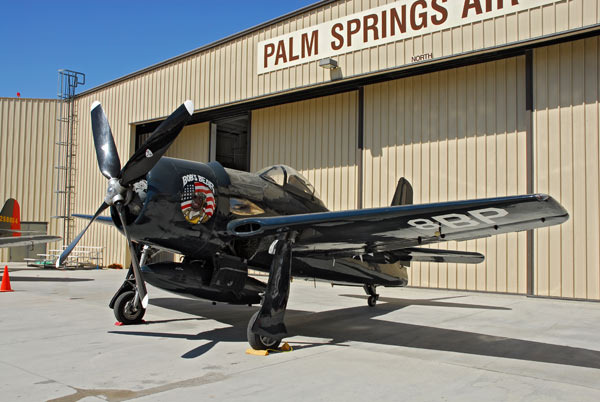
Southern California's Palm Springs has always had the image of a place where warm sunshine meets golden desert landscapes.
This city, embraced by beautiful nature, was already well-known as a travel destination. However, recently, I had an unexpected experience there.
The Palm Springs Air Museum was a place where I had a great experience beyond just a tourist spot.
Admission is $24 for adults, located 2 hours from LA.
Palm Springs is also famous for displaying important fighter planes from World War II.
Having been interested in history and aircraft since childhood, I planned a day trip to see the desert landscapes of Palm Springs and visit this museum.
When I first arrived at the Palm Springs Air Museum (Palm Springs Air Museum), I was surprised by its size.
Palm Springs Air Museum was located on quite a large site, with planes spread out towards the sky as if guarding the museum.
The museum itself was a massive exhibition hall for aircraft, and various fighter planes used during World War II stood quietly as if trapped in time.
The reason this museum is special is that it does not merely store and display aircraft. The exhibited B-17 Flying Fortress and P-51 Mustang seemed to vividly showcase the battles they fought in the past. All the displayed aircraft were thoroughly restored, and some were maintained to the extent that they were still capable of flying.
As I looked closely at these aircraft, I thought of the pilots who flew them in past battlefields. The tension felt at their fingertips while flying in the sky, and how significant those moments must have been, the emotions they experienced inside the aircraft flashed through my mind in an instant. And I could only admire. The planes were not just machines; they were important cultural heritage containing the memories of people who lived through those times.
As I ventured deeper into the museum, I saw military jets like the F-4 Phantom (which surprised me with its size compared to what I had seen in photos) and the F-86 Sabre. These aircraft emerged after World War II and were legendary planes that played significant roles in the Korean War and the Vietnam War.
In particular, the F-4 Phantom was an aircraft boasting cutting-edge technology at the time. Equipped with missiles and demonstrating powerful maneuverability, this fighter was used in various wars from the 1960s to the 1990s.
While exploring the museum, I realized one thing for sure. Aircraft are not merely tools of war; they symbolize people's dreams, challenges, and the will to overcome limits. The advancement of technology stems from humanity's continuous challenges and attempts. From that perspective, as I walked through the museum, I saw that aircraft were not just combat machines of their time but the results of challenges to make the impossible possible for humanity.
The most memorable moment in this museum was the flight experience program. The experiential flight offered by the museum was truly a special experience. Although I did not pilot the aircraft, sitting in the cockpit of a fighter jet and experiencing the flight was unique.
Palm Springs is famous for its resorts and hot springs, but the Air Museum there was a hidden gem with another charm.The Palm Springs Air Museum is a must-visit place for anyone interested in aviation history.







 candytip |
 Gold Bar |
 Pirate Ship Popcorn Maker |
 Montgomery Mom |
 Anjollinya Blog |
 Weekend Movie Blog |
 Beauty, Health, Lifestyle Blog |
 coloradoman |
 Superman Cat Blog |
 novapixel |
  US Embassy |
  Korean Mom |
  My NYC |
  moo moo |
  Mr Oh |
  forevergee |
  festival |
  manchester |
  constant |
  Leapfrog Move |
  vibranto |
  Tora Tora |
  yellowbutter |
  Dolly |
  NYC saladbar |
  Finding Superfoods |
  lightyear |
  song bang |
  vexomo |
  Indiana Jones |