
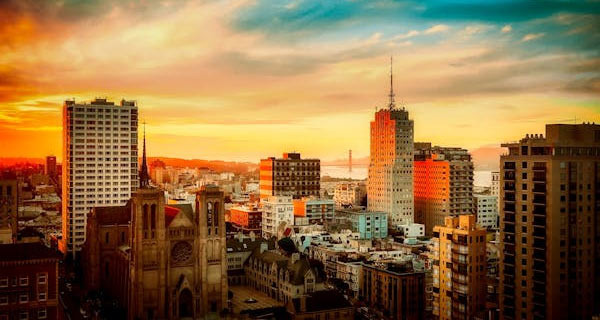
Los Angeles (LA) is one of the most famous cities in the world, known for its glamorous Hollywood, beautiful beaches, and diverse culture.
However, LA has another side. It faces a serious air pollution problem.
LA is considered one of the cities with the most severe air pollution among many metropolitan areas, which greatly impacts the environment and people's health.
History of Air Pollution in LA
The air pollution problem in LA is closely related to its history. LA rapidly developed in the early 20th century, with urbanization occurring alongside the automobile industry. Initially, LA was famous for its clear weather and beautiful scenery, but from the late 1940s, air quality began to deteriorate due to industrialization and the surge in automobile use. In particular, LA is geographically located in a basin surrounded by mountains, which makes it easy for air pollutants to become trapped.
Automobile exhaust is cited as a major cause of LA's air pollution problem, which began to increase sharply from the 1950s. LA is one of the cities with the most cars in the world, and the exhaust from vehicles on the roads contributes to the formation of ozone, nitrogen oxides (NOx), and fine particulate matter (PM). Since the 1970s, air pollution management policies have been introduced to address this issue, but air pollution remains a significant unresolved environmental problem.
Main Causes of Air Pollution in LA
LA's air pollution problem arises from various causes. Automobiles are one of the biggest contributors to air pollution in LA. With millions of vehicles on the roads daily, the exhaust from these vehicles contains nitrogen oxides (NOₓ), carbon monoxide (CO), fine particulate matter (PM10, PM2.5), and volatile organic compounds (VOCs).
There are many industrial factories concentrated in the LA area. In particular, emissions from various industries such as oil refining, chemical manufacturing, and electronics manufacturing are major contributors to worsening air pollution. The sulfur oxides (SOx), nitrogen oxides (NOₓ), and fine particulate matter emitted from these factories increase air pollutants and adversely affect the health of local residents.
Geographically, LA is located in a basin, making it easy for air pollutants to accumulate. The basin, surrounded by mountains, does not allow for good airflow, causing pollutants to linger and obscure the sky. Additionally, LA often experiences hot and dry weather, which creates favorable conditions for ozone formation. During the summer, when high temperatures and strong sunlight coincide, nitrogen oxides and volatile organic compounds in the atmosphere combine to form ozone, leading to smog.
Effects of Air Pollution in LA
Air pollution in LA is one of the leading causes of respiratory and cardiovascular diseases. It particularly contributes to the increase of diseases such as asthma, COPD (chronic obstructive pulmonary disease), allergic rhinitis, and lung cancer. On days when the concentration of fine particulate matter (PM2.5) and ozone is high in the LA area, children, the elderly, and individuals with respiratory diseases are especially at risk. Fine particulate matter can penetrate deep into the lungs, worsening respiratory health and potentially affecting the cardiovascular system.
Air pollution also leads to economic losses. The healthcare costs and productivity losses due to air pollution are significant. An increase in the number of people visiting hospitals and the suffering of productive workers from air pollution result in economic losses. Particularly, since children and the elderly are more vulnerable to air pollution, their health issues can have widespread societal impacts.Efforts to Address Air Pollution in LA
LA has made various efforts over a long period to address the air pollution problem. Key solutions include regulating automobile exhaust, controlling emissions from industrial factories, and establishing eco-friendly public transportation systems.
To regulate automobile exhaust, LA collaborates with the Environmental Protection Agency (EPA) to set strict standards for vehicle emissions and promote the adoption of low-emission vehicles. Efforts are ongoing to increase the distribution of electric and hybrid vehicles, along with policies to expand electric vehicle charging infrastructure. The Zero Emission Vehicle (ZEV) program has become a crucial element in improving air quality in LA.
To reduce emissions from industrial factories, LA implements strict air pollution regulations. Emission levels are regulated across various industries, and companies are encouraged to adopt technological methods to reduce air pollutants. Efforts are being made to reduce sulfur oxides (SOx), nitrogen oxides (NOₓ), and fine particulate matter.
Improving the public transportation system also plays a vital role in addressing LA's air pollution problem. LA Metro is planning to reduce dependence on cars and increase public transportation usage by expanding subway and bus routes. In particular, the introduction of electric buses and low-emission public transport options is actively being pursued to reduce air pollution.
LA is also working to mitigate the urban heat island effect by expanding green spaces and planting trees. Additionally, various policies are being implemented to reduce air pollution by promoting eco-friendly construction and energy conservation.







 Weekend Movie Blog |
 Beauty, Health, Lifestyle Blog |
 coloradoman |
 Superman Cat Blog |
 Awesome Blog |
  Tora Tora |
  yellowbutter |
  Dolly |
  US Embassy |
  NYC saladbar |
  Finding Superfoods |
  lightyear |
  song bang |
  vexomo |
  Indiana Jones |
  meloncat |
  novapixel |
  mortrix |
  Esther 1983 |
  fortbliss |
  Moscow Kim |
  My Two Way |
  toastyfox |
  FLORIDA Acus |
  tracker |