

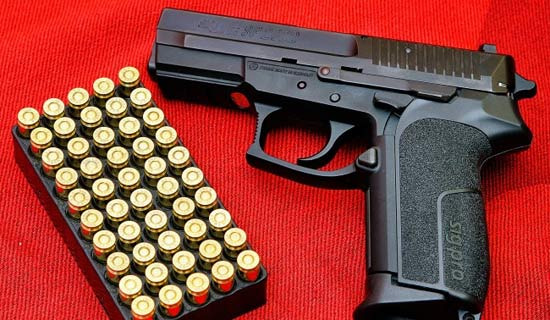
One of the images that comes to mind when thinking of America is guns. Whenever the news is on, stories about gun incidents are always present.
So, among those preparing to immigrate from Korea to the U.S., questions like "Isn't it scary that there are a lot of guns there?" often arise.
However, the funny thing is that living here, the fact that there are many guns and the fact that I would need to use one are completely different issues.
It may seem like a dangerous country, but in reality, daily life flows quite differently. Here's what I've experienced while living in the U.S.
First, let's think about the typical lifestyle pattern of a Korean immigrant. They go to work in the morning, send their kids to school, shop after work, go to Costco or a restaurant on weekends, occasionally take walks in the park, and attend church or gatherings... this is the entire routine. There's no moment where they would hold a gun.
A scene like in the movies where a thief bursts into a store and pulls out a gun? In reality, even in high-crime areas, such incidents might happen only once every few years. Moreover, Koreans generally have a strong tendency to avoid conflict. If faced with a robbery, they usually prefer to hand over money to avoid problems and call the police later.
U.S. police respond quickly and handle situations according to formal procedures, so there's no need for me to fight with a weapon.
Another factor is the characteristics of the area where one lives. Most Korean immigrants choose to live in safe suburban areas or neighborhoods with a high concentration of Koreans, focusing on their children's education and convenience. Neighborhoods with frequent gun incidents are excluded from their housing options from the start. Ultimately, the gun incidents reported in the news happen "across the U.S.," but they are not part of my daily life. Just because there's a heavy rain warning doesn't mean I'm guaranteed to be in a flood zone. While it's true that there are many guns, the probability of encountering one is lower than expected.
Furthermore, the culture of gun ownership is actually quite diverse. In southern states like Texas and Arizona, guns feel as common as household tools, but in the West, large cities, and areas with good school districts, regulations are strict, and gun ownership is not even a common topic. Many people live without even knowing if someone has a gun. It's natural not to know if a coworker owns a gun, and when someone brings up a conversation about firearms, the atmosphere can suddenly become quiet.
Those who handle guns usually have clear purposes. They might have hobbies like hunting, enjoy shooting ranges, or need them for professional reasons. If a Korean comes to the U.S. and becomes interested in hunting or shooting, they can do so. However, there are almost no cases where someone feels the need to buy a gun for everyday life. It's not common to push a shopping cart and suddenly think, "Oh, I need a gun." Living in a country with many guns does not equate to becoming someone who uses one.
Sometimes I hear this kind of talk: "Shouldn't you have a gun to prepare for dangerous situations?" But let's think about it. Owning a gun doesn't automatically make it a means of defense. You have to learn how to use it, store it properly, and there are legal responsibilities that come with it.
Using a gun ultimately means taking on legal risks and the risk of accidents. Households with children need to be more cautious, undergo training, and if misused, I could become the perpetrator. Owning a gun doesn't bring peace of mind; it can actually lead to management stress.
In fact, more realistic preparations for life in the U.S. include installing CCTV, having a doorbell camera, subscribing to security apps, and building relationships with neighbors. These are used more frequently and provide greater help. Fixing a leaking sink with a wrench happens far more often than dealing with a gun.
In conclusion, the simple truth is that Koreans living in the U.S. rarely need to use guns. There are no situations in daily life where guns are involved, and people are accustomed to relying on laws and systems, making actual gun ownership more of a hassle.
While it's true that there are many guns, the reality of the America I live in is mostly ordinary and quiet, flowing with everyday life.
In fact, the probability of me getting scolded by my wife for forgetting to buy beef at Costco is much higher than experiencing a gun incident.




 Make My Day |
 viroma |
 eatontown blog |
 Toaster Pizza Magic Show |
 US Embassy |
 Conflite Teacher |
 Choco Choco Star |

 There Are Such Things in the World |
 Exploring American Life Information |
  Bushing Around Life |
  Active |
  Cherokee Rose |
  Kor. Master |
  Holey Moley |
  Hodong Prince Over Flex |
  Mist inn |
  citrus pop |
  Onion Ring |
  phoenixia |
  viewtop |
  loverun |
  Kim Do Sun |
  SEVEN SEVEN |
  yentra |
  Victory 1988 |
  Tonky |