
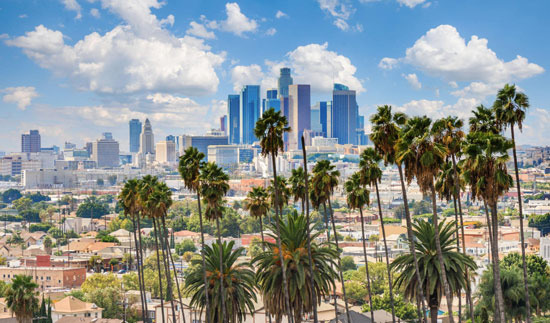
Essentially, LA has a Mediterranean climate. The average annual temperature is about 63.7°F, which is around the mid-17 degrees Celsius.
While the numbers may seem quite mild, the actual feel can vary significantly by area. This difference becomes particularly evident in the summer. Coastal areas like Santa Monica or Malibu are relatively cool due to the ocean breeze. In contrast, inland areas like the San Fernando Valley or San Gabriel Valley are a completely different world.
It is common to experience a temperature difference of over 10 degrees on the same day. Inland areas can see heat waves exceeding 100°F, which is not just "hot" but affects daily life itself.
The precipitation pattern is also unique. LA is known as a city with little rain, but it's not just about the amount; it's also about "when it comes." Most of the annual rainfall of about 16 inches occurs in the winter. Almost all the rain falls between November and April, while from May to October, there is virtually no rain.
This affects lifestyle patterns as well. In the summer, lawn care and water usage may be restricted, while in winter, sudden heavy rains can cause flooding on the roads.
Snow is almost nonexistent. The last recorded snowfall in downtown LA was in 1949. However, just a short drive away, a completely different landscape appears. In the San Gabriel Mountains, snow accumulates every winter, and ski season begins. This is a characteristic of LA: wearing short sleeves in the city while seeing snow-capped mountains just a couple of hours away.
Another important variable is the Santa Ana winds. This is not just any wind; it is hot, dry air blowing from inland to the coast, which drastically lowers humidity and raises temperatures. When these winds blow, the risk of wildfires increases sharply. In fact, most major wildfires in LA occur under these conditions. A significant wildfire that broke out in early 2025 was exacerbated by strong dry winds and low humidity.
In recent years, there has been a noticeable increase in climate anomalies. Previously, the pattern of "dry summers and rainy winters" was relatively consistent, but now those boundaries are becoming blurred. Winter has seen more frequent heavy downpours, while summers have become longer and hotter. As the duration of heat waves increases, so does electricity usage, raising concerns about power outages. At the same time, prolonged droughts are recurring. When it rains, it pours, but there can be months without any rain.
Another noticeable factor is air quality. The dryness is a given, but during wildfire season, air quality deteriorates rapidly. This is not just a smell issue; it leads to health problems. Masks and air purifiers have become essential items. What was once optional is now nearly a necessity.
Therefore, living in LA requires a nuanced understanding of the weather. While it is true that there are many clear days, one must also consider the hidden risks. The UV rays are strong, making sunscreen a must, and the dryness necessitates skin care. In winter, driving habits need to change to prepare for sudden heavy rains. In summer, water management and cooling costs must also be taken into account.
Ultimately, while LA's weather may seem stable on the surface, it is actually moving towards a structure of "increasing volatility." The LA of the past is different from the LA of today. If you come in without understanding this, you may be caught off guard by the reality behind the pleasant weather. Conversely, if you understand and prepare for this pattern, you can enjoy the advantages of this city while effectively managing the risks.







 Make My Day |
 viroma |
 eatontown blog |
 Toaster Pizza Magic Show |
 US Embassy |
 Weekend Movie Blog |
 Beauty, Health, Lifestyle Blog |
 coloradoman |
 Superman Cat Blog |
 Victory 1988 |
  round1 |
  Way to easy |
  musicque |
  road98 |
  Churros Train Conductor |
  gleeful |
  Burbank Lee |
  Olivia's Blog |
  Bushing Around Life |
  Active |
  Cherokee Rose |
  Kor. Master |
  Holey Moley |
  Conflite Teacher |
  Hodong Prince Over Flex |
  Mist inn |
  citrus pop |
  Onion Ring |
  phoenixia |
  viewtop |