

If you take a look at the school pickup line during kids' dismissal time, you will see cars lined up for a long time.
Most of them wait with the engine running, thinking they will be out soon.
In fact, considering modern cars, the engine automatically shuts off when stopped, but the scene of waiting with the engine on feels like an old habit.
To be honest, this campaign seems more like an education for drivers who are still accustomed to the old ways rather than for those driving the latest cars.
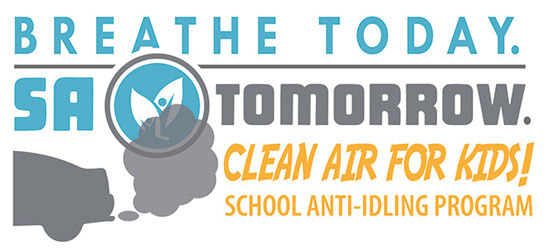
The Clean Air for Kids program in San Antonio is a program that easily informs children and parents about how idling affects air pollution and how to reduce it.
When you think about it, idling is really everywhere in our lives. There's no place that doesn't involve it, from school pickup lines to drive-thru banks or burger joints, delivery trucks, and buses waiting for passengers.
The problem is that it's not always necessary; it's just a habit. People find it bothersome to turn off the engine or continue to do it because it's how they've always done it.
These small actions accumulate, leading to worse air quality, and the impact directly affects people. It is especially sensitive for children. The increasing rates of childhood asthma are often linked to this kind of air pollution in daily life, and that's not just a coincidence.
What's interesting about the Clean Air for Kids program is that it doesn't impose strict regulations; it simply puts up a sign in front of schools to reduce idling and sends a simple information sheet to parents.
It also includes parents and children making a promise together, saying, "We will not idle."
It may seem trivial, but when these actions accumulate, the air quality around schools definitely improves. This is more about lifestyle education than just a simple campaign.
Children learn about the importance of air, parents demonstrate through their actions, and schools and communities work together.
In San Antonio, Leslie Antunez from the City of San Antonio Office of Sustainability encourages schools to understand idling habits and to see air quality data together, so they can feel how small actions can lead to significant changes.
Ultimately, I believe that a simple way to protect children's health is just to turn off the engine while waiting; that's where it can all start.







 Magic Cabbage School of Martial Arts |
 Vacation on Hawaii |
 morvex37 |
 Ari Songhan American Immigration Life |
 Bearded Strawberry Smoothie |
 Helpful Life Stories |
 American Man in a Mask |
 USA Pharmacy Pharmacist |
 Texas Migration Story |
 Texas Migration Story |
  Tonky |
  viroma |
  cookie |
  Live and that's it |
  Alright Twain |
  eatontown blog |
  HAWAII Korean Church News |
  Amore |
  linex |
  Balancework |
  laro90 |
  MEDBIO American Doctor Blog |
  SWAT TEAM BLK |
  DREAM BIG |
  frostbite |
  330 Forever My Love |
  El Dorado |
  dralix58 |
  Gorama Round |
  Skydiving |