


One thing I feel while living in the United States is that people suffering from complex or excessive work easily lose their 'concentration'.
The issue of workers being unable to concentrate and becoming distracted is almost a matter of survival in places like Silicon Valley.
Here, where numerous IT companies and startups abound, developers are expected to be smart, and how quickly they can produce results while concentrating is crucial. The problem is... as experience accumulates, the knowledge increases, but producing quick results while concentrating is not as easy as it sounds.
Is that why? Across the United States, the number of people diagnosed with ADHD and taking stimulant-based prescription medications like Adderall and Vyvanse is increasing.
As of 2023, the number of adult ADHD patients in the U.S. has... surprisingly exceeded 15 million, and many of them rely on these medications for their work and academic performance.
Source: https://www.cdc.gov/mmwr/volumes/73/wr/mm7340a1.htm
However, the main ingredients of Adderall are amphetamine and dextroamphetamine. Both are central nervous system stimulants that enhance concentration and provide alertness, but they are said to have a very high risk of dependence and abuse.
That is why this medication is not even approved in South Korea.
In a country like Korea, where competition for entrance exams is intense, it is obvious what would happen if such medications were easily available.
Students preparing for exams, even office workers, would start seeking "medications that help them study well and concentrate".
In a country where people already consume coffee, energy drinks, and even ginseng, what would happen if Adderall were introduced? It would ignite a societal atmosphere akin to "grinding the brain". Thus, it is perhaps natural that this medication is not only considered 'medical' but also subject to regulation in Korea.
These illegal(?) drugs in Korea increase dopamine and norepinephrine levels in the brain to maximize concentration, but the side effects are significant.
Decreased appetite, insomnia, anxiety, abnormal heart rhythms... and even drug dependence can follow.
The problem is that most of us are not diagnosed ADHD patients.

However, modern society induces a kind of 'fake ADHD' in all of us.
Emails, notifications, social media, messaging apps, video calls, shorts, TikTok, Slack... there are too many mental stimuli we encounter every day.
As a result, many people are looking for a 'healthy detour' to boost their concentration.
The keyword that comes to mind here is functional supplements (Nootropics).
A typical example is caffeine. Coffee, energy drinks like Red Bull or Monster, and 5-Hour Energy have already become popular tools for concentration.
In the company where I interned, half of the refrigerator in the break room was filled with Red Bull, and the other half with mineral water....
The problem is that caffeine can lead to tolerance over the long term and may cause gastrointestinal issues or insomnia.
Therefore, recently, there has been a trend towards finding more natural brain function supplements with fewer side effects.
Here, L-Tyrosine and L-Theanine are gaining attention.
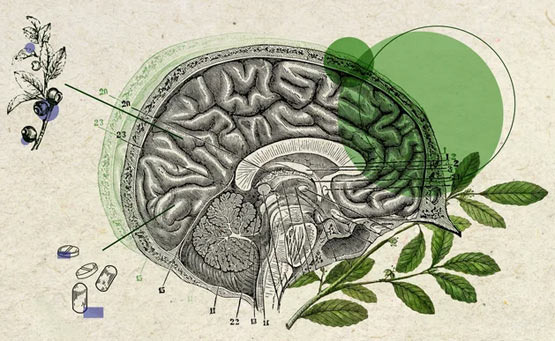
L-Tyrosine: Brain Fuel to Overcome Stress
L-Tyrosine is a type of amino acid used in the brain to produce dopamine, norepinephrine, and epinephrine.
Research has shown that it is particularly effective in stabilizing brain circuits during stressful situations caused by lack of sleep, overwork, or multitasking.
The U.S. Army Research Institute of Environmental Medicine (USARIEM) reported that Tyrosine improved soldiers' concentration and reaction times.
I have tried taking Tyrosine when my brain felt foggy during code reviews, and I definitely felt a sense of 'the brain fog lifting'.
In fact, foods rich in L-Tyrosine are abundant in the protein-rich foods we consume daily. Foods like chicken breast, eggs, salmon, tuna, tofu, legumes, cheese (especially aged cheeses like Parmigiano), milk and yogurt, peanuts, almonds, and avocados.
While it can be supplemented through food daily, a certain amount is needed to send it directly to the brain, so taking it in supplement form is helpful. The effects of Tyrosine are not as immediately noticeable as caffeine, but it helps to subtly calm the mind and enter a concentration mode.
Many manufacturers produce and sell it at markets, Walmart, and Amazon, and the recommended daily dosage for adults is about 500mg-1500mg. The price starts at $9 for 90 capsules, so it's not a burdensome cost.
L-Theanine: The Friend in Green Tea that Lowers Brain Waves
L-Theanine is an amino acid extracted from green tea leaves. When taken with caffeine, it helps maintain concentration while reducing anxiety and excessive alertness.
In fact, various experiments in Japan and the UK have revealed that Theanine induces a 'calm concentration state'. In other words, it creates a state of 'quiet immersion'.
Thus, among developers like me, the combination of 'morning coffee + Theanine capsules' has become a sort of routine.
I take it a step further and create a cocktail of 'L-Tyrosine + L-Theanine'. I try to reduce caffeine as much as possible and instead control concentration with the amino acid combination.
This combination has worked very well for someone like me. It reduces anxiety and enhances the sustained concentration needed for debugging and tracking down bugs.
GABA: The Master of Relaxation
Another interesting ingredient is GABA (Gamma-Aminobutyric Acid).
It is an inhibitory neurotransmitter that suppresses brain excitation and is particularly effective for those who easily crumble under stress.
However, there is controversy over its ability to cross the blood-brain barrier (BBB), leading to differing opinions on its oral intake effectiveness.
Still, when I want to calm my mind in the evening, I often take GABA capsules.
Why the Market is Heating Up
The market for these functional brain supplements has now exceeded $3 billion annually in the U.S.
Click here for related news links.
Especially after COVID, with the increase in remote work, digital fatigue, and multitasking environments, demand has surged.
The 'tired brain society' is no longer just an individual issue but a challenge that industries themselves are trying to solve.
Some startups in Silicon Valley even provide Theanine or Tyrosine supplements to employees as part of a "wellness package" to improve work efficiency.
Whereas it used to be Vitamin C, nowadays, 'brain boosters' are the norm.
I still want to take care of my brain in a natural way rather than with medications.
Instead of strong stimulants like Adderall, I feel that a method that 'quietly communicates with the brain' suits me better.
So I include the combination of Tyrosine and Theanine in my morning routine.
My brain wakes up gently, and I feel less fatigued when coding. Of course, this is not a cure-all. The brain ultimately needs 'rest'.
However, we are all hunting for concentration in our own ways. For me, that weapon is L-Tyrosine and L-Theanine.
I hope this serves as an opportunity for you to explore what combination works best for you.




 Moscow Kim |
 coloradoman |
 Montgomery Mom |
 GOGO SING |
 Hajiwon Blog Hair Salon |
 Shining Our Own World |

 California Kangaroo |

 Reggae Party |
  Korean Mom |
  My NYC |
  moo moo |
  Mr Oh |
  forevergee |
  festival |
  manchester |
  constant |
  Leapfrog Move |
  vibranto |
  Tora Tora |
  yellowbutter |
  Dolly |
  US Embassy |
  NYC saladbar |
  Finding Superfoods |
  lightyear |
  song bang |
  vexomo |
  Indiana Jones |