

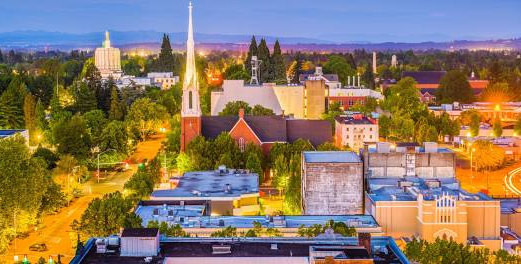
It is one of the few places in the United States where you can experience mountains, waterfalls, rivers, and the ocean all in one state. With activities like skiing, snowboarding, kayaking, and horseback riding, as well as desert racing with four-wheel drive vehicles or ATVs, the state offers a wide spectrum of nature-based activities.
There are several theories about the origin of the name Oregon. Spanish explorers who ventured into the area in 1598 referred to the Columbia River by a name derived from a crop similar to oregano, or it may have originated from the Spanish place name Arroyo del Oregón. In 1765, British Army officer Robert Rogers claimed that the name came from the Native Americans calling the Columbia River Ouragon. There are also theories suggesting influences from other Native languages like Waregan or Wourican.
Initially, Oregon was a territory of Britain but was later ceded to the United States. It was officially admitted as the 33rd state on February 14, 1859. At that time, it was managed along with the Washington territory but became an independent state. Upon joining the Union, it was classified as a free state, forming the basis of its political identity.
Pioneers who moved westward to escape the harsh conditions of the Midwest in the 19th century referred to Oregon as the land before the gates of Eden or the promised land. The rich land, mild climate, and geographical location leading to the Pacific were seen as symbols of new life opportunities. This expression frequently appears in literature and songs that discuss Oregon's history and culture.
The history of Oregon begins with Native American cultures. The Chinook, Nez Perce, and Clatsop tribes settled in the area for thousands of years, utilizing natural resources for their livelihoods. In the early 1800s, the Lewis and Clark Expedition crossed the Pacific Northwest, bringing this land to the attention of Western society. By the mid-19th century, the Oregon Trail became a major route for settlers moving from the East to the West, ultimately leading to Oregon's statehood. The early economy was centered around fur trading, agriculture, and logging, later evolving into a focus on technology and service industries.
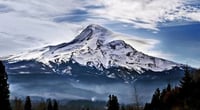
Geographically, Oregon is located on the Pacific Coast and features a highly diverse natural environment. It is bordered by Washington to the north, Idaho to the east, California and Nevada to the south, and the Pacific Ocean to the west. The area covers approximately 255,000 square kilometers, making it the ninth largest state in the U.S. A beautiful coastline stretches about 584 kilometers along the Pacific, and the Cascade Range runs north to south through the state. The highest peak in this range is Mount Hood. The eastern part of the state is characterized by plateaus and isolated desert areas. The Columbia River forms the boundary between Oregon and Washington and plays a crucial role in hydroelectric power and transportation. Crater Lake is a world-famous volcanic lake and the deepest lake in the United States.
The climate also varies significantly by region. The coastal and western areas have a mild maritime climate with frequent rain. The eastern region has a dry desert climate with hot weather in the summer. Thus, Oregon is a state where nature, history, and culture harmoniously coexist.




 Magic Cabbage School of Martial Arts |
 Vacation on Hawaii |
 morvex37 |
 Ari Songhan American Immigration Life |
 Bearded Strawberry Smoothie |
  Oregon Our Neighborhood Story |
 Sunset Oregon |
 jammybear |
 Time Management Enthusiast |
 Tora Tora |
  yellowbutter |
  Dolly |
  US Embassy |
  NYC saladbar |
  Finding Superfoods |
  lightyear |
  song bang |
  vexomo |
  Indiana Jones |
  meloncat |
  novapixel |
  mortrix |
  Esther 1983 |
  fortbliss |
  Moscow Kim |
  My Two Way |
  toastyfox |
  FLORIDA Acus |
  tracker |