

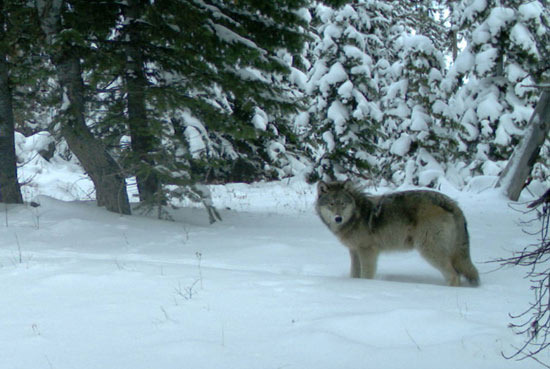
As you walk through Oregon's mountainous areas, there is a presence somewhere in the forest that carefully spends time with the surroundings.
Although not easily seen, this animal maintains the tension and balance of nature in the region: the wolf.
In Oregon, it is regarded not just as a wild animal but as a symbol that has returned after a long conflict.
Once disappeared due to indiscriminate hunting and habitat destruction, it has returned as a wild resident thanks to habitat recovery and protection policies.
The wild wolves inhabiting the United States, including Oregon, mostly do not attack people or homes.
Essentially, wolves are afraid of humans and tend to avoid places with human scents or noise.
Even if they encounter humans in the forest, they usually flee first or watch from a distance before quickly disappearing.
From the wolf's perspective, humans are large and unpredictable beings, so they feel that coming close is dangerous.
The habitat of Oregon wolves mostly spans the Cascade Mountains and Eastern Highlands.
They are not animals that city dwellers in places like Portland or Eugene can easily encounter; they primarily operate in areas where deep mountains and plains intersect.
Snow-covered mountain ridges and scattered pine forests are shadowy homes where Oregon wolves hide and move.
The Oregon region and southern Cascade Mountains provide a favorable environment for both humans and wolves to maintain distance from each other due to natural ruggedness.
Wolf packs usually move along rivers or streams in search of food, and these waterways serve as pathways connecting the mountainous ecosystem, naturally forming the wolves' movement routes around them.
Just because there are many wolves does not mean they appear recklessly. Most move cautiously, out of sight of humans.
Those who have hiked in Oregon may sense the presence of wolves through a single footprint on the forest floor, elongated traces left in the snow, or the low howls heard from afar.
Especially in areas with heavy snowfall during winter, it is easy to find footprints, and at night, howls can carry on the wind. However, they do not come close enough to pose a threat to humans.
In this region, the conflict between wolves and humans largely arises from livestock protection issues. Eastern Oregon is a common area for ranching, leading to debates over cases of wolves attacking livestock.
Ranch owners cannot simply dismiss it with the statement, 'Wolves have a right to live,' as their livelihoods are at stake, while conservation groups argue for an end to hunting or interfering with wolves.
Oregon seeks to balance these two sides by simultaneously promoting wolf protection policies and livestock protection support policies.
The approach is to maintain the balance of the ecosystem with wolves while addressing livestock damage through compensation and management programs. If wolves disappear, herbivore populations will increase, leading to vegetation damage, which in turn affects other animals, creating a complex web of connections.
The presence of wolves signifies that the ecosystem in that area is alive. Seeing a wolf in the mountainous region is not an easily experienced adventure; it is closer to facing a living nature.
While hiking, when you hear the sound of the wind shaking the trees or suddenly feel the energy of nature on a path with no traces, the wolves will be living somewhere on the same land.
Even if they are not visible, they are a life that exists together. I believe the mountains of Oregon quietly convey that feeling of coexistence.







 Oregon Our Neighborhood Story |
 Sunset Oregon |
 jammybear |
 Time Management Enthusiast |
 manchester |
  constant |
  Leapfrog Move |
  vibranto |
  Tora Tora |
  yellowbutter |
  Dolly |
  US Embassy |
  NYC saladbar |
  Finding Superfoods |
  lightyear |
  song bang |
  vexomo |
  Indiana Jones |
  meloncat |
  novapixel |
  mortrix |
  Esther 1983 |
  fortbliss |
  Moscow Kim |