
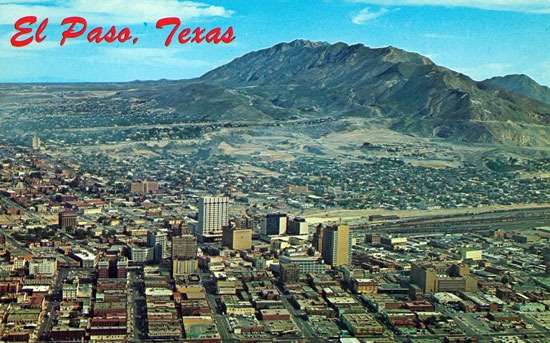
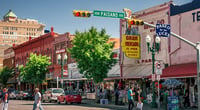
El Paso, due to its unique location right next to the Mexican border, has long been more of a massive site where two countries mix rather than just an "American city."
Although it is in the middle of the desert, it has strangely always been a place where people, money, and culture continuously flow. The decisive period that shaped the city into its current form was the 1970s and 80s.
In the 1970s, El Paso was literally in the midst of a manufacturing boom. The maquiladora system, created by the U.S. and Mexican governments, began to take off, leading to a surge of factories on both sides of the border. Famous clothing brands like Levi's, Lee, and Wrangler established factories in El Paso, making it a center for denim and casual clothing production.
As factories began to operate, jobs exploded, and people flocked to the area. The population, which was around 320,000 in 1970, surpassed 420,000 by 1980, prompting the expansion of residential areas outward and rapid improvements to the airport and highways. The basic framework of El Paso's road network was established during this time.
As the 1980s arrived, El Paso faced another major test. The Mexican peso crisis in 1982 severely impacted the region's economy, which heavily relied on cross-border trade. Store sales plummeted, and factories began restructuring. However, this crisis became a turning point that changed El Paso's economic structure. The city and businesses realized that relying solely on manufacturing was not sustainable, prompting a shift towards the service, finance, and healthcare industries.
During this time, the expansion of Fort Bliss, a large U.S. military base, brought in a significant number of soldiers and their families. This influx created a stable consumer base for El Paso, playing a crucial role in restoring balance to the city's economy. At the same time, Hispanic culture naturally took root throughout the city, making El Paso one of the largest bilingual cities in the U.S. The blend of English and Spanish in this culture is a key element of El Paso's identity today.
With this solid foundation, El Paso in 2026 has entered a completely different phase. Thanks to the nearshoring trend of global supply chains moving from Asia to North America, El Paso is being reevaluated as a massive border manufacturing hub alongside Juárez, Mexico. Automotive parts, medical devices, and semiconductor logistics are spreading throughout North America via El Paso. The university has grown, and research and medical facilities have concentrated, allowing the city to play a role as a center for technology and healthcare.
The once factory-filled areas, once echoing with the sounds of sewing machines, have now transformed into startup offices, artist studios, and logistics centers. El Paso remains in the desert, but within it, the currents of the global economy are quietly moving.
The sweat and trial and error of the citizens in the 70s and 80s have shaped the El Paso we know today.




 fortbliss |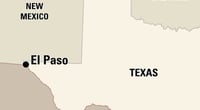
 Tomex Train Uncle |
 hexon |

 Spicy Immigration Life |
  dralix58 |
  Gorama Round |
  Skydiving |
  dreamport |
  Yellow Snowman |
  Toaster Pizza Magic Show |
  velvetnom |
  Anytime Journey |
  Mrs. Duluth |
  jaxter |
  Atlanta Mama |
  Baguette Blog |
  US Embassy |
  Korean Mom |
  My NYC |
  moo moo |
  Mr Oh |
  forevergee |
  festival |
  manchester |