
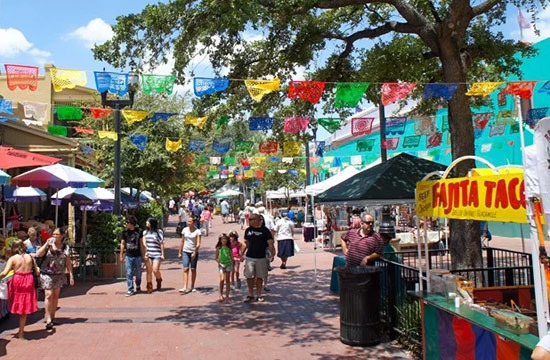
Honestly, when I first said I was coming here, most people around me reacted with, "What's there?"
Even though it's the second largest city in Texas, it tends to be overshadowed by Austin and Dallas.
But after living here, I've realized that the city's real strength is its 'affordability.' The cost of living index is 92, which means it's about 8% cheaper than the national average, and it's not common for a city with over 1.4 million people to maintain such low prices. With a mix of tourism, military bases, and healthcare industries, plus a unique Hispanic cultural ecosystem supporting the cost of living, this is what I've felt during my three years here.
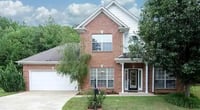
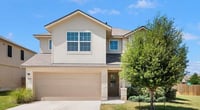
The most noticeable aspect is definitely housing prices. I found a two-bedroom apartment for around $1,250 a month, while the average for a two-bedroom here is about $1,100 to $1,400. Considering the national median rent is between $1,500 and $2,200, that's quite low. In Texas, to get a two-bedroom in Austin, it would be $1,600 to $2,200, and in Dallas, it's around $1,400 to $1,800.
The price for single-family homes is also around $250,000 to $300,000, which is below the national average and quite competitive within Texas. A colleague of mine bought his first home last year, and he said he wouldn't have even dreamed of doing that in Austin.
Food prices are not bad either. Texas doesn't have a sales tax on groceries, and here, there's an added benefit of being close to the Mexican border.
Fresh vegetables and Latin ingredients are really cheap. And then there's H-E-B, a Texas-based grocery store that is particularly strong in San Antonio. I can't shop anywhere else now. For a family of four, the monthly grocery bill is about $700 to $800.
On the other hand, transportation is... the weak point of this city. There is public transportation called VIA, but the coverage isn't very extensive, so it's really frustrating without a car.
While gas prices in Texas are less of a burden, the city is so spread out that a round trip can add up quickly. Combining gas, electricity, and water, the total comes to about $200 to $250 a month. However, winters are much milder than in Dallas, so heating costs are almost negligible. Overall, when you look at the year, utility costs tend to be lower than in northern Texas cities. It feels like you pay a lot in the summer and take a break in the winter.
If you line up the cities in Texas, San Antonio (92) is among the cheapest major cities, except for El Paso (88).
It's on a different level compared to Austin (118) or Plano (112), and even lower than Dallas (102) or Arlington (98). Interestingly, Austin is only 80 miles away via I-35, so there are actually some long-distance commuters who work in Austin but live here. It can be tough to commute daily, but the difference in housing prices makes it worthwhile for some people.
The Korean community is honestly small. However, you can find basic Korean ingredients through two Korean markets and some Chinese and Vietnamese Asian markets. There are also a few Korean students and researchers at UTSA and Texas A&M San Antonio. To sum it up, I would seriously recommend San Antonio to Korean families who want to enjoy the infrastructure of a big city while significantly reducing their cost of living. It's not flashy, but it's a city that is easy on the wallet. This is my honest recommendation after living here for three years.
 KoreaNews
 BlueOcean






 |
| 
 Premium Gas Camp |
 CA Real Estate |
 cheesepup |
 breezem |
 TEXAS Fishing Boat |
 Helpful Life Stories |
 solvix18 |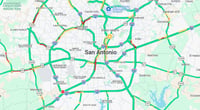
 Texas Migration Story |
  Glassroom |
  Granola |
  joyfull yang |
  Olivia's Blog |
  Living in America and Writing Essays |
  Piano Teacher Blog |
  bearcup |
  explorer |
  dictionary |
  Mr Bull Jung |
  radiant |
  Georgia 88 |
  Great TOWN NEWS |
  Open Flex Mind |
  Hartford Blog |
  unified |
  Generation X |
  ringwinds |
  American Food Information & Calories |
  Hawaii Maui Kahului |