

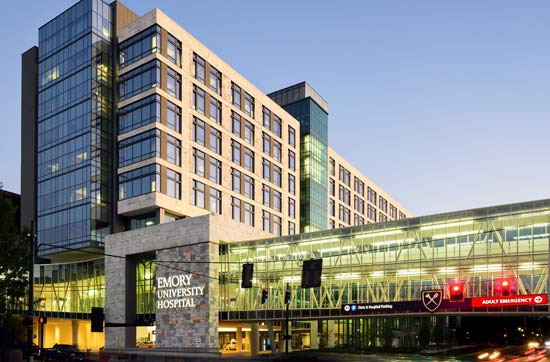
When discussing the level of healthcare in Atlanta, the name that often comes up is Emory University Hospital.
This hospital is not just a large general hospital; it is a representative academic medical institution where research and clinical practice operate simultaneously.
It is located in the Druid Hills area east of Atlanta, near the Emory University campus.
It has established itself as a trusted medical institution for Koreans in Atlanta and throughout Georgia when it comes to treating serious illnesses.
Thanks to its geographical location, the medical school, research institutes, and hospital operate as a cohesive system.
This is a typical structure of what is commonly referred to in the U.S. healthcare system as an "Academic Medical Center."
The reason Emory Hospital is gaining attention is that it is not just a hospital that provides good care; it is a place where the latest medical technologies are applied first.
It is closely connected to the Emory School of Medicine, allowing for rapid translation of research findings into clinical practice.
In the fields of cardiology, cancer treatment, neuroscience, and organ transplantation, it is rated among the best in the southeastern United States.
Particularly, its ability to respond to infectious diseases is nationally recognized, largely due to the presence of the Centers for Disease Control and Prevention headquarters in Atlanta and its collaborative relationship with Emory.
In fact, it is known as the first hospital in the U.S. to treat an Ebola patient, significantly raising its international profile.
Looking at this hospital alone provides only half the understanding.
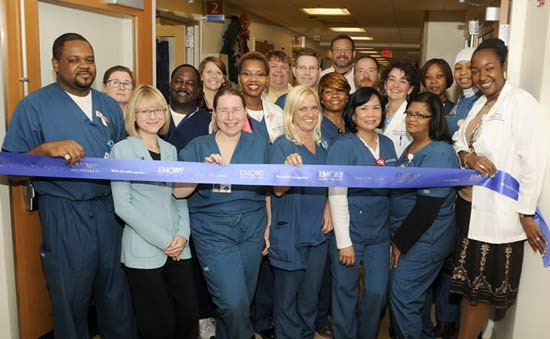
Emory operates not just as a single hospital but as part of a large healthcare network called Emory Healthcare.
Notable facilities include Emory University Hospital Midtown, Emory Saint Joseph Hospital, and Emory Decatur Hospital, all of which are operated together. The advantage of this structure is that patients can receive a certain level of medical service regardless of where they live.
In particular, the Midtown hospital has good accessibility to the city center, resulting in a higher proportion of working professionals and younger patients. In contrast, the main hospital has a higher rate of complex surgeries and treatment for severe illnesses.
When actually seeking care, there are several practical considerations to keep in mind.
Due to the nature of the U.S. healthcare system, a referral from a primary care physician is often required to see a specialist.
Appointments tend to fill up quickly, so it is advisable to plan ahead if you want to see a specific specialist.
Especially popular cancer centers or heart centers may have longer wait times.
It is also essential to check insurance network participation, as Emory accepts most major insurances, but costs can vary significantly depending on the plan.
From the perspective of the Korean community, Emory Hospital has a reputation as a "trusted hospital."
It is often chosen for significant situations such as surgeries, cancer treatment, and chronic disease management rather than for simple consultations.
While some Korean interpretation services are available, there may be limitations depending on the time and situation.
If important tests or surgeries are scheduled, it is safer to arrange for a separate professional interpreter.
The digital system is also well established. Emory patients can use the MyChart portal to make appointments, check test results, and message with doctors.
Recently, telehealth services have expanded significantly, allowing for simple consultations or follow-ups to be handled without a hospital visit. This system is particularly convenient for patients undergoing long-term treatment.
In fact, when you think about it, Emory University Hospital is not just a "large hospital" but a healthcare hub that combines research, education, and clinical practice.
It plays a key role in providing critical care not only in Atlanta but throughout Georgia and the southeastern United States.
Therefore, this hospital operates with a different approach than a local neighborhood hospital. It requires preparation and an understanding of its structure to be utilized effectively.






 Enjoyable American Life Diary |
 California Dreamer |
 Best Frozen Yogurt |
 Burbank Lee |
 ANSLO NEWS |
 Dragon Lee |
 Ready for sunshine |
 Maximum Pro |
 Dingho and USA News |
 Tiger Milk Foam Research Institute |
  My Town My Way Blog |
  Hawaiian Dooly Mom |
  Roman Pan |
  Key spots |
  Community Cross |
  Oz's Wow Company |
  Wenda |
  Nuchuhan Exploration BLOG |
  Who's watching? |
  Strawberry Pancake Warrior |
  What can make money? |
  Egg Steamed Pot |
  New Jersey News Local Stories |
  Study Abroad Life Know-How Tips |
  My Love DS |
  Leapfrog Move |
  US Regional Information Local News |
  Finding Superfoods |
  COLO COLO |