

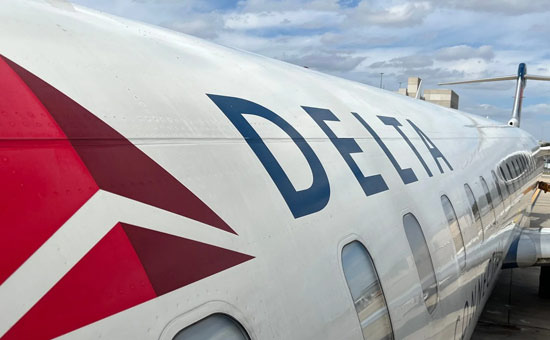
Do you know why Delta is called the "number one" in the U.S.?
To summarize it in one line, it's not just a company that operates many flights, but an airline that is genuinely committed to running profitable routes reliably and capturing premium demand until the end.
According to recent data from U.S. transportation statistics (domestic market share indicators), there are periods where Delta has the highest share over the last year (there are times when Delta is marked as number one in domestic market share), and this is not just an image but is reflected in the numbers as a "big company."
However, Delta's real strength lies in its operational methods rather than its size. By tightly weaving a network around major hubs like Atlanta (ATL), which is one of the busiest airports in the U.S., it has relatively good recovery resilience even when delays occur (a dense hub structure makes it easier to find alternatives/reassignments) and strongly captures routes with high corporate travel demand in large cities.
Moreover, instead of filling seats with "cheap tickets," it has long operated a model that binds customers through premium cabins (business/premium economy/upgrade demand), lounges, co-branded cards, and a mileage ecosystem.
Delta's emphasis on revenue, margins, and cash flow during quarterly earnings announcements ultimately means that this structure is profitable.
Now, to the main point, using Delta miles (SkyMiles) becomes easier if you remember one thing. Delta has a weak fixed redemption chart (mileage redemption fluctuates depending on routes/dates/demand), so the key is 'when to use them.'
First, make it a habit to check the SkyMiles Award Deals page on the Delta app or website. Delta often releases certain routes at "unbelievably" low prices, and timing is more important than studying for these deals.
Second, once you start using a Delta co-branded card (Amex Delta SkyMiles card), the value of your miles changes significantly. A typical example is TakeOff 15, where holders of eligible cards like Gold/Platinum/Reserve receive a 15% discount on miles when booking Delta-operated Award Travel through the Delta app/website. This means that even for "the same seat, on the same date," having the card means you spend fewer miles, which often justifies the card's annual fee for frequent users (note that there are conditions where this does not apply to partner flights).
Third, it's good to know about the Pay with Miles feature. This is not a typical 'buying a ticket with miles' method, but rather a way to reduce the ticket price by a portion with miles, making it quite useful when you have leftover miles or when cash prices are reasonable but mileage tickets are extremely expensive. This is especially beneficial when you want to keep cash spending at a certain level, like during family trips.
Fourth, another aspect of mileage is the Medallion status, which Delta has recently restructured to focus more on 'money' for status qualification, and it clearly guides how to earn MQD through card spending (for example, Delta Platinum members earn MQD per certain spending amount, while Reserve members earn MQD at a faster rate).
If you frequently use lounges, would like seat upgrades, and aim to reduce travel stress through additional baggage or priority boarding, you need to plan how to fill your MQD separately from accumulating miles.
The reason Delta is considered number one ultimately comes from this. They have not only been selling plane tickets but have also created a structure that makes it very difficult for customers to leave for a long time.
Delta and Korean Air are both members of SkyTeam, so mileage sharing and earning/redemption are somewhat organic. For example, when flying Delta, earning with Delta SkyMiles is standard, but you can also earn with Korean Air's 'SkyPass' for the same flight. Conversely, flying Korean Air also allows you to accumulate Delta miles.
The important thing is that the earning rates vary by seat class, and even for the same airline flight number, the earning rates can differ for codeshare flights. Therefore, it is essential to develop the habit of checking the earning charts of both Delta and Korean Air's mileage programs before booking tickets. Especially when flying long-haul premium seats, the SkyTeam partnership earning can be surprisingly efficient, often accumulating miles much faster than just repeating short-haul economy flights.
From a usage perspective, it is also possible to book Korean Air flights with Delta miles or Delta flights with Korean Air miles, and depending on the route, season, and available seats, there can be significant variations in which option is more advantageous. So I always keep two accounts, one for Delta and one for SkyPass, and after getting quotes for the same flight from both programs, I book with the least miles. This approach greatly helps maximize the value of miles compared to only using Delta.





 candytip |
 Gold Bar |
 Pirate Ship Popcorn Maker |
 Montgomery Mom |
 Anjollinya Blog |
 Cherokee Rose |
 Dingho and USA News |
 moonshine 7 |
 Let's Be Like a Salt-like City Person |
 Gimmi207 Blog |
  meloncat |
  novapixel |
  mortrix |
  Esther 1983 |
  fortbliss |
  Moscow Kim |
  My Two Way |
  toastyfox |
  FLORIDA Acus |
  tracker |
  TONTON COFFEE |
  sunrise |
  ultron78 |
  uplifted |
  Folding Instructions |
  same same life |
  USA Hyundai Kia |
  morvex37 |
  BOL SA RAM |
  TOUCHE NEWS |