

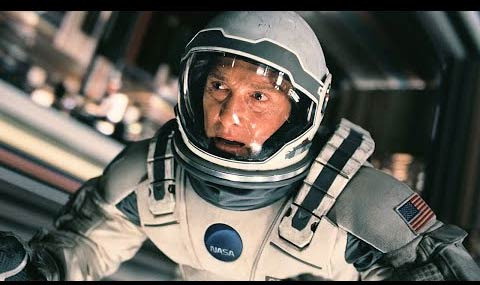
In the movie Interstellar, the story of black holes and wormholes is backed by a solid scientific foundation.
A black hole is literally a 'hole from which not even light can escape.' However, this description makes it sound like an infinitely sucking monster, right? In reality, a black hole is the result of a star dying and collapsing under its own weight, becoming extremely heavy and dense.
To put it simply, it can be described as a super-dense mass formed when a very large star cannot withstand its own weight and collapses inward. At its center, there is a point where physical laws do not apply, and around it is a boundary called the 'event horizon,' beyond which even the fastest light cannot escape.
The reason time flows slowly when Cooper passes near the black hole 'Gargantua' in the movie is precisely because the gravity is so strong. The fact that strong gravity slows down time was revealed by Einstein's theory of relativity. Thus, time flows differently for someone far away and someone near the black hole.
The scene in which one hour on the planet Miller corresponds to several years on Earth dramatically illustrates this scientific principle.
A wormhole is a somewhat different entity. While a black hole only sucks things in, a wormhole can be described as a 'secret passage in space.'
Imagine the universe as a sheet of paper, with galaxies far apart from each other. Normally, you would have to travel a long way along the paper to reach your destination, but if you fold the paper and connect two points, it becomes much closer, right? A wormhole is a concept that connects distant distances instantaneously by folding space like this.
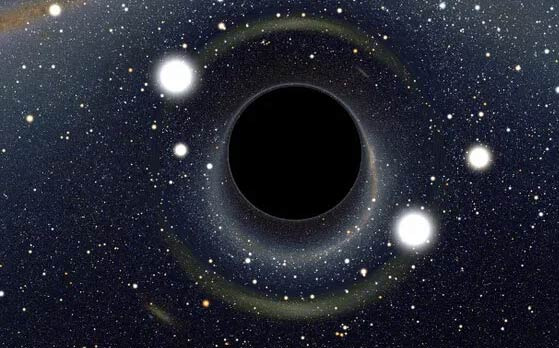
The reason a wormhole appears near Saturn in the movie is a plot device to allow humanity to quickly reach a planet on the opposite side of the galaxy. Of course, in reality, no one knows if wormholes actually exist. However, they are theoretically allowed to exist within Einstein's equations.
Interestingly, one of the entrances to a wormhole may look like a black hole. Many people confuse the two, but the difference is that a black hole is a one-way sucking hole, while a wormhole can be a two-way passage.
The reason Interstellar is fascinating is that it goes a step further by touching on 'dimensions within a black hole.' Cooper encounters a tesseract, a five-dimensional space inside Gargantua, and sends messages to his daughter by moving through time as if it were a physical location.
While it differs slightly from real science, it is an intriguing imagination that starts from the scientific idea that "time can also be a dimension."
Just as we can freely move back and forth in a room, higher-dimensional beings might be able to walk through the space of time. It sounds complex, but black holes do exist, the distortion of time around them is real, and wormholes are possible according to scientists' papers.
In my view, there are several special reasons why Interstellar was particularly successful in Korea. It is not just because it is a sci-fi blockbuster, but because it resonated perfectly with the emotions and zeitgeist of Korean audiences.
First, this movie centers around a strong family narrative of "the love between parents and children." Korean audiences deeply empathized with the emotional elements of Cooper and Murphy's separation, longing, and reunion, rather than the complex scientific setup. Especially, the setting of a father leaving for space while leaving his daughter behind resonates more strongly in Korean society.
Second, Korea has a high interest in disaster, space, and science genres. After the movie's release, content such as "Interstellar explanation videos," "interpretations of relativity," and "ending interpretations" exploded, which is also a reason for its success.
Third, the overwhelming scale of CG and sound, along with the high trust in director Christopher Nolan in Korea, significantly boosted its success.
These elements combined to establish Interstellar not just as a movie, but as "a must-see work."







 LIZ Legal Information Blog |
 Egg Steamed Pot |
 novapixel |
 xylora |
 vegas mom |
 Weekend Movie Blog |
 Beauty, Health, Lifestyle Blog |
 coloradoman |
 Superman Cat Blog |
  Anytime Journey |
  Mrs. Duluth |
  jaxter |
  Atlanta Mama |
  Baguette Blog |
  US Embassy |
  Korean Mom |
  My NYC |
  moo moo |
  Mr Oh |
  forevergee |
  festival |
  manchester |
  constant |
  Leapfrog Move |
  vibranto |
  Tora Tora |
  yellowbutter |
  Dolly |
  NYC saladbar |