

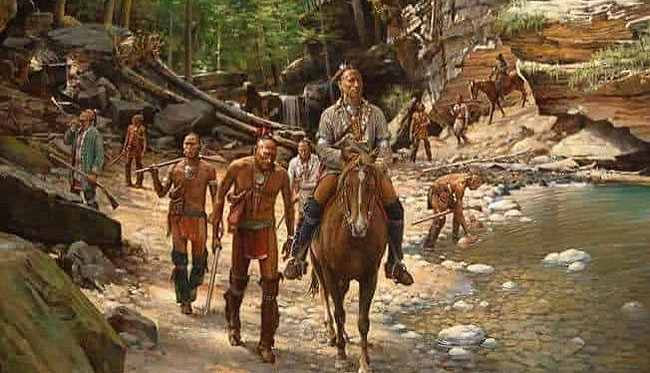
Among the most powerful and influential Indian tribes in the history of South Carolina, the Cherokee stand out.
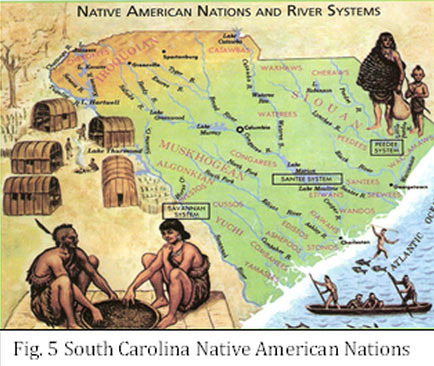
Today, the Cherokee Nation is well known in Oklahoma and North Carolina, but their roots originally extended into the northwest of South Carolina, reaching the Blue Ridge Mountains and the Piedmont region. The Cherokee established their home in this area, developing an independent culture through agriculture, hunting, and trade. It is not an exaggeration to say that a significant part of the southeastern Indian culture we know today originates from the Cherokee.
The life of the Cherokee was closely connected to nature. They regarded mountains, rivers, and forests as sacred and believed that humans are a part of nature. When hunting, they took only what was necessary and returned the rest to the forest, emphasizing ecological balance. Their main foods were corn, beans, and squash, which they referred to as the 'Three Sisters.' They believed these crops helped each other grow. Cherokee women farmed, while men were responsible for hunting and warfare. The social structure was matrilineal, with lineage traced through the mother.
The Cherokee were not a simple primitive tribe. By the time European explorers first encountered them in the 16th century, Cherokee society already had a sophisticated political organization. Each village had a 'Council House,' where tribal leaders gathered for meetings each season. During times of peace, a White Chief led the village, while a Red Chief took charge during war, demonstrating the Cherokee's emphasis on balancing peace and conflict.
The first encounters with Europeans were relatively peaceful. British and French traders began to interact through the fur trade. However, as the colonies expanded, the story changed. White settlers gradually encroached on Cherokee land, and firearms, alcohol, and disease began to disrupt tribal society. In the mid-18th century, the Cherokee allied with the British, only to clash with colonial forces later. The 'Cherokee War' ultimately became a decisive moment leading to the loss of their territory.
The most tragic event was the 'Trail of Tears' in the 1830s. At that time, the U.S. government forcibly relocated the Cherokee and other southeastern Indians westward through the 'Indian Removal Act.' Thousands of Cherokee were removed from South Carolina, Georgia, and North Carolina and had to walk to Oklahoma. Harsh weather, starvation, and disease claimed the lives of over 4,000 along the way. Even today, the Cherokee people remember this event as one of the most painful memories in their tribal history.
However, the Cherokee did not disappear. Those who moved to Oklahoma established the Cherokee Nation in their new land, preserving their language and traditions. Their language developed through a unique syllabary created by Sequoyah, which allowed even those who could not read to learn the Cherokee writing system easily. Thanks to this, the Cherokee were already publishing newspapers and maintaining a record culture in the early 19th century, making them a highly developed community for that time.
Today, traces of the Cherokee can be found in various places throughout South Carolina. The northwestern regions of Oconee and Pickens were lands inhabited by the Cherokee, and many place names are derived from them. For example, the word 'Oconee' means 'land by the water' in Cherokee. Traditional Cherokee craft exhibitions and cultural festivals are held, where descendants of the tribe introduce visitors to their ancestors' culture.
The legacy of the Cherokee is not just a vanished past but is deeply embedded in the identity of this region today. A life that respects nature, community-centered values, and a strong vitality that has not disappeared even amidst foreign influences—this is the spirit that the Cherokee have left behind.






 urbanmint |
 See South Carolina |
 Information on All Regions of the United States |
  Atlanta Mama |
  Baguette Blog |
  US Embassy |
  Korean Mom |
  My NYC |
  moo moo |
  Mr Oh |
  forevergee |
  festival |
  manchester |
  constant |
  Leapfrog Move |
  vibranto |
  Tora Tora |
  yellowbutter |
  Dolly |
  NYC saladbar |
  Finding Superfoods |
  lightyear |
  song bang |