

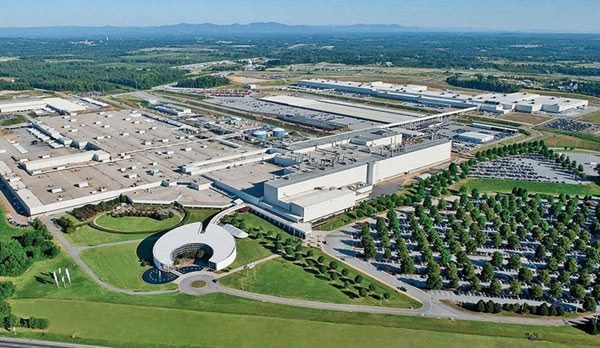
The quiet city of Spartanburg in southern South Carolina. When BMW from Germany announced in the early 1990s that it would build a factory here, people were puzzled.
"Are they really going to make that expensive European car here?" There was a skeptical atmosphere.
However, the moment the first BMW 318i rolled off the assembly line in 1994, the history of this region changed completely.
In fact, when BMW first chose this land, it was a 900-acre peach farm. It was a time when the local economy was struggling due to the decline of the traditional southern textile industry. So when a car company from Germany said, "We will build a factory here," everyone was surprised. BMW promised an initial investment of $600 million and 500 jobs, and now the scale has grown beyond imagination.
Today, the Spartanburg BMW plant has grown into a massive facility capable of producing over 450,000 vehicles annually. There are more than 10,000 employees, and 70% of the vehicles produced here are exported abroad. In other words, this place has become a key hub in the global automotive industry, with BMW being shipped to 140 countries around the world through the Port of Charleston.
In particular, the X series models, including the X3, X5, X6, and X7, are all made here. This is why factory officials proudly say, "The BMWs we make are American-made German cars that cannot be found anywhere else in the world."
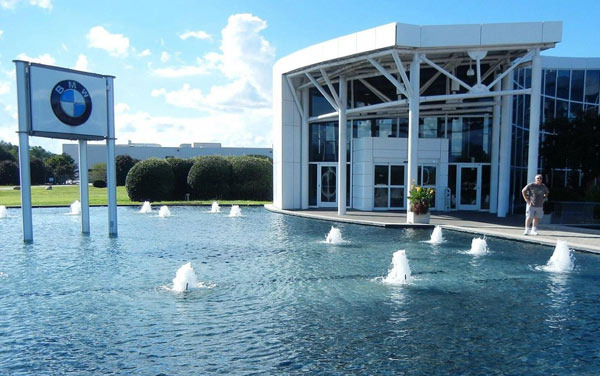
The arrival of BMW has completely transformed the local economy. Surrounding it, parts suppliers have sprung up, along with restaurants, accommodations, logistics, and educational facilities. What was once a quiet rural area has now become a city where advanced technology and global industry move together. Local residents say, "BMW saved this place."
The structure of the factory is also interesting. It is designed in a 'spine structure' with several buildings extending like fingers from a central point, making it easy to expand and flexibly change production lines. In fact, BMW has a motto of "Perform while transform," allowing them to assemble traditional engine vehicles and electric cars on the same line. Recently, they have invested $1.7 billion to prepare for battery production facilities.
Another noteworthy point is the 'people-centered technical education.' BMW collaborates with local universities and technical schools to train skilled workers and operates its own training campus within the factory. It is not just a simple assembly plant, but a space where technology and talent grow together.
Visitors who tour the factory all say, "It was impressive that every car is made to order."
Instead of pre-made stock, each vehicle is precisely assembled according to the specifications desired by the customer. While robots assist with some tasks, the fine adjustments are still handled by human hands.
On one side of the factory, there is a visitor center and a mini museum, making it a popular spot for BMW fans.






 urbanmint |
 See South Carolina |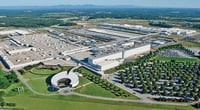

 Korean Mom |
  My NYC |
  moo moo |
  Mr Oh |
  forevergee |
  festival |
  manchester |
  constant |
  Leapfrog Move |
  vibranto |
  Tora Tora |
  yellowbutter |
  Dolly |
  US Embassy |
  NYC saladbar |
  Finding Superfoods |
  lightyear |
  song bang |
  vexomo |
  Indiana Jones |