
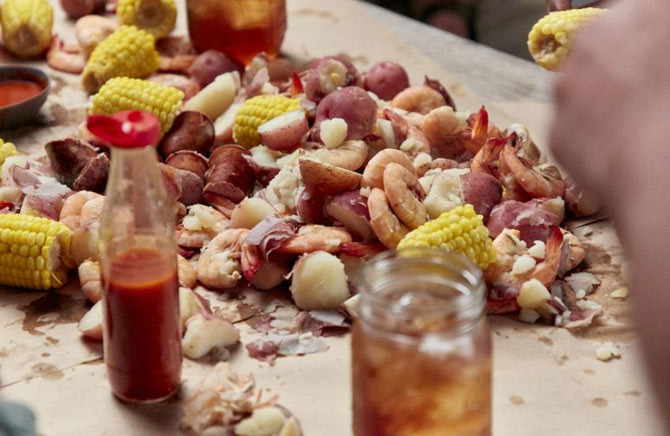
The food of the American South, 'Cajun', is characterized by a rich flavor of spicy and aromatic spices, butter, garlic, and seafood.
When thinking of Cajun, Louisiana usually comes to mind first. However, Cajun cuisine is also deeply rooted in South Carolina. While these two regions' Cajun foods may seem similar, they are definitely different. Although both are Southern, South Carolina's Cajun has a slightly softer and richer flavor profile.
First, let's look at the roots of Cajun. Cajun cuisine was created when Acadian immigrants, who were of French descent, were expelled from Canada in the 18th century and migrated to Louisiana.
They blended French cooking methods with Southern ingredients to create their own new dishes. Perhaps due to the muddy swamps, rivers, and hot, humid climate of Louisiana, Cajun food there is known for its strong spiciness and rich spices. In contrast, South Carolina's Cajun food can be seen as a more refined and smoother version of the original Louisiana style.
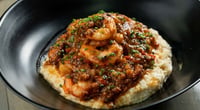
The first difference is the intensity of flavor. Louisiana-style Cajun uses plenty of cayenne pepper, paprika, thyme, oregano, and garlic powder, providing a strong stimulus that can make your mouth tingle. The combination of rich spices is a key attraction. On the other hand, South Carolina-style Cajun lowers this intensity a bit and instead adds butter, cream, and cheddar cheese to create a smoother balance. The emphasis is on a nutty and creamy sensation rather than spiciness. Therefore, it is sometimes referred to as 'southern-style Cajun'. Representative dishes include 'Cajun Shrimp & Grits', 'Blackened Catfish', and 'Cajun Chicken Alfredo'.
The second difference is the use of ingredients. Louisiana has an abundance of ingredients from the swamps and sea of the lower Mississippi River, using a variety of seafood such as crawfish, crab, shrimp, and alligator meat. In contrast, South Carolina focuses on fresh seafood from the Atlantic coast. In the Charleston and Hilton Head areas, shrimp, oysters, and blue crab are the main ingredients. In the inland areas, chicken, sausage, and pork are used with Cajun seasoning. Thus, while Louisiana's Cajun represents the 'strong taste of the swamps', South Carolina's Cajun can be described as the 'harmonious taste of the sea and farm'.
The third difference is the cooking method. Louisiana-style Cajun often features one-pot dishes. Dishes like 'Jambalaya' or 'Gumbo' involve putting all the ingredients together and simmering them, resulting in deep and hearty flavors. South Carolina-style Cajun is relatively simpler. It often involves sautéing or grilling, focusing on preserving the natural textures of the ingredients. For example, 'Cajun Shrimp & Grits' is finished with Cajun-seasoned shrimp on top of smooth corn grits. This style is much more modern and fits well with brunch culture.
The fourth difference is the character of the food culture. Louisiana's Cajun is more like 'party food'. It is food enjoyed with jazz, blues, and street festivals. It feels rough and free, with a strong aroma of spices. In contrast, South Carolina's Cajun has a more refined and 'restaurant food' feel. Due to the characteristics of the Southern coastal cities, it has been enhanced with elegant plating and clean flavors for tourists. Therefore, while Louisiana's Cajun is soulful and hot, South Carolina's Cajun is soft and sensuous.
The final difference is how it combines with local culture. South Carolina has a unique coastal culture known as Lowcountry. This area has a strong influence from the Gullah culture of African Americans, leading to a unique fusion of Cajun seasoning with local seafood dishes. Thus, South Carolina's Cajun has developed into a 'Cajun-Lowcountry fusion' cuisine that uses oysters, crabs, shrimp, and rice together, unlike the original.
Ultimately, while the Cajun foods of the two regions are similar, their characters are different. Louisiana expresses the passion of the South through the intensity of spices and rich stews, while South Carolina captures the softness and sophistication of the Southern coast.





 urbanmint |
 See South Carolina |
 Information on All Regions of the United States |
  Anytime Journey |
  Mrs. Duluth |
  jaxter |
  Atlanta Mama |
  Baguette Blog |
  US Embassy |
  Korean Mom |
  My NYC |
  moo moo |
  Mr Oh |
  forevergee |
  festival |
  manchester |
  constant |
  Leapfrog Move |
  vibranto |
  Tora Tora |
  yellowbutter |
  Dolly |
  NYC saladbar |