
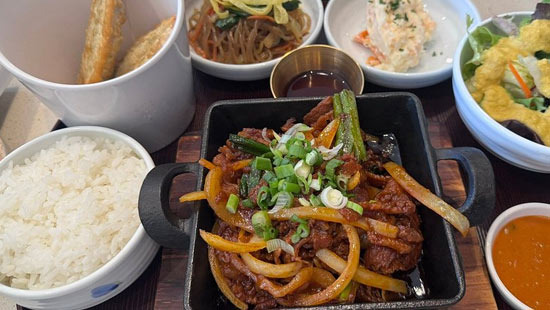
The Southeastern United States is known for its warm climate and rich local flavors in food.
People here view food as a culture that connects individuals. They cherish meals filled with warmth, gathered around the table sharing stories, and enjoying the deep flavors of long-cooked dishes. This Southern food culture pairs surprisingly well with Korean cuisine.
First, the biggest characteristic of Southern food is the 'slow food' philosophy. Meals are made slowly and with care. Iconic dishes like barbecue, grilled or smoked meats, long-simmered stews or bean dishes, and cornbread exemplify this. These cooking methods resemble the philosophy of Korean cuisine.
Korean food also involves lengthy cooking processes and a lot of care. For example, marinating ribs for over a day or fermenting kimchi for several days reflects the Southern emphasis on the 'taste of time' found in smoking meats or slowly simmering sauces.
The second reason is the 'culture of sharing.' In the South, sharing a table is very natural. Families or neighbors gather to cook in large pots and enjoy sharing meals. This is identical to the Korean dining culture, where instead of individual plates, various side dishes are placed in the center for everyone to share with chopsticks.
Thus, the popularity of Korean restaurants in the South is no coincidence. Korean-style barbecue, where diners grill their own meat, perfectly aligns with the Southern 'family-centered meal' culture. The atmosphere of gathering around a grill, laughing, and sharing food is exactly the dining style that people in this region enjoy.
Another commonality is the 'depth of flavor.' Southern food generally emphasizes strong spices and seasonings, focusing on rich flavors rather than greasiness. Spicy and sweet barbecue sauces, buttery dishes, and pickled sides all showcase a harmony of strong tastes. Korean cuisine also creates diverse flavors with seasonings like gochujang, soy sauce, garlic, and sesame oil.
For Southerners, Korean marinated ribs or bulgogi feel familiar. In fact, at Southern Korean restaurants, locals often say, "This is lighter and cleaner than our barbecue, but the flavor is much more complex."
Climatically, the two cultures also align well. Southern regions like South Carolina, Georgia, and Alabama have long, hot, and humid summers. In such climates, salty and spicy foods stimulate the appetite. Therefore, dishes like kimchi, doenjang jjigae, and spicy chicken pair surprisingly well. Additionally, the South is rich in seafood, making Korean dishes like haemul-tang, grilled fish, and fried shrimp harmonize well with local ingredients. In coastal cities like Charleston or Savannah, Korean seafood dishes are quite popular.
Culturally, Southerners place great importance on 'hand taste.' They often say that who made the food is more important than the recipe itself. This sentiment resonates with the 'care and heart' found in Korean cuisine. The belief that even a single head of kimchi or a spoonful of doenjang contains care is akin to the Southern 'grandma recipe' culture.
Ultimately, while the food cultures of the Southeastern United States and Korean cuisine were born on different continents, they share the same philosophy.





 urbanmint |
 Information on All Regions of the United States |
  See South Carolina |

 Watch Walker |
  Tonky |
  viroma |
  cookie |
  Live and that's it |
  Alright Twain |
  eatontown blog |
  HAWAII Korean Church News |
  Amore |
  linex |
  Balancework |
  laro90 |
  MEDBIO American Doctor Blog |
  SWAT TEAM BLK |
  DREAM BIG |
  frostbite |
  330 Forever My Love |
  El Dorado |
  dralix58 |
  Gorama Round |
  Skydiving |