
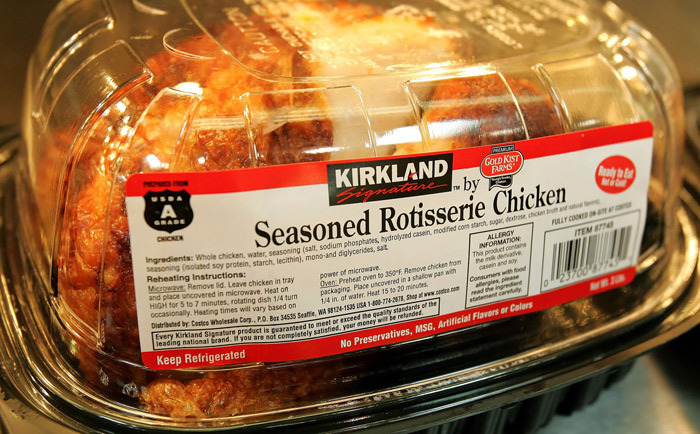
Rotisserie chicken is a term that directly translates the English "Rotisserie Chicken," where Rotisserie means 'spit-roasting.'
In other words, rotisserie chicken refers to chicken that is cooked by being skewered and rotated while being roasted.
This method allows the chicken to slowly rotate in the oven, receiving even heat, resulting in a crispy exterior and moist interior. Additionally, as the chicken rotates, its fat spreads evenly, giving it a rich and savory flavor even without special seasoning.
To discuss the history of rotisserie chicken, we should first look at the history of the cooking method 'rotisserie' rather than just 'chicken.'
Rotisserie is a term derived from French, meaning a method of roasting meat on a spit over a fire. In medieval European castles or noble mansions, rotisseries that turned meat in front of large fireplaces or ovens were common, initially operated by servants or boys who turned the spit by hand. Later, devices like water wheels or gear systems, and even mechanisms where dogs ran inside a wheel to turn the spit, were developed.
In 17th-18th century France, specialized rotisserie shops began to emerge, selling roasted chicken, duck, or lamb on a spit. This is the prototype of what we now commonly see as 'rotisserie chicken' in supermarkets today.
After the Industrial Revolution, automatic rotating ovens using coal, gas, and electricity were developed, spreading rotisserie cooking to homes and restaurants, and as chicken became an affordable and popular protein, 'rotisserie chicken' became a global food phenomenon.
In the United States, supermarkets began competitively selling rotisserie chicken from the late 20th century.
Especially after the 1990s, it gained popularity as an "affordable and convenient meal" in large supermarkets and warehouse stores, becoming a staple item in almost all large grocery stores. Among them, Costco's $4.99 rotisserie chicken has established itself as a 'loss leader' product, turning rotisserie chicken into a kind of cultural icon.
In summary, rotisserie chicken can be easily understood as the evolution from medieval European noble oven cooking → French rotisserie specialty shops → popularization after the Industrial Revolution → convenient meals in 20th-century supermarkets → spit-roasted whole chicken.








 Weekend Movie Blog |
 Beauty, Health, Lifestyle Blog |
 coloradoman |
 Superman Cat Blog |
 Noodle Noodle |
  Cherokee Rose |
  Kor. Master |
  Holey Moley |
  Conflite Teacher |
  Hodong Prince Over Flex |
  Mist inn |
  citrus pop |
  Onion Ring |
  phoenixia |
  viewtop |
  loverun |
  Kim Do Sun |
  SEVEN SEVEN |
  yentra |
  Make My Day |
  Victory 1988 |
  Tonky |
  viroma |
  cookie |
  Live and that's it |