

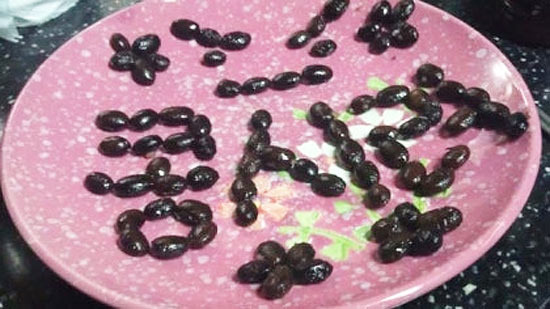
In Korea, bean rice often leaves many people with a kind of 'unpleasant memory' image.
Just the fact that beans are mixed with rice makes it seem dry and unappetizing, especially due to childhood experiences of being forced to eat it during school lunch inspections or military meals, leading to the perception that "bean rice = punishment food."
Moreover, the expression "eating bean rice" can also mean serving time in prison, which has contributed to the negative connotation of the term itself.
Why has this image formed? Historically, bean rice was used as a substitute during times when rice was scarce in Korea.
During the Japanese occupation and the poverty after the Korean War, when it was hard to eat rice freely, people mixed barley, millet, corn, and beans to cook rice.
People regarded white rice as the best food, and if beans were mixed in, it was often stigmatized as 'food from a poor household.'
As a food symbolizing poverty, it is natural that younger generations developed a sense of aversion to it.
Additionally, the fact that prison meals mainly consisted of bean rice further solidified its negative image. The memories of being forced to eat it instead of white rice, combined with the socially stigmatized expression, led bean rice to have a long-standing 'bad image.'
However, contrary to this image, bean rice is an incredibly beneficial food from a health perspective.
First of all, beans are a powerhouse of protein. While rice is mainly carbohydrates that quickly raise blood sugar and lead to quick hunger, beans are rich in protein and dietary fiber, keeping you full for a longer time.
In particular, the amino acid compositions of rice and beans complement each other, so when eaten together, the protein nutritional value significantly increases. It's not just about filling your stomach; it's about consuming high-quality protein necessary for building muscles and cells.
Moreover, beans contain a component called isoflavones, known as plant-based estrogen. This helps prevent osteoporosis in women and maintain hormonal balance, positively affecting cardiovascular health in men.
It helps lower blood cholesterol and prevent arteriosclerosis. Additionally, the unsaturated fatty acids abundant in beans help keep blood vessels clean. Thus, it is a much more 'health-oriented meal' compared to carbohydrate-heavy white rice.
In terms of dietary fiber, bean rice is excellent.
The fiber in beans promotes bowel movement and helps prevent constipation, and it raises blood sugar slowly, which is beneficial for diabetes management.
In fact, white rice has a high glycemic index, which is not good for diabetics, but mixing in beans lowers the overall blood sugar response. It's also a great choice for those wanting to lose weight, as it keeps you full longer and helps regulate calories, reducing the risk of overeating.
Another interesting point is that recently, bean rice is being reinterpreted as a 'health food.' In the past, it was strongly perceived as "food from a poor household," but now, with growing interest in well-being and longevity, more people are intentionally seeking out bean rice.
Especially among those over 50, research has shown that the protein and antioxidant components in beans are good for preventing aging and cardiovascular diseases, leading to a renewed focus on bean rice in home-cooked meals and restaurant menus.
Even among younger generations, there is a growing perception that "mixed grain rice, especially bean rice, is more satisfying than white rice."
In summary, while bean rice has historically been associated with poverty and deprivation, and even as a symbol of prison, it can truly be considered a 'superfood combination' from a health perspective.
The combination of rice and beans complements protein and nutrients, excels in managing blood sugar and cholesterol, and provides satiety and gut health, making it an ideal diet.
As times change, bean rice is no longer seen as 'unpleasant food,' but rather is being reevaluated as a meal intentionally chosen for health.
So, there's no need to shy away from bean rice just because of childhood memories of being forced to eat it.
In fact, when you think about it, this bean rice might be the food we should enjoy again for a healthy old age and a vibrant life.







 neroyo |
 nivex85 |
 Old English |
 nixxon |
 LIZ Legal Information Blog |
 Cali M Law Group |

 Various Knowledge and Information in the USA |

 U.S. Weather Bureau News |
  manchester |
  constant |
  Leapfrog Move |
  vibranto |
  Tora Tora |
  yellowbutter |
  Dolly |
  US Embassy |
  NYC saladbar |
  Finding Superfoods |
  lightyear |
  song bang |
  vexomo |
  Indiana Jones |
  meloncat |
  novapixel |
  mortrix |
  Esther 1983 |
  fortbliss |
  Moscow Kim |