

We have learned that taxes imposed by the state should be fair.
However, the reality we see and hear in the field of taxation is the exact opposite. Especially these days, when comparing South Korea's comprehensive real estate tax (property tax) and the U.S. inheritance tax system, one cannot help but feel skeptical about 'who the taxes are for.'
In South Korea, when real estate prices rise, taxes are raised first. It feels as if they are punishing you for making a profit. The comprehensive real estate tax is a prime example of this. Even for a single household with one home, if the assessed value exceeds a certain amount, they face heavy taxation, and especially for multiple homeowners, the tax burden is almost like a tax bomb. The government wraps this up as 'wealth redistribution,' but in reality, it is merely a band-aid solution trying to substitute tax for speculation suppression. Even that changes with political winds, making predictability nearly zero.
What about the United States? It is true that there is an inheritance tax.
However, the exemption limit for inheritance tax is a whopping $13.2 million per person (as of 2024).
If combined with a spouse, there is no inheritance tax up to about $26.4 million.
In other words, you can transfer up to 3.5 billion won to your children without paying a single penny in taxes. And while a reduction in the limit is expected starting in 2026, high-income earners have already set up trusts and adjusted their gifting schedules to take advantage of this loophole. In contrast, those in the middle class and below spend their days just trying to file their taxes, let alone hire a lawyer to write their wills.
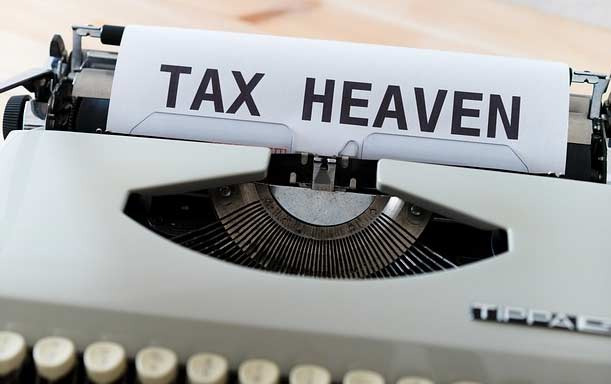
The problem does not end here. When crossing borders, even worse things happen. Regions known as tax havens—such as the Cayman Islands, Bermuda, Panama, Luxembourg, and Ireland—are laundering centers for the top 0.01% of wealth in the world and corporate tax shelters.
Companies like Amazon, Google, and Facebook set up corporations in these regions to pay minimal taxes on their massive profits. This is referred to as 'legal tax avoidance.' If a tax audit occurs, accounting firms and lawyers step in to defend, saying, "This is legitimate under international law." Tax justice is buried behind legal provisions, and ordinary people do not even have the time to understand those laws.
Ultimately, the biggest victims are the common people. When they receive their salaries, social insurance and income taxes are automatically deducted, and even owning a single home comes with property taxes, comprehensive real estate taxes, and acquisition taxes.
To send one child to college, they must pay tuition along with indirect taxes.
In the midst of this, the campaign slogan "Let's pay taxes for a fair society" feels hollow. Some hide behind paper companies in island nations, while others lose sleep worrying about taxes due to rising home prices.
At this point, one wonders whether taxes are merely a means of funding public resources or a measure of obedience to the system. In reality, the primary reason ordinary people pay taxes is out of fear. If they do not pay taxes, they face seizure, delinquency, and criminal penalties.
On the other hand, high-net-worth individuals try to avoid paying taxes through 'planning.' This so-called planning is just a disguise for avoidance. So, whose life is rational, and whose life is honest?
In the end, taxes are a matter of conscience, but also a matter of information and assets.
Some believe that 'paying taxes is patriotic,' while others think 'paying taxes is foolish.' The funny thing is, both groups are necessary for the state.
The former is the foundation of national finances, while the latter serves as experimental subjects studying the loopholes in laws and systems.
Talking about fairness within this system may be ironic.
I believe taxes are a good example of whose side this society is on.
When you look at the reality, it is usually only the common people who are reflected, while the true big players remain unseen.
For ordinary people who struggle to learn about tax avoidance, tax havens become a pie in the sky.







 moo moo |
 ultron78 |
 garlic bread |
 Sugar Cream Door Bulletproof Noodles |
 urbanmint |
 Piano Teacher Blog |
 Kkikki Ppappa Shout Out Loud |
 Coco and Lulu |
 U.S. Weather Bureau News |
 American Airlines Mileage |
  US Embassy |
  Korean Mom |
  My NYC |
  Mr Oh |
  forevergee |
  festival |
  manchester |
  constant |
  Leapfrog Move |
  vibranto |
  Tora Tora |
  yellowbutter |
  Dolly |
  NYC saladbar |
  Finding Superfoods |
  lightyear |
  song bang |
  vexomo |
  Indiana Jones |