
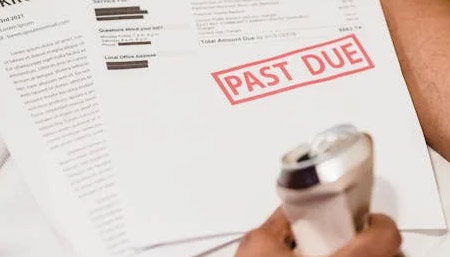
These days, you can't miss the news about the increasing number of bankruptcy filings by individuals and businesses in the U.S. While there is much talk about economic recovery, the reality on the ground feels very different for those affected. When you manage a household, it becomes clear: money is not circulating. Prices are rising, interest rates are climbing, and there is less and less room to breathe.
The biggest reason is interest rates. The Federal Reserve has raised rates too quickly over the past few years. This was done in an effort to control inflation, but the burden has ultimately fallen on consumers and businesses. With rising mortgage rates, credit card interest, and student loan rates, the monthly expenses have noticeably increased. Small businesses are facing even more severe challenges. It's hard to borrow money, and even when they do, the interest is unmanageable. As a result, more businesses are struggling to survive and ultimately heading toward bankruptcy.
The situation post-COVID also plays a role. During the pandemic, government support provided a temporary relief, but once that support ended, the harsh reality set in. With the end of PPP loans and various support programs, self-employed individuals and small businesses suddenly found themselves bearing all the burdens alone. Moreover, sectors like retail and restaurants, which rely on in-person services, have not seen a return to pre-pandemic sales levels due to changes in consumer behavior.
Inflation continues to be a significant obstacle. You can feel it when you go grocery shopping. The amount you can buy with the same money is decreasing. People are only purchasing essentials and cutting back on dining out and shopping. Consequently, store sales are declining, while businesses face rising labor and raw material costs, making it increasingly difficult to stay afloat.
The financial environment has also tightened. Banks are conducting loan assessments much more stringently. Individuals with high debt or businesses with unstable performance find it hard to even get through the door. Meanwhile, credit card debt has reached an all-time high. When people start relying on credit cards to cover living expenses, they eventually reach a point where it becomes unmanageable. That point leads to bankruptcy.
International circumstances also contribute to the issue. Wars, political conflicts, and supply chain problems have driven up import prices, increasing the cost burden on businesses. Goods are becoming more expensive, sales are becoming harder, and the structure is becoming tangled.
Additionally, debts that were deferred during the pandemic are now coming due all at once. With mortgage repayments resuming, personal bankruptcies are rising, and commercial real estate rents have not recovered, causing real estate-related businesses to falter.
Experts suggest that this trend is unlikely to change easily in the near future. It will be difficult to significantly lower interest rates right away, and economic recovery may take longer than expected, with consumer sentiment likely to remain depressed. Ultimately, the current increase in bankruptcies in the U.S. is not just a simple recession; it is a structural signal of multiple issues converging at once. The effectiveness of future policies will determine whether this situation worsens or if there is any relief ahead.








 Weekend Movie Blog |
 Beauty, Health, Lifestyle Blog |
 coloradoman |
 Superman Cat Blog |
 Noodle Noodle |
  Tonky |
  viroma |
  cookie |
  Live and that's it |
  Alright Twain |
  eatontown blog |
  HAWAII Korean Church News |
  Amore |
  linex |
  Balancework |
  laro90 |
  MEDBIO American Doctor Blog |
  SWAT TEAM BLK |
  DREAM BIG |
  frostbite |
  330 Forever My Love |
  El Dorado |
  dralix58 |
  Gorama Round |
  Skydiving |