

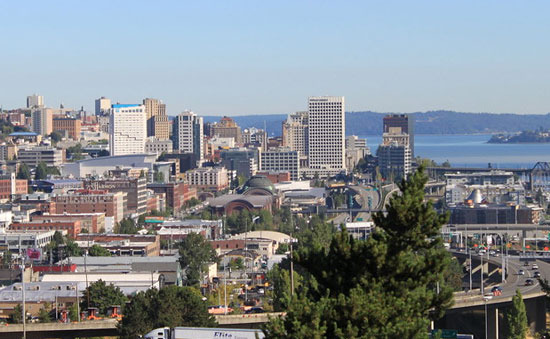
Today, I would like to talk about Tacoma, the second city in Washington State and a long-time partner of Seattle.
From the perspective of someone who has consistently observed the Tacoma real estate market, Tacoma is shedding its old image as an industrial city and is now one of the cities undergoing the fastest transformation. I will summarize the real estate trends in Tacoma based on three pillars: homes, rentals, and land.
First, let's look at the housing market. Until a few years ago, Tacoma was close to being a bedroom community for those who could not afford Seattle's housing prices. However, the atmosphere has completely changed now. With housing prices in Seattle and Bellevue reaching unaffordable levels, Tacoma still maintains a relatively low entry barrier.
As of 2026, the median price of single-family homes is about 60-70% of Seattle's, which continues to attract first-time homebuyers and young professionals. However, there are significant regional disparities. Areas like North Tacoma and the Proctor District, which are older affluent neighborhoods, still form a luxury housing market, while South Tacoma has much development potential, leading to particularly active investment demand.
The rental market is Tacoma's strongest asset. Above all, the presence of the large military base Joint Base Lewis-McChord nearby provides stable rental demand. Thanks to the continuous movement of soldiers and their families, vacancy rates are very low, and rental prices are steadily rising. Additionally, the ongoing improvements in transportation infrastructure, such as the light rail extension connecting to Seattle and the Sounder commuter train, are rapidly bringing commuting demand from Seattle to Tacoma. In recent years, modern high-rise apartments and condos have been built in downtown Tacoma, causing the rental prices for one-bedroom and two-bedroom units to reach new highs every year.
Ultimately, the last battleground in real estate investment is land. Tacoma still has many undeveloped or redevelopment-needed sites compared to Seattle, making it a very interesting city from a long-term investment perspective. In particular, the city of Tacoma is actively promoting zoning changes to address the housing shortage.
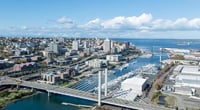
As more areas allow duplexes or triplexes on existing single-family home lots, the investment method of purchasing old homes and redeveloping them into multi-family housing is rapidly spreading. Furthermore, the waterfront development centered around Ruston Way is redefining the value of Tacoma land. As the Point Ruston project successfully establishes itself, the prices of nearby commercial and residential properties are rising together.
If you are considering Tacoma real estate, there are a few things you must check. The atmosphere of the neighborhood can change significantly with just one block difference. It is essential to explore both day and night to personally verify safety and living conditions. Additionally, while Washington State has no state income tax, it has a high proportion of property tax and sales tax, so the tax structure must be accurately reflected in the operating profit calculations. A strategy focused on stable rental income and long-term value appreciation due to urban growth is particularly well-suited for this market, rather than short-term capital gains.
Tacoma is no longer in Seattle's shadow. This city, which embraces the sea of Puget Sound and the scenery of Mount Rainier, has three elements: reasonable living costs, strong rental demand, and a development market with growth potential, making it a rare balanced real estate market in the West.




 moo moo |
 ultron78 |
 garlic bread |
 Sugar Cream Door Bulletproof Noodles |
 urbanmint |
 horizon |
 |
| 
 Ari Songhan American Immigration Life |
 Taco Seattle |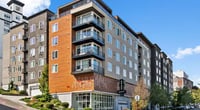
 victory |
  round1 |
  Way to easy |
  musicque |
  road98 |
  Churros Train Conductor |
  gleeful |
  Burbank Lee |
  Olivia's Blog |
  Bushing Around Life |
  Active |
  Cherokee Rose |
  Kor. Master |
  Holey Moley |
  Conflite Teacher |
  Hodong Prince Over Flex |
  Mist inn |
  citrus pop |
  Onion Ring |
  phoenixia |
  viewtop |