
When I tell friends in Korea that I live in Texas, the response is usually predictable.
"Wow, the place with cowboys?" or "It must be really hot there!" It's one of those two.
To be honest, they're not wrong. But Texas is much larger and more diverse than you might think.
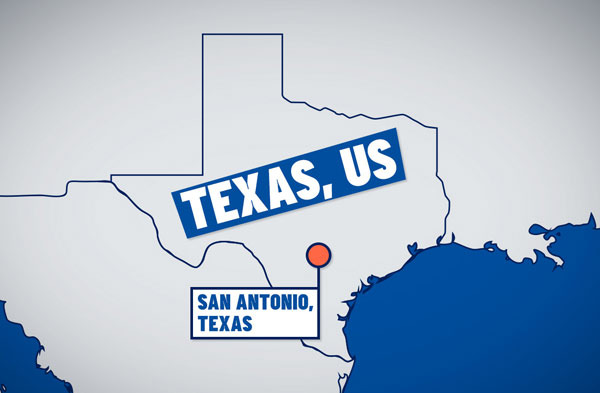
What I've realized while living here is that Texas is not just a single state in the U.S.
On the map, it may just look like a line drawn, but in reality, it consists of several regions with different climates, landscapes, and atmospheres.
Let's look at the numbers. Texas is really big.
The area of Texas is about 700,000 square kilometers.
South Korea is about 100,000 square kilometers, so it's roughly seven times larger.
You could fit the entire Korean Peninsula in it and still have more than three times the space left.
Some people might remember the massive power outage we experienced that winter in 2021.
On the other hand, if you go further south, it's a completely different world.
The Rio Grande Valley areas like Brownsville and McAllen have a subtropical climate. There are palm trees, and there are days in winter when you can wear short sleeves.
Geographically, it's right next to Mexico, and culturally, it's essentially borderlands.
West El Paso is different again. It's a complete desert.
During the day, it can reach 40 degrees, and at night, the temperature drops significantly, typical of a desert climate.
The cowboy movie scenery that Koreans imagine is actually closer to this area.
Having lived in Dallas, San Antonio, where I currently reside, is located slightly south in central Texas.
It's about a 4-5 hour drive from Dallas, 3 hours from Houston, and an hour and a half from Austin.
In terms of climate, it's neither a desert nor a completely humid area, but somewhere in between.
It's true that the perceived temperature can rise close to 40 degrees in July and August. However, it's not as suffocatingly humid as Houston,
nor is it as dry as El Paso, where your lips crack.
It's a pretty balanced place for someone experiencing Texas for the first time.
Just 30 minutes north, you enter Hill Country.
Hills, rocky mountains, and trees. If you take a drive to Fredericksburg on the weekend, it suddenly feels like a German countryside village.
This is one of the reasons why Texas is interesting.
"Since it's the same state, it must be a quick trip, right?" — This is a total misconception.
It takes 9 hours to drive from San Antonio to El Paso.
That's within the same Texas. It's the distance of making a round trip between Seoul and Busan twice.
I've seen a few people plan a road trip without knowing this and end up confused halfway through.
There's a saying among Texans.
"Where you live in Texas matters; just saying you live in Texas means nothing."
This is actually true. People from Dallas and El Paso have completely different living environments, climates, and cultures.
It's more accurate to think of it as a structure made up of several small countries united together.
This is an identity that Texans themselves enjoy. "We're not just a state. We're Texas."
For Koreans, Texas is still perceived only through the stereotypes of cowboys and heat.
But in reality, Texas is not a place you can understand just by visiting. You have to live here to see it gradually unfold.





 Rice Shop Uncle BLOG |
 My Town My Way Blog |
 Arizona AZ Cowboy |
 Valley Hong |
 Mr Oh |
 Helpful Life Stories |
 My Antonio |

 History Repeats Itself |
 Key spots |
  berrypup |
  Yo Lock Me Up |
  Oh my Julia |
  bibigoo |
  silents |
  Team Korea Psychoanalysis Research |
  North Dakota Ragdoll Cat Owner |
  El Dorado |
  Cap Com |
  Trot King News |
  Blondee |
  some fame |
  rapidfire |
  walnutbo |
  Shinbaram Dr. Blog |
  breaddough |
  Michigan Enthusiast |
  Only Dentalbay |
  postcard |