

These days, when watching the news in the U.S., one might wonder if there's any president who loves lawsuits as much as Donald Trump.
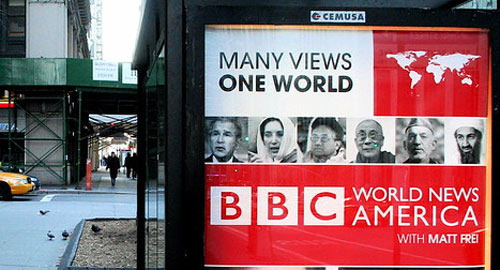
This time, the opponent is the British Broadcasting Corporation (BBC). To summarize the situation, Trump filed a lawsuit in December of last year in a Florida federal court over a documentary aired by the BBC titled Trump: A Second Chance? ahead of the 2024 election. The claim for damages is a staggering $10 billion.
That includes $5 billion for defamation and $5 billion for unfair trade practices. That's about the annual budget of a small country.
The crux of the lawsuit revolves around the editing of a speech given on January 6, 2021. On that day, Trump spoke to his supporters in Washington, and afterward, some of those supporters stormed the Capitol. The BBC documentary edited this speech, stitching together three statements from two parts that were nearly an hour apart, making it appear as if Trump incited his supporters to march together and "fight like hell."
The issue is that the original speech included a statement urging peaceful protest, which was completely cut out. This editing sparked controversy, leading the BBC to issue an official apology to Trump, and as a result, the CEO and news director of the BBC resigned. Nevertheless, the BBC maintains that it did not defame Trump.
According to documents submitted to the Miami federal court this past Monday, the BBC plans to file a motion to dismiss the lawsuit on March 17.
The reasons are quite interesting. First, they argue that the documentary was neither produced, aired, nor distributed in Florida, so the Florida court has no jurisdiction. Second, they claim that the assertion that the BritBox streaming service provided this documentary in the U.S. is not true. Third, they argue that Trump has failed to prove that the BBC aired the documentary with malicious intent to harm him.
BBC lawyer Charles Tobin made an even more interesting point. He stated that while Trump claims to have been harmed by the documentary, he won a landslide victory in the 2024 election, particularly winning Florida by a significant margin of 13 percentage points. His performance was even better than in 2016 or 2020. So, the question is, what actual harm did he suffer?
Moreover, the documentary aired after Trump had already been indicted by a federal grand jury for attempting to overturn the results of the 2020 election. The indictment included allegations that Trump directed the crowd to go to the Capitol. In this context, it's hard to argue that a single BBC documentary dealt a greater blow to Trump's reputation.
The BBC also made another important request. They asked to suspend the discovery process until a decision is made on the motion to dismiss. Discovery involves submitting all emails, internal documents, and research materials, which can be costly and burdensome. If the case is dismissed, all of that would be unnecessary, so they want to pause it in advance. If the lawsuit continues, the trial is set for 2027, which illustrates just how long U.S. lawsuits can drag on.
The BBC has stated that they will defend this case to the end but will not provide any additional comments. However, looking at the entire process, it reveals once again Trump's political style. When a political controversy arises, he tends to file a lawsuit before making any public statements, regardless of whether the opponent is CNN, The New York Times, or now the BBC.
For Korean Americans living in the U.S., this news might seem like just another current affairs article, but it actually involves significant issues intertwined with press freedom, political accountability, and American litigation culture. Yet, from a news-reading perspective, it feels like yet another epic lawsuit saga has begun, which is quite typical of Trump.







 El Dorado |
 lightyear |
 Moscow Kim |
 coloradoman |
 Montgomery Mom |
 xylora |
 wendra |
 Aura-Infused WACAM |
 Texas Migration Story |
 There Are Such Things in the World |
  Tonky |
  viroma |
  cookie |
  Live and that's it |
  Alright Twain |
  eatontown blog |
  HAWAII Korean Church News |
  Amore |
  linex |
  Balancework |
  laro90 |
  MEDBIO American Doctor Blog |
  SWAT TEAM BLK |
  DREAM BIG |
  frostbite |
  330 Forever My Love |
  dralix58 |
  Gorama Round |
  Skydiving |