

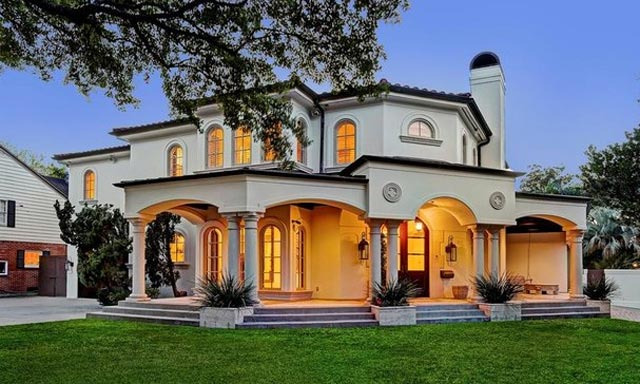
When thinking of affluent neighborhoods in Texas, one might picture luxurious mansions worth two to three million dollars, lined up in communities with spacious gardens.
However, living there reveals that buying an expensive house doesn't necessarily mean you're living in an 'affluent neighborhood.'
The true affluent areas are determined by the neighborhood's atmosphere, the quality of its residents, school districts, safety, and the overall quality of the community.
There are several places in Texas that are considered representative affluent neighborhoods.
These include West University Place near Houston, Highland Park north of Dallas, Southlake near Fort Worth, West Lake Hills in Austin, and The Dominion in San Antonio.
The commonality among these neighborhoods is that they are 'well-balanced.' They offer decent access to workplaces or downtown, have top-tier schools, and the streets are clean and quiet.
The roads are well-maintained, and it's safe to walk around at night.
This environment is consistently maintained because the residents have a strong sense of community management.
For example, the Memorial Villages near Houston are mostly self-governing, managing landscaping, safety, and waste collection on their own. While taxes and HOA fees are high, that money is used to maintain the neighborhood's quality.
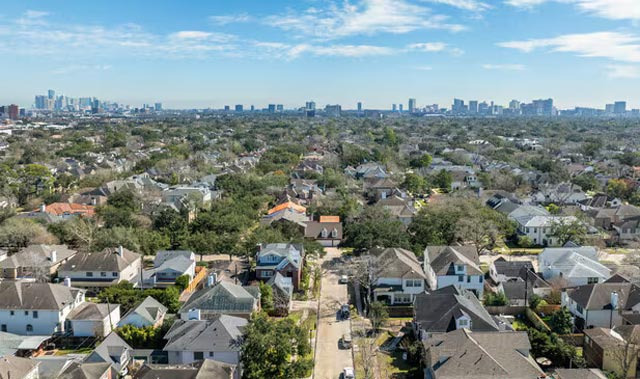
On the other hand, even if you buy an expensive house, if the surrounding neighbors or environment don't match, the feeling is different.
Sometimes, even in a neighborhood with two-million-dollar homes, there might be a barren field or old, poorly maintained buildings on the next block, creating a chaotic atmosphere.
Thus, living in an affluent neighborhood in Texas means more than just home prices; it includes the 'overall level of the neighborhood.'
Another important condition for an affluent neighborhood is the school district. Areas with good school districts naturally have higher educational levels among parents, and the atmosphere for children is different. This is also why housing prices rise and are maintained. Therefore, for families raising children, the criteria for an affluent neighborhood become the educational environment rather than just real estate value.
Some areas in Southlake or Plano are popular for this reason. In practical terms, affluent neighborhoods in Texas come with a significant cost of living. Property taxes are high, and maintenance fees or insurance premiums are also expensive. Even if you buy a house, you need to budget for property taxes, repair costs, pool or lawn maintenance, cleaning, and security, which can add up to fixed monthly expenses like rent.
So, simply having a lot of money doesn't mean you can live the lifestyle of a true affluent neighborhood.
True affluent living requires sustained financial comfort. Additionally, the character of affluent neighborhoods in Texas varies slightly by city.
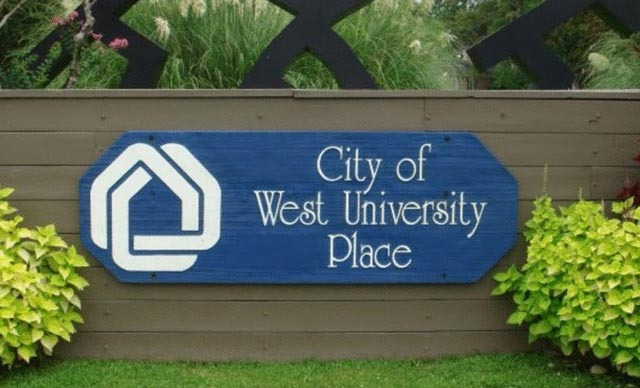
West University Place, often shortened to West U, located west of Houston, is one of the most notable affluent neighborhoods in Texas.
The characteristic of West U is that it is a small but independent city. Administratively, it is adjacent to downtown Houston but operates as a separate city (government). This means it has its own police and fire departments, city hall, and taxes are managed separately. As a result, safety is very good, and street management is thorough. Even at night, the roads are clean, and the streetlights are bright, allowing residents to walk safely.
The residents of this area are mostly high-income professionals such as doctors, lawyers, professors, and corporate executives. Consequently, the educational level is high, and there is a strong sense of community. Schools, including West University Elementary School, are among the top public schools in Houston, providing an excellent educational environment.
In contrast, while Highland Park in Dallas has a classic and conservative feel, Westlake Hills in Austin emphasizes nature and tranquility. River Oaks in Houston is a traditional upper-class neighborhood, home to many long-established wealthy families with a strong community network. These places have a 'subtle barrier' that makes it difficult for outsiders to integrate.
No matter how much money you have, blending into that culture is another challenge. In conclusion, affluent neighborhoods in Texas are not just areas filled with expensive homes. Home prices are merely a result, and within them lies the accumulated lifestyle, education, safety, and environmental management awareness of the residents over many years.
Therefore, living in a true affluent neighborhood means not just 'owning an expensive house' but 'living among people who can maintain that quality of life.' Ultimately, what matters more than home prices is the sense of stability and quality that the neighborhood provides, and how naturally I can fit in within it.





 xylora |
 Aura-Infused WACAM |
 wendra |

 Dallas Fort Worth DFW |
  manchester |
  constant |
  Leapfrog Move |
  vibranto |
  Tora Tora |
  yellowbutter |
  Dolly |
  US Embassy |
  NYC saladbar |
  Finding Superfoods |
  lightyear |
  song bang |
  vexomo |
  Indiana Jones |
  meloncat |
  novapixel |
  mortrix |
  Esther 1983 |
  fortbliss |
  Moscow Kim |