

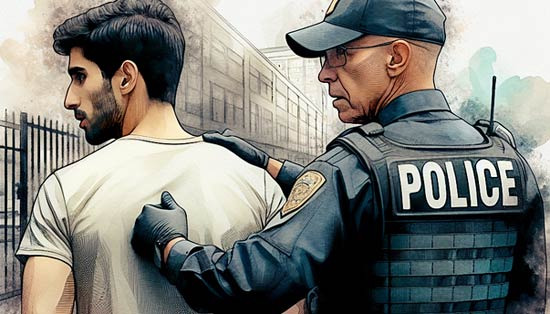
In 1992, I was thirty-seven.
The LA riots triggered by the Rodney King incident in late April that year left the deepest scars of my life.
My restaurant near the Olympics was doing well thanks to the large number of Korean students and the Korean community.
Then suddenly, when the riots broke out, I had to climb onto the roof of my store and stay up all night with a gun as part of a neighborhood watch.
What we were protecting was not just property. It contained our family's livelihood, the blood and sweat of our parents' generation, and the pride of the first generation of immigrants.
That day, the police did not come.
Even when we called, we only heard, "We cannot respond right now."
Taking advantage of that, looters appeared.
They were not just a simple outburst of anger.
They came in with shopping carts, stealing electronics, breaking into jewelry stores, and sweeping the shelves of pharmacies.
Some even drove trucks to smash store windows and loaded up cash registers and various electronics.
I cannot forgive them. No, I do not even want to forgive them.
The riots were not just a one-time event.
After 1992, LA burned again in 2020 due to the George Floyd incident.
And I felt the same anger then.
Under the name of civil rights movements, looting was justified once again.
Not all looters were shouting for social justice.
Rather, most were opportunists and mere thieves taking advantage of the chaos.
Some say.
"Looting is a reflection of structural inequality in society."
"Their anger must be understood."
But I do not agree with that logic.
The truly angry people try to protect their community.
The truly wronged do not destroy their neighbors' homes.
No matter how wronged you feel, you do not have the right to destroy someone else's store and steal what is inside.
I still remember the colleagues I formed a neighborhood watch with on Western Avenue.
Mr. Kim was shot and injured in the arm, and Mr. Jung had to start over after his store was completely burned down.
Yet we upheld the law until the end.
Now, more than 30 years later, I still live as a U.S. citizen, pay taxes, raise two sons, and see my grandchildren.But a deep regret still lingers in my heart.
In the news, the instigators of the riots are packaged as "social activists," and the looters are romanticized as "oppressed voices."
But who were the victims?
The merchants of Koreatown, the small restaurants on the street, the places where immigrants made their living burned that day.
What justice, what freedom took away the blood and sweat of small business owners like us?
Even now, every April, the smell of that day when the riots broke out still lingers in my nostrils.
I cannot forget the smell of burning tires and the anxious night air filled with cigarette smoke.
So I still hate them.
The looters, those who habitually participate in riots and film it for fun to post on social media.
When they broke the store windows, what they took was not just refrigerators or gold, but our trust in life.
The belief in law and order, the hope for social justice, the sense of community—all shattered that day.
Now I no longer have the strength to climb onto the roof with a gun, but the anger from that time still lives within me.
The riots are not a thing of the past.It is still a living memory of warning.
And I will not erase that memory.




 Korean Mom |
 novapixel |
 Peter Pan Pet |
 horse |
 Sunset Oregon |
 Weekend Movie Blog |
 Beauty, Health, Lifestyle Blog |
 coloradoman |
 Superman Cat Blog |
 US Embassy |
  My NYC |
  moo moo |
  Mr Oh |
  forevergee |
  festival |
  manchester |
  constant |
  Leapfrog Move |
  vibranto |
  Tora Tora |
  yellowbutter |
  Dolly |
  NYC saladbar |
  Finding Superfoods |
  lightyear |
  song bang |
  vexomo |
  Indiana Jones |