

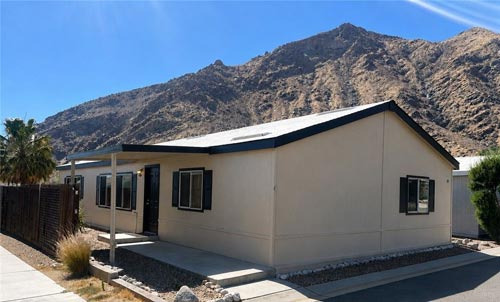
If you are looking for a second home or a place to live after retirement in Palm Springs, the first thing you will likely check is the home prices.
I've opened listing sites and thought, "This looks better than I expected," only to be shocked after crunching the numbers. While the home prices may seem reasonable at first glance, the actual monthly costs can be significantly higher than anticipated.
As of 2026, the median home price in Palm Springs is around $660,000. Compared to LA or Orange County, it seems a bit more affordable, but it's certainly not a cheap area.
For example, let's assume you buy a house for $660,000. If you make a 20% down payment, you'll need about $132,000, and if you borrow the remaining $528,000 with a 30-year fixed mortgage, your principal and interest payment will be about $3,400 per month. When you add property taxes and homeowners insurance, the monthly housing cost often exceeds $4,200.
To comfortably maintain a home at this price, calculations based on the DTI (debt-to-income) ratio suggest that an annual income of around $180,000 is necessary. However, the actual median household income in the Palm Springs area is about $70,000, which shows a significant gap.
You might wonder, "Who on earth can afford such homes?" There's a reason for this. Palm Springs is not primarily a city where regular workers live; it attracts retirees, second-home buyers, winter vacationers, and consistent demand from investors. This leads to home prices being maintained at a high level compared to local incomes.
Especially for Korean families, even with dual incomes for children's education or jobs, it can be challenging to exceed an annual income of $180,000. But don't feel too pressured. You don't have to start with a single-family home. Starting with a condo or townhome, or preparing a larger down payment to reduce loan burdens, are also realistic options.
Another point is that Palm Springs is heavily influenced by the seasons. While many people flock there in winter, transactions tend to slow down in summer, so waiting until the off-season to compare prices can be a good strategy. You might find that negotiations go better than expected.
Ultimately, it seems more important to consider whether the home is within our monthly budget rather than just its price. Choosing a home that you can comfortably live in for a long time is often much more satisfying than stretching yourself to buy a beautiful house.
Especially for those preparing for retirement, I recommend calculating future pensions or investment returns and setting a budget that fits your situation before looking for a home. This way, you won't feel rushed, and you'll have much less to regret later on.
 AUTOKOR
 goldenroadtraveler1919







 moo moo |
 ultron78 |
 garlic bread |
 Sugar Cream Door Bulletproof Noodles |
 urbanmint |
 USA Hyundai Kia |
 Palm 1000 |
 US Regional Information Local News |
 Star Blog |
 Where is a really nice neighborhood? |
  Real Estate |
  Forest Gump |
  Real Estate Investment Korean American |
  Dollydori, Lover of Movies |
  dmzline |
  travelo |
  American Food Information & Calories |
  Splendid Mission |
  sparklingo |
  Watch Walker |
  Soy Angelino |
  autumn |
  K-POP TV News |
  cortiva6 |
  Nevada Teppanyaki |
  aerion99 |
  Golado |
  Maximum Pro |
  Joyce blog |