
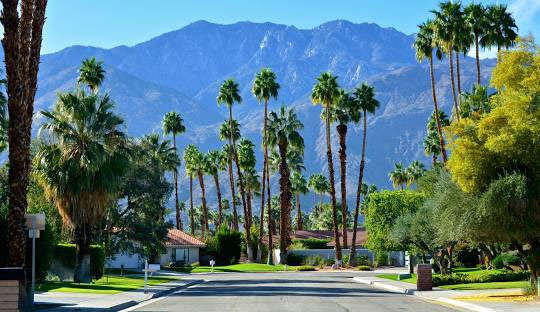
Palm Springs, located in Southern California, is a popular resort city known for its unique history and culture.
This city has undergone many changes and growth since the early 20th century, establishing itself as a famous tourist destination, particularly known for its image as a modern resort city. The history of Palm Springs is filled with fascinating stories that blend natural elements and human development.
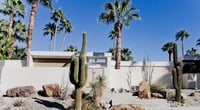
The Palm Springs area was originally the land of the Cahuilla tribe. The Cahuilla people are indigenous to this region, having lived in the desert for thousands of years, and they made good use of the hot springs and natural environment here. Palm Springs was one of their main living areas, and the hot springs in this region played an important role for the tribe. In particular, the name 'Palm Springs' is derived from the many palm trees that grow naturally in the area.
In the mid-19th century, as exploration and settlement westward began, the Palm Springs area started to attract the attention of Westerners. However, significant development did not occur until the early 20th century.
Palm Springs began to gain attention in the early 1900s. The area is famous for its warm climate and hot springs, and especially during the winter, many people began to visit for health reasons. Palm Springs became a resort destination for the elite and celebrities from the Eastern and Midwestern United States.
From the 1910s to the 1920s, Palm Springs gradually began to earn its reputation as a tourist destination. During this time, natural resources, including hot springs, became known to the public, and hotels and resorts began to emerge. Additionally, the area's convenient location and beautiful natural environment promoted the city's development.
The true fame of Palm Springs came from its relationship with Hollywood. Starting in the 1930s, stars from the Hollywood film industry frequently visited, and Palm Springs quickly became famous. At that time, movie stars and directors escaped the hustle and bustle of Hollywood to relax and enjoy leisurely time here.
As the relationship with Hollywood deepened, Palm Springs gradually acquired the image of a 'celebrity resort.' Notable examples include famous personalities like actress Rita Hayworth and Frank Sinatra, who built homes here, further enhancing the region's reputation. As a result, Palm Springs established itself as a city for luxury resorts and wealthy individuals.
From the 1950s to the 1960s, Palm Springs experienced architectural changes as modernism became popular. During this period, many resorts and homes in the city were built with modern and clean designs. In particular, many buildings influenced by architects Richard Neutra and Frank Lloyd Wright emerged.
During this time, Palm Springs was also referred to as the 'capital of modern architecture' in the United States. Many people visited to appreciate the architecture, relax, and enjoy the culture. The buildings from this period remain an important cultural heritage of Palm Springs today.
Palm Springs continues to be a popular tourist destination in the late 20th and early 21st centuries, especially during the winter when many tourists visit. The city welcomes many visitors from around the world due to its beautiful mountainous terrain and unique culture, as well as its historical architecture.
Additionally, Palm Springs hosts various cultural events and festivals every year. Among them, the Palm Springs International Film Festival is an important event where film industry professionals and movie enthusiasts gather, holding great significance for filmmakers worldwide.
In recent years, Palm Springs has been strengthening its image as a sustainable tourist destination, emphasizing eco-friendly resorts and hotels, as well as various nature-friendly activities. From its origins as a native homeland to a site visited by Hollywood stars, Palm Springs has developed into a unique city where modern architecture and resort culture converge, continuing to be a place of rest and inspiration for many people.



 candytip |
 Gold Bar |
 Pirate Ship Popcorn Maker |
 Montgomery Mom |
 Anjollinya Blog |
 Star Blog |

 Sarah's Blog |
 USA Hyundai Kia |
  Korean Mom |
  My NYC |
  moo moo |
  Mr Oh |
  forevergee |
  festival |
  manchester |
  constant |
  Leapfrog Move |
  vibranto |
  Tora Tora |
  yellowbutter |
  Dolly |
  US Embassy |
  NYC saladbar |
  Finding Superfoods |
  lightyear |
  song bang |
  vexomo |
  Indiana Jones |