

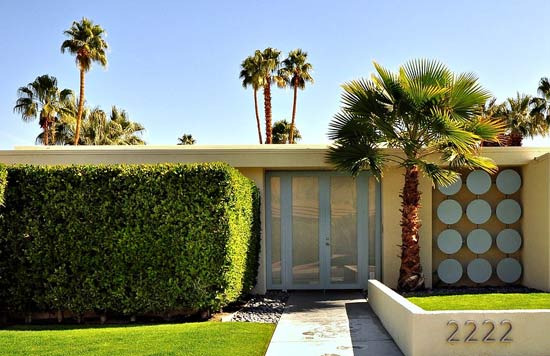
The most realistic question for those considering a retirement move to Palm Springs is ultimately about money.
No matter how appealing the warm sunshine and poolside living may seem, you need to calculate how much it costs to maintain real estate before making the move to avoid regrets. While housing prices in Palm Springs are generally more affordable compared to LA or Orange County, the maintenance costs can be more significant due to the desert's characteristics.
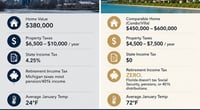
The first cost to consider is property tax. In California, it's about 1% of the home value, so for an $800,000 home, you can expect to pay around $8,000 annually. This can increase with Melrose or special taxes.
The second cost is HOA fees. Palm Springs has a high percentage of gated and golf communities, making HOAs common. Fees can range from $200 a month for basic communities to $500-$800 for upscale golf communities. These fees cover pool maintenance, landscaping, security, and community center upkeep. If you choose a standard single-family home without an HOA, exterior maintenance falls entirely on the homeowner.
Due to the desert environment, maintaining grass can be challenging, so many opt for artificial turf or rock landscaping. Palm tree trimming or exterior maintenance can cost around $300-$800 annually. The biggest variable is the pool. Retirees in Palm Springs love having a pool in their backyard, but it comes with costs. Pool cleaning services can range from $100-$150 a month, and with chemical management, it can go up to $200. If there are issues with filters or equipment, costs can run into the hundreds or thousands.
In the summer, air conditioning usage spikes, leading to higher electricity bills, with many reporting monthly costs of $300-$500 during peak summer. Installing solar panels to reduce this burden is a common choice.
Water costs are also significant. Even without grass, you need to consider pool refill and sprinkler usage, making water a precious resource in the desert. Depending on the season, expect to pay around $60-$150 a month.
Insurance is another consideration. Home insurance typically ranges from $1,200 to $2,500 annually, but it can be higher in fire-prone areas. When factoring in maintenance and unexpected repair costs, you should budget between $3,000 and $10,000 annually.
Future large expenses like air conditioning replacement or roof repairs can run into the thousands, so it's wise to include these in your cash flow planning for retirement. While it can't be said that living in Palm Springs is cheap,
the peaceful routine of reading a book under the sun in a t-shirt during winter, leisurely golfing, and enjoying a slower pace of life is a bonus. The costs are a reality, but the sunshine is a perk.
However, living in Palm Springs does come with its inconveniences. First, the airport is small. There are not many international flights, and the options for routes are limited, often requiring a trip to LA or Ontario.
It takes a while to drive there, and finding flights at convenient times can be challenging. Transportation can also be more inconvenient than expected. Don't rely on public transport; living without a car is practically impossible.
The shopping infrastructure is also lacking compared to larger cities. If you were expecting department stores, large hospitals, and a variety of restaurants, you might be disappointed.
While it may feel like paradise in winter, you quickly understand why it's referred to as a "convenient rural town" in terms of living infrastructure. There are reasons why young people are not flocking here.



 vibranto |
 sparkling |
 oh my salami |
 saffronroute |
 You Only Live Once |
 Star Blog |
 USA Hyundai Kia |

 Sarah's Blog |
 US Embassy |
  Korean Mom |
  My NYC |
  moo moo |
  Mr Oh |
  forevergee |
  festival |
  manchester |
  constant |
  Leapfrog Move |
  Tora Tora |
  yellowbutter |
  Dolly |
  NYC saladbar |
  Finding Superfoods |
  lightyear |
  song bang |
  vexomo |
  Indiana Jones |