
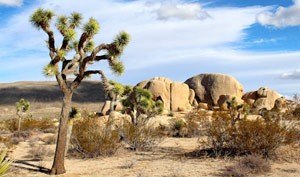
Joshua Tree National Park is located in California, USA, where this national park is situated at the point where the Mojave Desert and the Colorado Desert meet, boasting unique natural landscapes and ecosystems. Now, let's take a closer look at each aspect.
First, Joshua Tree is named after the iconic tree of the region, the Joshua tree. This tree is actually a species called the yucca, and its famous appearance resembles long branches that look like arms reaching out. The Joshua tree is named because it resembles the outstretched arms of Joshua from the Bible, reaching towards the sky.
Many of these trees are thousands of years old, and their unique shape leaves a strong impression on many visitors. The Joshua tree does not provide shade; in fact, it withstands strong sunlight and maintains its vitality as a drought-resistant plant.
Joshua Tree National Park covers an area of about 800,000 acres (approximately 323,749 hectares). This park is located at the junction of two deserts—the Mojave Desert and the Colorado Desert—where the characteristics of both deserts combine to support unique plants and animals. The park's elevation ranges from about 1,000 to 1,800 meters, with significant temperature differences between day and night, experiencing very hot weather in summer but also cold weather in winter.
The natural scenery of Joshua Tree is truly diverse and spectacular. The rock formations are particularly impressive, especially the natural rock pillars and massive boulder piles. These rocks have taken their current shape through millions of years of weathering and erosion. Must-see spots include Skull Rock and Item Rock, which are naturally sculpted by wind and rain, showcasing many unique shapes that attract photographers.
The mountainous terrain is also an important aspect, with one of the mountains in the park being Peter's Mountain, known for its hiking trails. Additionally, this area is famous for its clear skies, making it a great place for stargazing. Many people visit to see the stars and the Milky Way in the night sky.
Joshua Tree National Park is home to a wide variety of wildlife. In addition to the Joshua tree, cacti, various grasses, and small trees thrive here. The plants in this region are mostly drought-resistant, allowing them to grow well even in the hot summer months. Many resilient plants thrive even in high temperatures and dry conditions during summer.
Among the animals, small mammals like coyotes, lizards, foxes, and rabbits are frequently spotted, as well as birds like hawks and eagles. This place is great for wildlife observation, especially popular among birdwatchers.
Joshua Tree National Park offers a variety of outdoor activities such as hiking, camping, and rock climbing. Rock climbing is particularly famous here, with the rocks providing numerous climbing routes that attract many climbers. There are also several trails suitable for everyone from beginners to advanced hikers.
If you want to camp in this area, there are several campgrounds available for comfortable camping. Barker Dam and Hidden Valley campgrounds are very popular camping spots, and spending a night under the stars in beautiful nature is truly a special experience.
The Joshua Tree area held significant meaning for Native Americans. Particularly, the Pahrump and Quailow tribes lived in this region, and their culture and history can be explored in the local museums and historical sites. Additionally, this area has become a cultural symbol of the United States, closely related to rock and roll culture, with the famous band U2 recording an album here.
Joshua Tree is truly a special place where nature, culture, and outdoor activities all come together. The landscape of Joshua trees and rocks is uniquely incomparable, and stargazing or hiking there will provide a wonderful experience. It is a pilgrimage site worth visiting for nature lovers.




 candytip |
 Gold Bar |
 Pirate Ship Popcorn Maker |
 Montgomery Mom |
 Anjollinya Blog |
 USA Hyundai Kia |
 Star Blog |
 US Regional Information Local News |
 Sarah's Blog |
 Tonky |
  viroma |
  cookie |
  Live and that's it |
  Alright Twain |
  eatontown blog |
  HAWAII Korean Church News |
  Amore |
  linex |
  Balancework |
  laro90 |
  MEDBIO American Doctor Blog |
  SWAT TEAM BLK |
  DREAM BIG |
  frostbite |
  330 Forever My Love |
  El Dorado |
  dralix58 |
  Gorama Round |
  Skydiving |