
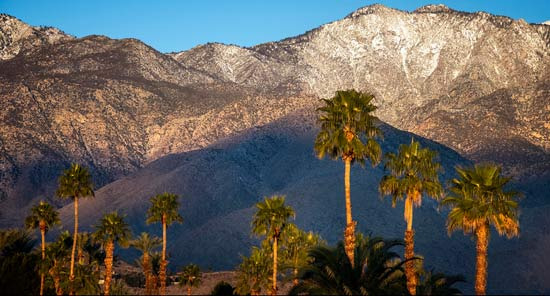
In Palm Springs, there's something that stands tall no matter where you look. It's the palm tree, reaching up as if to touch the sky.
When you take photos in this neighborhood, it feels like the trees occupy half the frame, and it's not just for decoration; the local environment and climate are truly optimal for palm trees to thrive.
It's a city in the middle of the desert, so how do they grow so well? The answer is clear upon reflection.
First is the sunlight. Palm Springs enjoys abundant sunshine all year round. There are far more sunny days than rainy ones, and clouds are rare. Palm trees love sunlight, so they grow quickly in this environment. The sunlight here is neither weak nor short; it feels like it pours down all day long for photosynthesis.
Second is the dry air. As a desert city, it has low humidity and little rainfall. While these conditions can be harsh for most plants, they are just right for palm trees. Their leaves are narrow and deeply divided, minimizing water loss, and their root structure draws water from deep underground, allowing them to adapt well to this climate.
Third is the soil. The soil in this area has a high sand content and good drainage. Water doesn't pool and quickly seeps away, preventing root rot. Palm trees do not like soil that stays moist for long, so the well-draining soil of Palm Springs is perfect for them.
Fourth is water management. Just because it rains little doesn't mean they grow without water. In Palm Springs, groundwater wells and irrigation systems consistently supply water to the palm trees. It's common to see sprinklers running in the morning or evening, and the palm trees around hotels, resorts, and golf courses are regularly maintained. It's a combination of natural conditions and artificial management.
Another interesting aspect is the aesthetic effect. In this city, palm trees are synonymous with its image. The sight of tall trees lining the roads completes the unique resort vibe of Palm Springs. This is why the entire city becomes a massive photo zone. Tourists feel as if they've arrived in a tropical paradise just by walking down the street, which leads to even more palm trees being planted.
In the summer, they can withstand temperatures close to 40 degrees without much impact, and in the winter, it's warm enough to reduce concerns about frost damage. There's plenty of sunlight, no humidity, well-draining soil, and easy access to water when needed, all supporting the city's image. These factors combine to allow palm trees to thrive here.
Thus, in Palm Springs, the trees have become the symbol of the city, and that's why the silhouette of the palm tree automatically comes to mind when thinking of Palm Springs.





 moo moo |
 ultron78 |
 garlic bread |
 Sugar Cream Door Bulletproof Noodles |
 urbanmint |
 USA Hyundai Kia |
 Star Blog |
 US Regional Information Local News |
 Sarah's Blog |
 Tonky |
  viroma |
  cookie |
  Live and that's it |
  Alright Twain |
  eatontown blog |
  HAWAII Korean Church News |
  Amore |
  linex |
  Balancework |
  laro90 |
  MEDBIO American Doctor Blog |
  SWAT TEAM BLK |
  DREAM BIG |
  frostbite |
  330 Forever My Love |
  El Dorado |
  dralix58 |
  Gorama Round |
  Skydiving |