

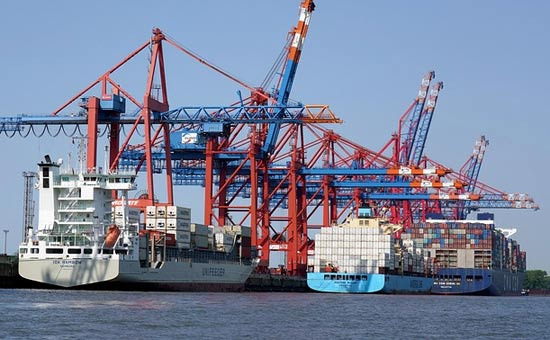
When Trump became president, he said, "America is no longer a fool country!"
It seems a bit childish for a statement made by the president of such a huge country as the United States.
The problem is that this 'childish' statement has actually shaken the world economy.
Was his claim of reciprocity a legitimate demand, or just another show?
He said, "Negotiation is a deal, and a deal is a fight." So he framed it as if the U.S. was losing in trade, turning other countries into villains, and wielding the stick of tariffs. Especially targeting China, Europe, Canada, and even South Korea.
The core argument he presented was 'reciprocity.' The idea was to end unfair trade where the U.S. pays a 20% tariff on imports while other countries receive U.S. products duty-free. Let's examine this calmly. The term reciprocity sounds plausible. It suggests that giving and taking is fair. But the reality is not that simple. Trade is intertwined with historical, political, and industrial structural contexts. Some countries rely on imports due to a lack of technology, some try to revive manufacturing with low labor costs, and others strategically favor certain countries. That's why trade agreements are so complex.
However, Trump simplified this in one fell swoop. "America is losing!"
And he tried to solve it with the weapon of 'tariff bombs.' Initially, his approval ratings went up. This was because Midwestern farmers, who cast votes, cheered, "Yes! Our agricultural prices fell because of China!" But a few months later, they faced the real tariff bomb. China reduced imports of U.S. soybeans in retaliation. So the Trump administration had to give subsidies back to those farmers.
Here's the real point. Trump used tariffs as a bargaining chip. This means it was more a means of 'dealing' than a trade policy. He expressed anger, saying, "China has been taking advantage of us for a long time," and shouted, "America First!" But in reality, American consumers faced the boomerang of rising prices, and companies incurred huge costs in restructuring supply chains.
That doesn't mean Trump was entirely wrong. It is also true that the U.S. has given up too much under the ideal of free trade.
Especially in relations with China, issues like forced technology transfer and unfair intellectual property rights actually existed. Trump's public acknowledgment and action on these issues can be seen as a kind of 'political courage.' Previous presidents recognized the issues but let them slide. But Trump just charged in.
So what was Trump's tariff policy ultimately?
Some say it was a "necessary shock therapy," while others view it as a "political gamble." I lean towards the latter. Because he used tariffs as a tool for re-election strategy rather than a long-term industrial strategy. Every election season, he would attack China, mention tariffs, and promote the slogan, "Make America Great Again!" Ultimately, tariffs became props to instill the image of a 'strong president' in American voters.
Now living in New York, I feel the prices of Chinese products rising in supermarkets every day, and the electronics I used to buy on Amazon becoming dozens of dollars more expensive. And I think, "Is this reciprocity, or just an illusion created by tariffs?" Trump's tariff policy clearly revealed problems and sent a warning that something needs to change. But the solution was too political. Negotiation is calculation, but it seems Trump charged in with emotion.



 Moscow Kim |
 coloradoman |
 Montgomery Mom |
 GOGO SING |
 Hajiwon Blog Hair Salon |
 newyorker 101 |
 Things to Do to Buy a House |
 Lunch and Dinner Mexican Taco |
 International Court |
 French fries |
  Tora Tora |
  yellowbutter |
  Dolly |
  US Embassy |
  NYC saladbar |
  Finding Superfoods |
  lightyear |
  song bang |
  vexomo |
  Indiana Jones |
  meloncat |
  novapixel |
  mortrix |
  Esther 1983 |
  fortbliss |
  My Two Way |
  toastyfox |
  FLORIDA Acus |
  tracker |