

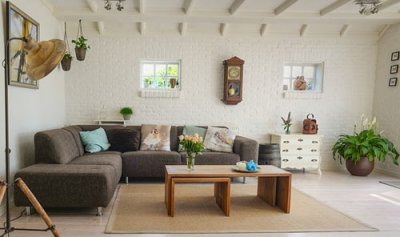
Located in the San Gabriel Valley east of Los Angeles, Roland Heights has long been home to Korean and Chinese immigrants. Analyzing the price trends over the past five years reveals the unique demand structure of this area.
According to Zillow data, the median home value in Roland Heights was around $655,000 at the beginning of 2021, but is projected to rise to approximately $946,000 by the first half of 2026, marking an increase of about 44% over five years. Considering that the average increase across the U.S. during the same period is around 35-45%, this area has shown a rise that is similar to or slightly above the national average.
Year by year, from 2021 to the first half of 2022, prices surged sharply due to ultra-low interest rates and the spread of remote work. However, from late 2022 to 2023, the rapid interest rate hikes by the Federal Reserve led to a decrease in transaction volume and a noticeable slowdown in price increases. After 2024, a gradual stabilization or slight upward trend has continued without sharp spikes or drops.
Factors supporting the price increase in this area include a steady demand from the long-established Korean and Chinese community. The preference for school districts adjacent to Walnut and Diamond Bar remains strong, and the lack of new land supply in this mature residential area structurally supports prices due to supply shortages.
However, the fact that mortgage rates have lingered in the mid-6% range means that buyer sentiment is not as strong as it once was. Recent market trends show longer periods to close transactions and instances where the final sale price is slightly lower than the listing price.
Future outlooks should be approached cautiously. If interest rates decline even slightly, there is a possibility that pent-up demand could revive. Conversely, if high rates persist, the current stabilization trend is likely to continue for some time.
For Korean households, the area's school district and community infrastructure remain attractive factors, suggesting that it may be more reasonable to assess buying timing from the perspective of actual residence and long-term holding rather than short-term price gains. Conversely, if considering selling, it seems advisable to observe the seasonal market trends and interest rate movements rather than rushing into a decision.
Ultimately, the past five years in Roland Heights can be summarized as a market that has steadily trended upward based on consistent real demand, rather than experiencing sharp booms and busts. As long as the unique community base and school district demand are maintained, the likelihood of significant corrections appears relatively low.
 mintcloudtraveler1967
 CryingLoses


 garlic bread |
 Sugar Cream Door Bulletproof Noodles |
 urbanmint |
 |
| 
 Premium Gas Camp |
  People Moon |
 Rowland Mama |
 American History This and That |
  vale vale |
  yentra |
  Golden life |
  andrew park |
  Peter Pan Pet |
  Balan |
  Cali M Law Group |
  neroyo |
  Dreams Come True as Desired |
  Khan Film Blog Production |
  coloradoman |
  Living Economy Information Blog |
  rustley |
  Shim Ramen |
  Cool Beach Freeway |
  Exploring American Life Information |
  Mental Health Psychiatrist |
  element |
  Koreab Date |
  CA Real Estate |