
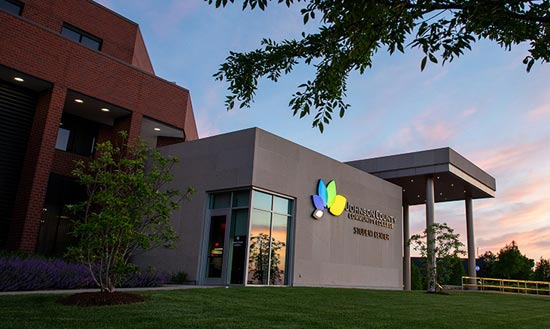
For those looking to attend a community college before transferring to a four-year university or seeking vocational training, community colleges in the Kansas City metro area offer very practical options. They have affordable tuition, evening and online classes available, and well-established pathways for transferring to four-year universities after graduation. Today, we will introduce the major community colleges near Kansas City.
The first one to introduce is Johnson County Community College (JCCC). Located in Overland Park, Kansas, this community college is the largest in the Kansas City metro area, with approximately 18,000 to 20,000 students enrolled. It offers over 100 degree and certificate programs and is frequently used as a pathway for transferring to major state four-year universities such as the University of Kansas (KU) and Kansas State University (K-State) after obtaining an Associate Degree.
Another strength of JCCC is its Career and Technical Education (CTE) programs, which are well-structured with practical courses in nursing, welding, automotive technology, IT, culinary arts, and graphic design. Tuition is around $100 per credit hour for Kansas residents, making it very affordable compared to four-year universities. The campus features a library, student center, and sports facilities, providing a good campus life environment. There is also a separate ESL program for international students, allowing those with limited English proficiency to gradually start their studies.
The second is Metropolitan Community College (MCC). This community college system operates several campuses centered around Kansas City, Missouri, including Penn Valley, Longview, Maple Woods, Blue River, and Business & Technology. With campuses spread throughout the city, students can choose the closest campus based on their residence. MCC offers affordable tuition for Missouri residents and has transfer agreements with the University of Missouri system, making it easy to transfer to UMKC or the University of Missouri (MU).
The programs offered cover a wide range of fields, including business, education, healthcare, technology, and the arts, and there are many certificate programs available, making it suitable for adult learners looking to acquire vocational skills in a short time. The high percentage of online classes also provides a favorable environment for those balancing work and studies.
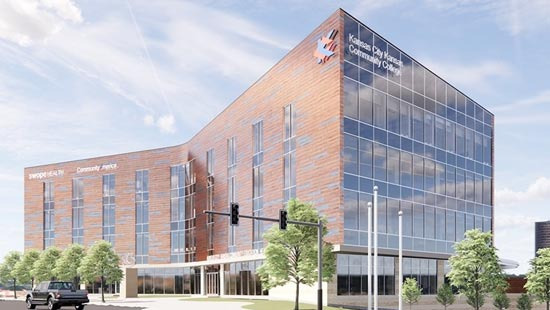
The third community college to introduce is Kansas City Kansas Community College (KCKCC). Located in Kansas City, Kansas, it primarily serves local residents. It has over 6,000 students enrolled and offers a variety of vocational training courses, from general education subjects to nursing, fire science, automotive technology, and agriculture. The affordable tuition for Kansas residents is a strong point, and small class sizes promote active interaction between faculty and students. KCKCC also has transfer agreements with Kansas four-year universities, providing a relatively clear pathway for transfers.
Let me explain the transfer pathway in more detail. In the U.S., it is common to complete a two-year program at a community college and earn an Associate of Arts or Associate of Science degree before transferring to the third year of a four-year university. This allows students to study affordably for the first two years without paying the full tuition of a four-year university, making it very economically advantageous. However, not all credits may be accepted upon transfer, so if transferring is the goal, it is important to check the transfer requirements and necessary courses of the target four-year university from the beginning and plan accordingly.
Many immigrants also utilize community colleges to learn English. Both JCCC and MCC offer ESL (English as a Second Language) and basic English courses, allowing students to build their English skills before transitioning to their major courses. These courses are divided by level according to English proficiency, and level tests are conducted each semester to determine advancement.
In terms of financial aid, community colleges can also receive federal support through FAFSA, including Pell Grants. Additionally, many schools offer scholarships or local foundation scholarships that can be applied for. Both Missouri and Kansas have state government support programs for low-income students, so it is advisable to consult with financial aid officers before enrollment.
Regarding vocational training, the certificate programs at community colleges are very practical. For example, there are programs to earn certifications as a Medical Assistant, Dental Hygienist, welder, electrician, or programmer within a year, providing skills that are immediately applicable in the job market. These professions also have steady demand in the Kansas City metro area's job market.
 SbuxSnob
 LuckyPeak77



 Ari Songhan American Immigration Life |
 Bearded Strawberry Smoothie |
 Heart Ticker |
 Duck Duck Go |
 Arong and Darong |
 Rynex |

 calvix |
 Ansaso |

 Kansas City Representative Singer |
  Springs Korea |
  nixon |
  mini hometown |
  Gleeee |
  MacMorningBlog |
  ASURA |
  Elastico |
  shaket |
  vionoo |
  chocolate |
  Whisper |
  Star Voyager |
  InDiGo |
  Rocky Mountains |
  Whoever It Is, I Don't Know |
  Why Not Me |
  Plastic Rose |
  Rice Shop Uncle BLOG |
  Victory 1988 |
  Gook Rule |