
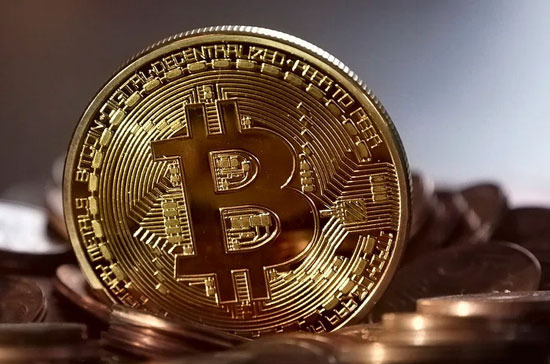
The days of dreaming big with Bitcoin, where even a low-end computer could automatically generate money through mining.
It was a moment that made people feel like they were "digging for gold at home." But is Bitcoin mining still possible now?
To put it simply, small-scale mining done by individuals at home is nearly impossible.
It is possible, but it is correct to say that it has lost its meaning because there is nothing left over.
In the past, if you plugged in a few graphics cards into a PC, mining was possible, and as long as you could cover the electricity costs, you could make some profit.
However, the competition for Bitcoin mining has now shifted to corporate levels. Now, hash power is dominated by countries that provide electricity at the lowest rates, companies with large-scale mining facilities, and firms that collaborate with governments to purchase electricity in bulk.
These entities use specialized equipment called ASIC miners, which are designed solely for Bitcoin mining, offering overwhelming performance, but they are also expensive and consume a lot of electricity. It is difficult for individuals to manage the initial costs and maintenance as a hobby, and even a slight increase in electricity rates can lead to losses.
Thus, the notion that "mining Bitcoin at home will make you money" has become a thing of the past. Nowadays, it is often considered more realistic and less risky to trade Bitcoin directly or invest in mining companies.
One reason personal mining is impossible is the difficulty adjustment. The Bitcoin network automatically increases the difficulty when the mining speed increases to maintain a consistent block generation rate. In other words, the more people invest in mining, the harder it becomes, reducing profitability.
It feels like "if someone mines quickly, it automatically makes the stones harder." And the biggest issue is electricity. Bitcoin is often referred to as a monster that consumes electricity due to its high energy consumption. In countries like the United States or South Korea, individuals mining would almost certainly incur losses.
In contrast, in countries like Kazakhstan, certain regions of China, Saudi Arabia, and Russia, where electricity is cheap, companies are building massive amounts of hash power to compete in mining. Ultimately, Bitcoin mining has become entrenched in a factory-like, corporate structure, leaving little room for individuals to profit.
Of course, there are still individuals who buy used ASIC equipment and mine in small quantities, but the amount mined is too small and the maintenance costs are too high to be meaningful beyond a hobby level.
So if someone asks, "Should I try mining Bitcoin?" it would be more realistic to consider directly purchasing Bitcoin or looking into stocks of mining companies or cryptocurrency-related funds rather than spending money on mining.
If in the past Bitcoin provided opportunities through mining, now it has become a market that offers opportunities to companies with 'operational capabilities and industrial infrastructure.'
In the end, while technological advancements gave people dreams akin to winning the lottery, over time it has industrialized, and now it has turned into a battle of capital and electricity.
If you love Bitcoin, I believe we are in an era where it is necessary to read the market trends rather than relying on mining.








 Weekend Movie Blog |
 Beauty, Health, Lifestyle Blog |
 coloradoman |
 Superman Cat Blog |
 novapixel |
  DREAM BIG |
  frostbite |
  330 Forever My Love |
  El Dorado |
  dralix58 |
  Gorama Round |
  Skydiving |
  dreamport |
  Yellow Snowman |
  Toaster Pizza Magic Show |
  velvetnom |
  Anytime Journey |
  Mrs. Duluth |
  jaxter |
  Atlanta Mama |
  Baguette Blog |
  Tan Sol |
  US Embassy |
  Korean Mom |
  My NYC |