

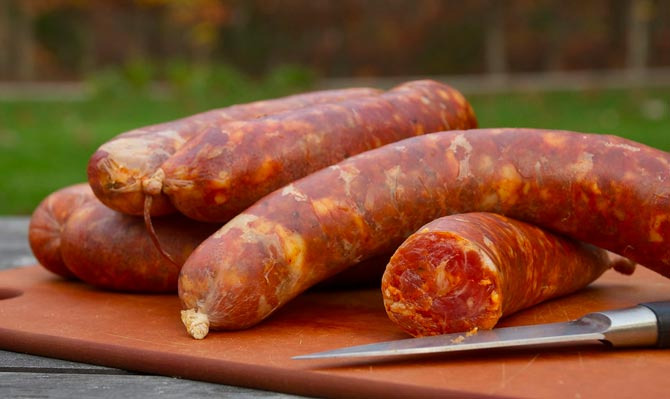
Although it has the same name, the Spanish and Mexican styles are so different that they can be considered completely different foods.
Basically, it is a sausage made by finely chopping pork and mixing it with garlic, paprika, chili, salt, and spices, then putting it in casings. The Spanish type is 'dried and smoked', while the Mexican type is 'cooked'.
Spanish chorizo uses smoked paprika (pimentón), giving it a deep color, and it is smoked, so it can be eaten just sliced. It pairs really well with bread or cheese when sliced thinly like salami, or served with tapas dishes. In contrast, Mexican chorizo is in raw meat form and must be cooked, with strong spices and chili that spread a spicy aroma with just one bite. Therefore, Mexicans often use it in tacos or burritos, or mix it into scrambled eggs (huevos con chorizo) or potato dishes.
Traditionally, chorizo is made with pork, but nowadays, versions made with beef (chorizo de res) are also common.
Especially in Mexico and the American Southwest, many people do not eat pork, so 100% beef chorizo is sold separately. The method of making it is similar, but the taste is slightly different. Beef chorizo is less fatty and has a more pronounced spice flavor.
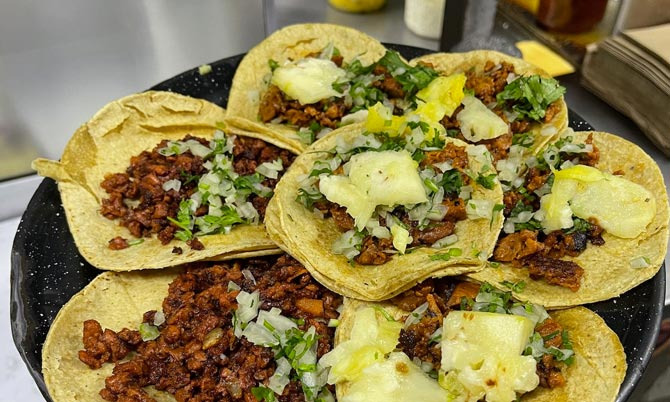
So it is not greasy and is perfect for stir-frying with eggs in the morning or grilling with potatoes. The reason why restaurants in Mexico ask whether you want pork or beef is precisely because of this difference.
Chorizo does not have a firm casing like the German sausages we commonly think of. Especially Mexican chorizo is put into casings in raw meat form, but the casing is often removed or broken apart when cooking.
So when cooked in a pan, it crumbles like minced meat, and the texture of the casing is almost gone. In contrast, Spanish chorizo is dried with a smoking process, so it is thin and not tough.
It can be eaten just sliced like salami, and unlike hard German sausages, it features a soft texture where spices and fat blend together. Simply put, chorizo is closer to 'spice sausage meat' than 'cased sausage'.
And when you go towards Florida, the story changes. In Miami, there are many Cuban-style chorizos.
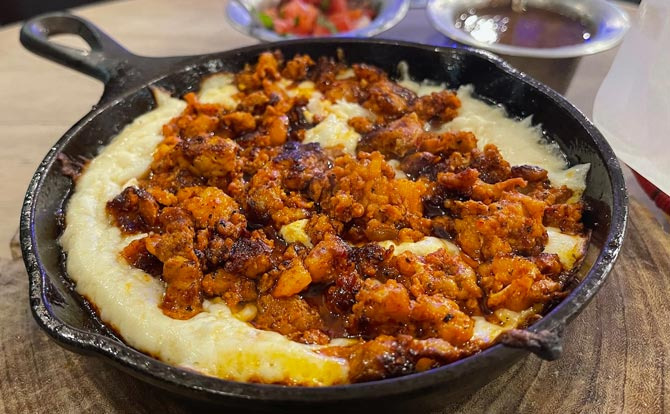
It is similar to the Spanish type but has a strong smoked paprika flavor and is dried, making it typical to put in Cuban sandwiches or fry with eggs in the morning. In contrast, areas like Orlando, Tampa, and Jacksonville have many Mexican immigrants, so they use fresh chorizo (chorizo fresco) more often.
It is characterized by being spicy and greasy, making it perfect as a filling for tacos or burritos. Ultimately, chorizo varies in taste from country to country and city to city, so even with the same name, you can have a completely different experience.
So in the U.S., if you see "chorizo" written, it's a good idea to ask what style it is.
Once you get hooked on chorizo, it becomes an appealing side dish for rice.
At first, the strong smell of spices may feel unfamiliar, but as you eat, the spicy and salty flavor sticks to your mouth.
Especially with Mexican chorizo, when stir-fried, the oil seeps out slightly, spreading a savory aroma, and when you mix it over rice, it becomes a wonderful meal.
Adding a fried egg on top makes it perfect. Koreans who love spicy gochujang stir-fried pork will quickly come to love chorizo as well.







 oh my salami |
 Komet Park |
 Victory 1988 |
 US Home Buying Information Home Insurance |
 Dr. Kelso |
  DREAM BIG |
  frostbite |
  330 Forever My Love |
  El Dorado |
  dralix58 |
  Gorama Round |
  Skydiving |
  dreamport |
  Yellow Snowman |
  Toaster Pizza Magic Show |
  velvetnom |
  Anytime Journey |
  Mrs. Duluth |
  jaxter |
  Atlanta Mama |
  Baguette Blog |
  Tan Sol |
  US Embassy |
  Korean Mom |
  My NYC |