
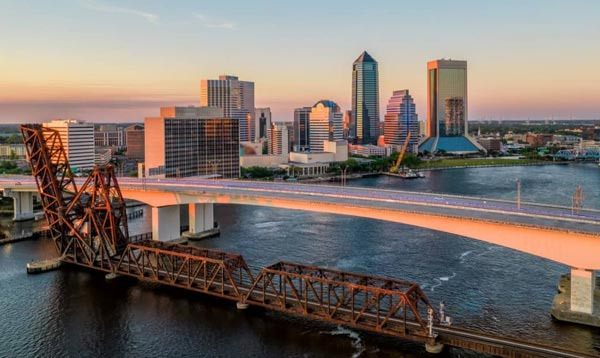
Jacksonville, the largest city in Northeast Florida, is the seat of Duval County and the administrative center, serving as the heart of culture and economy in Northern Florida beyond just a simple port city. The entire city is formed along the St. Johns River, which is considered a symbol of the city.
Jacksonville is located at the mouth of the St. Johns River and has grown as a center for maritime trade and logistics based on its geographical advantage of direct connection to the Atlantic Ocean. It is the core of the Jacksonville Metropolitan Area and ranks as the 12th largest city by population in the United States. Within Florida, it is considered the fourth largest metropolitan area after Miami, Tampa, and Orlando.
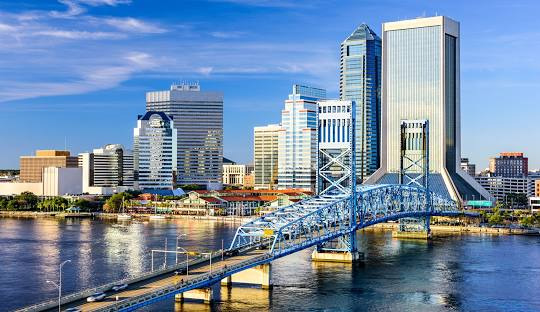
Geographically, Jacksonville is about 25 miles (40 km) south of the Georgia state line and approximately 340 miles (548 km) north of Miami. The eastern coastline of the city is known as the 'First Coast,' representing the beach culture of Northeast Florida. To the west, the St. Johns River flows through the city, leading to the Atlantic Ocean, with high-rise buildings, ports, industrial complexes, and residential areas harmoniously situated around the river. Several bridges connect various parts of the city, with the Main Street Bridge and Hart Bridge being particularly famous symbols of Jacksonville's night view.
Jacksonville's port industry is central to the city's economy, possessing the third largest port in Florida by cargo volume.
Following the ports of Tampa and Port Everglades, Jacksonville Port (JAXPORT) is a multi-purpose port where civilian cargo and military goods are transported together, playing a crucial role in Florida's maritime logistics. Various trade routes connect to Europe, South America, and the Caribbean through the Atlantic, creating numerous businesses and jobs.
Additionally, the city holds a very important strategic military position. Jacksonville is home to two major naval bases, one being the Blount Island Command, which is a key facility for transporting U.S. Marine Corps supplies worldwide.
The other is the nearby Naval Submarine Base Kings Bay, located near the Georgia border. These military facilities significantly impact Jacksonville's economy, providing a steady foundation for related industries and employment.
Economically, finance, insurance, healthcare, transportation logistics, and research and development industries are the main pillars. Jacksonville is recognized as the strongest financial center in Northern Florida, with major companies like CSX Corporation, Fidelity National Financial, FIS, and Landstar System at its core.
In addition, companies such as Ameris Bancorp, Atlantic Coast Financial, Black Knight Financial Services, and EverBank have their headquarters here, while real estate development and industrial resource companies like Regency Centers and Rayonier Advanced Materials are also actively operating.
Moreover, Jacksonville hosts headquarters of various fields, including Stein Mart, Web.com, Fanatics, Gate Petroleum, Haskell Company, Interline Brands, Sally Corporation, and Southeastern Grocers. These companies contribute significantly to local employment and tax revenue, making Jacksonville another pillar of Florida's economy.
Ultimately, Jacksonville is not just a 'port city in Florida' but a complex city where industry, military, finance, and culture have developed in balance, leveraging its geographical advantages of rivers and seas.





 Taco Bell Candy Note Blog |
 Mia Flori |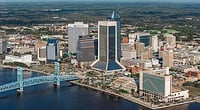


 Well Done Sir |
  laro90 |
  MEDBIO American Doctor Blog |
  SWAT TEAM BLK |
  DREAM BIG |
  frostbite |
  330 Forever My Love |
  El Dorado |
  dralix58 |
  Gorama Round |
  Skydiving |
  dreamport |
  Yellow Snowman |
  Toaster Pizza Magic Show |
  velvetnom |
  Anytime Journey |
  Mrs. Duluth |
  jaxter |
  Atlanta Mama |
  Baguette Blog |
  Tan Sol |