
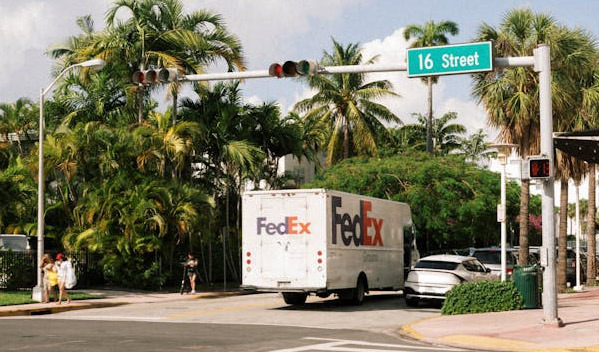
Establishment and History of FedEx
- Background of Establishment: FedEx was founded in 1971 by Frederick W. Smith. Smith first conceived the idea of FedEx in his Yale University business school thesis, arguing for the need for a modern logistics system.
- Initial Name: The original name at establishment was "Federal Express," focusing on rapid cargo transportation services.
- Start of Operations: In 1973, it began operations based in Memphis, Tennessee. This city was geographically advantageous as a national logistics hub.
- Key Innovations:
- In the 1980s, it became a pioneer in delivery tracking technology by introducing a computerized cargo tracking system.
- In 1994, it provided a service allowing customers to check delivery status directly through its website, leading industry innovation.
Business Growth
- Expansion and Mergers:
- In 1984, it entered the international shipping market.
- In the early 2000s, it acquired Kinko's (now FedEx Office) and TNT Express to expand its global logistics network.
- Brand Restructuring: In 2000, it simplified its brand name from "Federal Express" to "FedEx" to enhance global recognition.
- Diverse Services: Today, FedEx offers air, ground, e-commerce logistics, warehousing, and printing services.
Major Achievements
- Global Network: It provides delivery services in over 220 countries and regions.
- Air Transportation: It operates the world's largest cargo aircraft, handling millions of packages daily.
- Annual Revenue: As of 2023, it recorded over $90 billion in revenue, leading the global logistics industry alongside UPS.
Business Outlook
E-commerce and Growth Opportunities:
- The explosive growth of the e-commerce market post-COVID-19 pandemic has significantly contributed to FedEx's revenue increase.
- It is further enhancing efficiency through logistics technology and automation.
Competition and Challenges:
- Competitors: Competition with UPS, DHL, and Amazon Logistics is fierce.
- Operating Costs: Rising air fuel costs and supply chain issues remain ongoing challenges.
Sustainability Efforts:
- It has set a goal to achieve carbon neutrality by 2040, investing in electric delivery vehicles and green technology development.
- It aims to minimize environmental impact through sustainable packaging and efficient logistics systems.
Technological Innovation:
- Logistics optimization using artificial intelligence (AI) and big data.
- It is experimenting with drone delivery and autonomous driving technology, seeking to innovate last-mile delivery.
FedEx has established itself as a leader in the modern logistics industry through innovative services and a global network. The growth of the e-commerce market and sustainability strategies leveraging technological innovation brighten FedEx's future. However, intense competition and pressure from operating costs remain ongoing challenges. Despite these challenges, FedEx is likely to strengthen its position in the logistics industry based on efficiency and customer service.








 Weekend Movie Blog |
 Beauty, Health, Lifestyle Blog |
 coloradoman |
 Superman Cat Blog |
 novapixel |
  Korean Mom |
  My NYC |
  moo moo |
  Mr Oh |
  forevergee |
  festival |
  manchester |
  constant |
  Leapfrog Move |
  vibranto |
  Tora Tora |
  yellowbutter |
  Dolly |
  US Embassy |
  NYC saladbar |
  Finding Superfoods |
  lightyear |
  song bang |
  vexomo |
  Indiana Jones |