
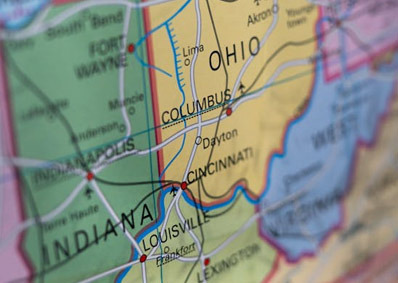
Ohio and Indiana, located in the Midwestern United States, are states that share similarities in economic, historical, and cultural aspects while possessing unique characteristics.
These two states have established themselves as important regions in the United States through their rich historical heritage, industrial development, and unique local cultures.
1. Ohio
Location and Geographical Features
- Ohio is situated at the junction of the northeastern and midwestern United States, bordered by Lake Erie to the north and the Ohio River to the south.
- This state, composed of 88 counties, features a coexistence of plains and mountainous areas, providing an environment favorable for agricultural and industrial development.
Population and Major Cities
- Ohio has a population of approximately 11.7 million, making it the seventh most populous state in the United States.
- Major cities:
- Columbus: The capital and largest city, home to various industries and universities (Ohio State University).
- Cleveland: Located near Lake Erie, known for the Rock and Roll Hall of Fame and its medical industry.
- Cincinnati: Situated along the Ohio River, characterized by a strong manufacturing sector and professional sports teams.
Economy and Industry
- Ohio has an economic structure based on various industries, including manufacturing, agriculture, and services.
- Manufacturing: Automotive parts, steel, machinery, etc.
- Agriculture: Major production areas for corn, soybeans, and wheat.
- Healthcare and Research: Home to world-class medical institutions like the Cleveland Clinic.
Culture and Tourism
- Tourist Attractions:
- Rock and Roll Hall of Fame
- Cincinnati Zoo
- Lake Erie Cruises
- Sports: The Ohio State University football team and the Cleveland Guardians (MLB) are well-known.
2. Indiana
Location and Geographical Features
- Indiana is adjacent to Ohio and is located in the central part of the Midwestern United States.
- Most of the state consists of wide plains and farmland, with the Mississippi River and Wabash River serving as major water sources.
Population and Major Cities
- Indiana has a population of about 6.8 million, making it the 17th most populous state in the United States.
- Major cities:
- Indianapolis: The capital and largest city, famous for the Indianapolis 500 auto race.
- Fort Wayne: Known for its historical architecture and rich cultural activities.
- South Bend: An academic center home to the University of Notre Dame.
Economy and Industry
- Indiana's economy is centered around manufacturing and agriculture.
- Manufacturing: Major factories for automotive production (Toyota, Honda, Subaru, etc.) and the pharmaceutical industry.
- Agriculture: High production levels of corn and soybeans.
- Logistics and Transportation: A major transportation hub in the United States, with well-established rail and highway networks.
Culture and Tourism
- Tourist Attractions:
- Indianapolis 500 auto race
- Indiana Dunes National Park: A natural tourist destination near Lake Michigan.
- Notre Dame University campus.
- Sports:
- NBA team Indiana Pacers.
- College sports, especially football and basketball, are very popular.
3. Similarities and Differences between Ohio and Indiana
Similarities
- Industrial Base: Both states have manufacturing and agriculture as the main drivers of their economies.
- Midwestern Culture: They share a calm lifestyle and strong traditional values.
- Sports Enthusiasm: College and professional sports are significant parts of the culture in both states.
Differences
- Economic Scale: Ohio is larger than Indiana in terms of population and economic scale, with a more diverse industrial base.
- Cities and Culture: Ohio has larger cities like Cleveland and Cincinnati with internationally renowned facilities, while Indiana has relatively smaller cities and nature-centered tourist attractions.
Ohio and Indiana hold important positions in the Midwestern United States, each possessing a unique identity in terms of economy and culture. Ohio is a larger and more urbanized state in terms of population and economic diversity, while Indiana showcases strong regional characteristics through its nature and sports-centered culture. Both states are attractive regions where Midwestern traditions and modern developments harmoniously coexist.








 Weekend Movie Blog |
 Beauty, Health, Lifestyle Blog |
 coloradoman |
 Superman Cat Blog |
 Sunny's Travel in America |
  road98 |
  Churros Train Conductor |
  gleeful |
  Burbank Lee |
  Olivia's Blog |
  Bushing Around Life |
  Active |
  Cherokee Rose |
  Kor. Master |
  Holey Moley |
  Conflite Teacher |
  Hodong Prince Over Flex |
  Mist inn |
  citrus pop |
  Onion Ring |
  phoenixia |
  viewtop |
  loverun |
  Kim Do Sun |
  SEVEN SEVEN |