

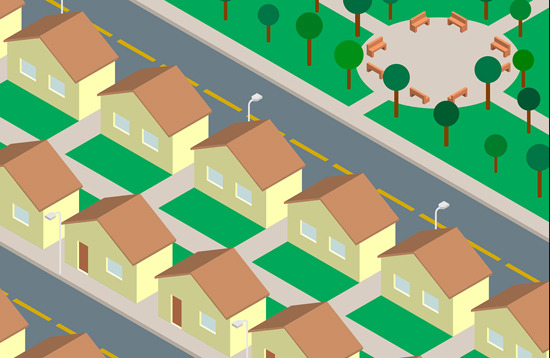
The period when we know HOAs began to explode in number is after the 1980s.
At that time, one of the conditions under which the federal government easily granted developers subdivision permits was the establishment of 'self-management organizations', making HOAs a mandatory system for almost all new communities. Ultimately, HOAs were created to keep neighborhoods cleaner and to be responsible for common facilities, but over time, regulations have excessively increased, and the powers of the executives have grown, transforming into a controversial organization as we see today.
On the surface, they are packaged as a 'grateful organization that keeps our neighborhood beautiful', but in reality, they often act like a mini dictatorship in the neighborhood. Especially in California, the absurd regulations and abuses shown by these HOAs against homeowners have piled up to the point where the state government finally stepped in, saying, "Enough is enough."
HOA (Homeowners Association) was originally created to manage communal living among residents, keep the neighborhood clean, and stabilize property values.
It sounds great at first. However, there are many places where a small number of executives, having tasted power, have created a ridiculous structure that allows them to control the entire neighborhood based on their 'feelings and tastes'.
For instance, fines for slightly different paint colors, fines for placing pots in front of doors, fines for leaving garage doors open, and even absurd cases where residents are prohibited from parking because of a dislike for certain car brands. Homeowners have no rights, while the HOA collects fees and reigns like a king.
California has been particularly sensitive to this issue.
With high housing prices and a large number of communities with HOAs, complaints have easily exploded. Thus, the California state government eventually intervened. "HOAs cannot do as they please. We protect residents' rights." Several bills were passed to limit the powers of HOAs, enhance transparency, and regulate the procedures for imposing penalties or fines more strictly.
To prevent HOAs from collecting fees through abuse or imposing unreasonable sanctions on residents, they mandated resident voting procedures, required financial reporting to be made public, and ensured that executives could not unilaterally change regulations.
So, what about the situation in other states?
To put it simply, the response to HOAs varies greatly from state to state.
Texas has recently been speeding up HOA regulations, following California's lead. Protests from residents who received hefty fines over parking sticker colors have led Texas to introduce bills to enhance transparency and reduce executive powers. However, HOAs still hold significant power, making it difficult for homeowners to contest regulations.
What about Florida? It is often referred to as the 'ultimate HOA' state.
Due to the high number of senior communities, regulations are extremely strict, and executives often have near-absolute decision-making power. Fines for grass length exceeding standards and warnings for a small decoration placed in front of doors are common occurrences. The problem is that when homeowners protest, the HOA often responds with, "Then let's see you in court," leading to a structure where residents become exhausted.
What about Arizona? Here, criticism of HOAs being excessively powerful is constant, and residents express dissatisfaction, saying, "Even though we own our homes, it feels like the HOA is the real owner." Although there have been recent legislative attempts, it is not as clearly regulated as in California.
In contrast, places like Washington and Oregon have a relatively progressive atmosphere regarding HOA regulations. Provisions for protecting residents' rights have been established early, making it difficult for executives to raise fees arbitrarily or create unreasonable regulations. However, these areas are not without problems. HOAs that like to reign like 'small kingdoms' exist everywhere.
Ultimately, the HOA issue is a manifestation of the 'abuse of small power' occurring across the United States. Organizations that should exist for the residents have, at some point, begun to dominate over them, making it difficult for homeowners to live freely even in their own homes.
Thus, the movements in California are significant. It is not a call to dismantle HOAs, but at least it reestablishes the obvious principle that "the right to interfere in residents' homes is not unlimited."



 moo moo |
 ultron78 |
 garlic bread |
 Sugar Cream Door Bulletproof Noodles |
 urbanmint |
 squidogame |
 Margarine Daebimama |
 eatontown blog |
 cloudyday |
 Google Idea |
  US Embassy |
  Korean Mom |
  My NYC |
  Mr Oh |
  forevergee |
  festival |
  manchester |
  constant |
  Leapfrog Move |
  vibranto |
  Tora Tora |
  yellowbutter |
  Dolly |
  NYC saladbar |
  Finding Superfoods |
  lightyear |
  song bang |
  vexomo |
  Indiana Jones |