


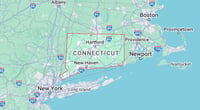
Many people in Hartford are debating whether it's better to rent or buy a home right now. The price trends over the past five years provide a compelling reason for this consideration.
According to Zillow data, the median home price in Hartford has risen from about $230,000 at the beginning of 2021 to around $330,000 recently, marking a cumulative increase of approximately 43 percent over five years. This figure is near the upper end of the national average cumulative increase, which ranges from 35 to 45 percent.
Looking at the years, the demand for relocation to areas near New York surged during the pandemic from 2021 to 2022, causing a significant price increase in Hartford. Although transaction volumes decreased after interest rate hikes in the second half of 2022, the lack of available listings meant that prices did not drop significantly, and by 2024, a gradual upward trend is expected to resume.
The background for Hartford's notable price increase includes its geographical advantage of being commutable to New York and a stable job base centered around insurance and finance. The rise in remote work has also led many households to move to Connecticut, which is more affordable than New York, further supporting demand.
The issue of supply shortage is particularly pronounced in the Hartford market. New home construction has not kept pace with demand, leading to situations where homes in popular school districts are sold almost immediately after being listed.
It remains to be seen whether this trend will continue. While the stabilization of interest rates may revive buyer demand, it seems unlikely that supply will increase significantly in the short term, suggesting that the upward trend may slow rather than completely reverse.
For Korean households, the market presents a dilemma between renting and buying. Delaying a purchase at this point does not seem likely to result in significantly lower prices, and it may be advantageous to consider the timing of the decision based on school districts and commuting conditions.
However, it is crucial to make careful judgments based on one's financial situation rather than resorting to excessive borrowing.
Compared to other commuting cities near New York, Hartford's price increase is not particularly unusual. Areas in New Jersey and parts of Long Island have seen similar levels of increase, which can be explained by the common supply shortage experienced across the New York commuting zone.
The trend in mortgage rates is also worth monitoring. The 30-year fixed mortgage rate, which soared from around 3 percent to over 7 percent, has recently shown signs of gradually decreasing, but the prevailing view is that it will be difficult to return to pre-pandemic levels.
Ultimately, Hartford is a market that has continued its upward trend due to geographical advantages and chronic supply shortages, and it is cautiously projected that a gradual increase is likely to continue.
The rental market is also an important aspect to watch. With both home prices and rents rising, the practical cost difference between enduring renting and buying now is not as significant as it once was, according to reports from the field.
Families with children often plan to move in line with the school year, so it may be wise to consider the market's characteristics and act quickly when listings become available.
As Korean households working in insurance and finance have steadily established themselves in Hartford, communities have formed around areas close to workplaces. For families considering relocation, referencing information about these existing communities may be helpful.
Areas with good school ratings, such as West Hartford or Simsbury, have particularly scarce listings, so broadly comparing various neighborhoods may be practically beneficial in finding a home that meets desired criteria.
 LunaFlyer
 LeekBurger






 garlic bread |
 Sugar Cream Door Bulletproof Noodles |
 urbanmint |
 |
| 
 Premium Gas Camp |
 Buckwheat Muktudari Notebook |

 Jin Soo V |
 CA Real Estate |
  yolanda78 |
  Round and Round Children's Song Kingdom |
  Mia Flori |
  nova nova |
  healthy |
  leaves |
  sparkling |
  maryland park |
  persiste |
  conte |
  blueman |
  Going Once |
  Eldorado 88 |
  cherrydino |
  middlekick |
  Moscow Kim |
  nivex85 |
  quanta7 |