

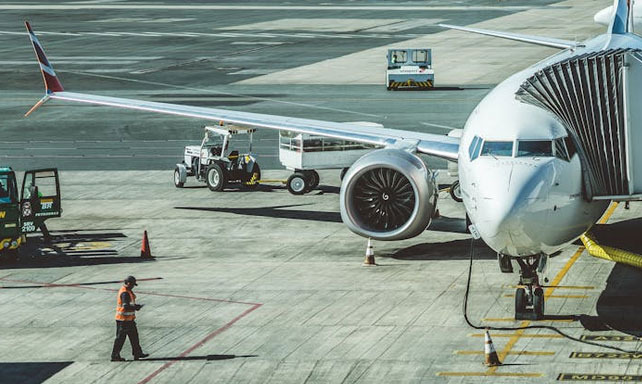
When you fly from an airport, you often see people in fluorescent vests busily moving near the runway. Many of them are TARP ground staff. The name may sound a bit unfamiliar, but they are actually key personnel who ensure that planes operate on time and safely.
The most basic role of TARP ground staff is aircraft ground support. When a plane lands and approaches the gate, their first task is to accurately position the aircraft. They guide the pilot to the stopping point using hand signals or equipment, helping the wheels to stop in the correct position. If this process goes awry, the jet bridge connection or subsequent operations can be delayed.
When people hear that TARP ground staff from U.S. airlines are deployed overseas, they often find it a bit puzzling. While it's expected for pilots and flight attendants to travel abroad, questions arise about why those who handle luggage and maintain aircraft need to go to other countries.
The primary reason is the global operational structure of airlines. U.S. airlines do not operate solely within the United States. They run extensive routes across Asia, Europe, the Middle East, and South America, which means they must maintain U.S. operational standards not only at major hub airports but also at overseas bases. TARP ground staff are not just simple cargo handlers; they are key personnel who implement aviation safety, maintenance procedures, and ground operation rules on-site. Therefore, deployment is necessary to convey headquarters standards directly and train local staff.
The second reason is accident response and abnormal situation management. Unexpected issues frequently arise at overseas airports. Variables such as bad weather, equipment failures, conflicts with local regulations, strikes, and airport congestion can prevent flights from departing or arriving properly. In such cases, having TARP personnel from the U.S. headquarters on-site allows for immediate judgment and coordination. They play a practical hub role in deciding on aircraft diversions, delays, and the deployment of alternative equipment, rather than just moving luggage.
The third reason is security and regulatory compliance. U.S. airlines strictly adhere to Federal Aviation Administration regulations, but conflicts with local regulations often occur at overseas airports. In these situations, deployed personnel act as a buffer to apply U.S. standards to the local environment. They serve not only as directive figures but also as mediators who adjust for cultural and legal differences.
Another important reason is workforce circulation and career development. Airlines enhance organizational loyalty by providing overseas work opportunities to long-term employees while simultaneously developing a global perspective. For TARP personnel, overseas deployment is more than just a business trip; it represents a step up in their careers. Experience with new airport operations, different national aviation systems, and working alongside colleagues from diverse cultures becomes a significant asset when advancing to management positions.
Economic reasons cannot be overlooked either. While some overseas airports may appear to have lower local labor costs, there is often a lack of skilled personnel capable of handling professional aviation ground operations. In such cases, sending verified TARP personnel from the U.S. for a certain period to maintain stable operations can be more cost-effective. It is cheaper to deploy skilled personnel than to have an aircraft grounded due to issues.
Finally, there is the issue of brand trust for airlines. From a passenger's perspective, they expect the same quality of service regardless of the country they are in. Poor ground operations can lead to delays, lost luggage, and safety incidents. Therefore, U.S. airlines often send their own TARP personnel to key routes or new destinations first to establish on-site standards and stabilize operations.
Ultimately, TARP ground staff play a comprehensive role in managing the ground movement and departure preparations of aircraft. While they may not be easily visible to passengers, without their hands and judgment, planes cannot move. Behind the timely takeoffs and landings at airports lies the invisible effort of these ground staff.
The overseas deployment of TARP ground staff is not just a matter of personnel movement; it is part of the airline's global strategy. It is a decision intertwined with safety, operational efficiency, regulatory compliance, talent development, and brand management. While it may outwardly seem like a task of moving luggage, there is a complex calculation behind it that supports a vast aviation network.






 candytip |
 Gold Bar |
 Pirate Ship Popcorn Maker |
 Montgomery Mom |
 Anjollinya Blog |
 Bacon King Blog |
 Bald Eagle Brothers |
 Seattle - Emerald City |
 PETRO Vatican Shrine |
 Real Estate Agent USA |
  Tora Tora |
  yellowbutter |
  Dolly |
  US Embassy |
  NYC saladbar |
  Finding Superfoods |
  lightyear |
  song bang |
  vexomo |
  Indiana Jones |
  meloncat |
  novapixel |
  mortrix |
  Esther 1983 |
  fortbliss |
  Moscow Kim |
  My Two Way |
  toastyfox |
  FLORIDA Acus |
  tracker |