
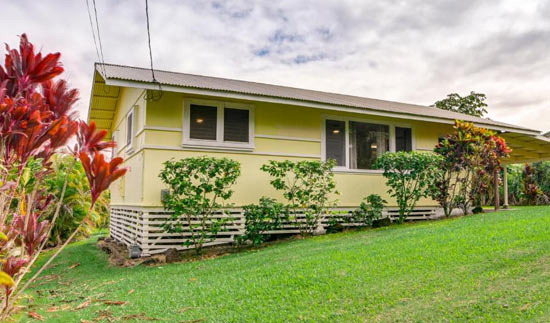
The name Hilo comes from the Hawaiian word meaning 'to twist'.
Originally, it referred to most of the eastern coast of the Big Island, but now it specifically denotes the city center. In the past, this area was the center of Hawaii's sugarcane industry. In the late 19th century, immigrants from various Asian countries, including China, flocked here for farm labor, and from that time, Hilo began to grow rapidly.
For example, in 1887, as many as 26,000 Chinese laborers worked in sugarcane fields across Hawaii, one of which was the Hilo sugar factory. At that time, that factory alone produced over 3,500 tons of sugar annually.
Today, Hilo is part of Hawaii County in the state of Hawaii, and it is the largest city on the Big Island and the second largest city in all of Hawaii. Hilo, located in Hawaii County, has a recent population count of 44,186.
However, despite its size, the rhythm of the city is truly relaxed. Even during rush hours, traffic jams are rare, and most shops close early in the evening. By 9 PM, the streets become quiet, and the only sounds are the waves and the chirping of insects, creating a peaceful atmosphere.
In contrast, mornings are a revelation. Thick fog rises over Hilo Bay, and as the sun rises above the horizon, the entire world is bathed in golden light. Holding a cup of coffee and gazing at that scenery makes one feel rewarded for the day in that moment. Perhaps that's why many retirees, artists, and writers gather to live here. People live leisurely, creating art in harmony with nature or quietly farming.
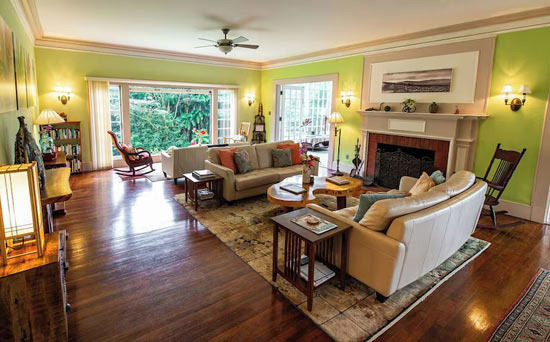
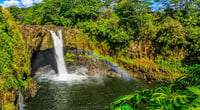
Hilo experiences a lot of rain. It is one of the areas with the highest annual rainfall in Hawaii, so homes can quickly become damp, and mold management is essential. Still, housing prices are much more reasonable compared to other areas in Hawaii.
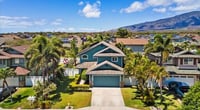
While a million-dollar home is common in Oahu or Maui, in Hilo, you can find a spacious single-family home for around $500,000.
There are also many homes with large backyards that offer views of both the ocean and the mountains.
Although the downside is that there are many old houses, if you want to live in quiet nature, there may not be better conditions than this.
Ultimately, the charm of Hilo lies not in its glamour, but in its slow rhythm and the ability to feel the true essence of Hawaii.
The ocean and mountains serve as the backdrop for the day, and the smiles of the people reflect a sense of ease.
Thus, Hilo truly deserves the title of 'a city where time flows slowly.'




 Hakuna Matata |
 Hilo Cat |
 HAWAII Korean Church News |
 Hawaii Maui Kahului |
  vibranto |
  Tora Tora |
  yellowbutter |
  Dolly |
  US Embassy |
  NYC saladbar |
  Finding Superfoods |
  lightyear |
  song bang |
  vexomo |
  Indiana Jones |
  meloncat |
  novapixel |
  mortrix |
  Esther 1983 |
  fortbliss |
  Moscow Kim |
  My Two Way |
  toastyfox |
  FLORIDA Acus |