
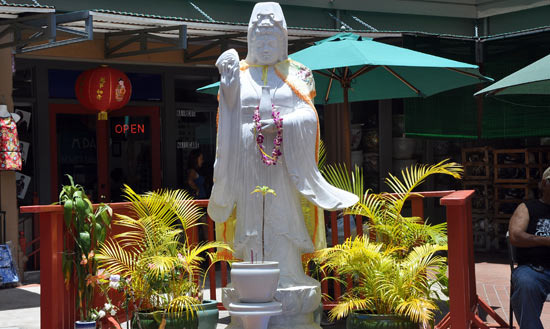
When traveling in Hawaii, there are times when the sea, mountains, wind, and sky all feel like 'living beings'.
This is not just a feeling; it is because Native Hawaiians have believed and lived this way for a long time. Hawaii has a traditional religion, or indigenous belief, that has been passed down for a very long time. The reason Hawaiians show respect when interacting with nature, beyond just saying "Aloha", is rooted in this belief.
The indigenous religion of Hawaii is polytheistic. It is believed that there are gods in everything in nature, not just one god. In the sea, there is 'Kanaloa', and in fire and volcanoes, there is 'Pele'. The god of the wind is 'Laka', the god of agriculture is 'Lono', the god of war is 'Ku', and the god of the sea is 'Kane'. Each of these gods is considered to connect natural phenomena with human life. For example, when a storm rages, it is referred to as 'the wrath of Kanaloa', and when a volcano erupts, it is expressed as 'the goddess Pele has awakened'.
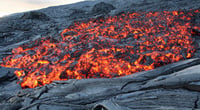
Among them, the most famous is the goddess of fire, 'Pele'. The Kīlauea volcano on the Big Island of Hawaii is known as Pele's home. Locals still think of Pele not just as a god, but as a 'living being'. When a volcano erupts, news reports sometimes say, "Pele is moving". There is also a story that if tourists take lava rocks or black stones (obsidian, known as 'Pele's tears') as souvenirs, misfortune will follow, which comes from this legend. In fact, the Hawaii National Park receives thousands of letters each year asking to return stones to Pele. Someone takes them as a souvenir, and when things go wrong, they send them back.
In the religion of Native Hawaiians, there is a concept called 'Kapu'. It is a kind of taboo or sanctuary. Sacred areas, known as Heiau, or shrines and temples, were not accessible to everyone, and only certain classes of people could approach them. Additionally, there were norms that prohibited women from swimming in the sea or eating certain foods during specific periods. While this may seem inconvenient from today's perspective, it served as a kind of 'ecological law' to prevent disrespect towards nature. For Hawaiians, Kapu was not just a religious rule, but a way of living in harmony with the world.
Heiau can be seen throughout the Hawaiian Islands. They are stone altars that vary in size and purpose. Some Heiau were built to pray for bountiful harvests, while others were created to wish for victory in war. A representative example is 'Puʻuhonua o Hōnaunau' on the Big Island. This place is known as the 'Place of Refuge', where people who broke the law or were defeated in war could escape and be forgiven without punishment. It is now designated as a national historical park, but locals still regard it as a 'sacred place'.
Native Hawaiians did not place gods above humans. Instead, they viewed them as 'beings living in harmony with nature'. Therefore, their religion was more about maintaining the balance of nature than simply praying for blessings from the gods. For example, fishermen would greet the waves and winds before going out to sea, and farmers would touch the ground and express gratitude before planting seeds. These actions were part of daily life rather than rituals.
This tradition still lives on in modern Hawaii. Residents offer a gift called 'ho'okupu' when starting festivals or ceremonies. They usually dedicate fruits, flowers, or objects while exclaiming "Mahalo" (thank you). Additionally, Hula dance is not just a performance but originated from offerings to the gods. Each movement of Hula contains stories of the wind, waves, fire, stars, and gods. Therefore, Hula is referred to as 'the language of dance' locally.
Hawaii's religion has changed significantly since the spread of Christianity, but its roots remain. Even those who attend church greet Pele when they climb a volcano and speak to Kanaloa in their hearts when fishing in the sea. Everyone knows that this is not superstition, but an expression of 'gratitude'.




 Hani 1977 |
 Mau Nui |
 Hawaii Tourist Information |

 dralix58 |
  Gorama Round |
  Skydiving |
  dreamport |
  Yellow Snowman |
  Toaster Pizza Magic Show |
  velvetnom |
  Anytime Journey |
  Mrs. Duluth |
  jaxter |
  Atlanta Mama |
  Baguette Blog |
  US Embassy |
  Korean Mom |
  My NYC |
  moo moo |
  Mr Oh |
  forevergee |
  festival |
  manchester |