
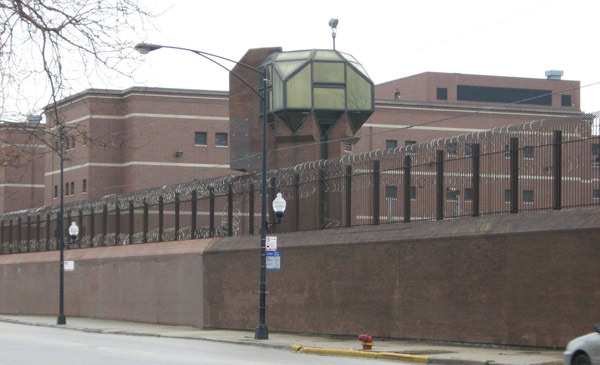
Cook County has the Cook County Jail, which is one of the largest correctional facilities in the United States.
This place is said to be one of the largest single correctional facilities in the country.
Given that it is located in the Chicago area, known for gang crime, its operational methods are said to have a long-standing tradition in the U.S.
Cook County Jail is located in Little Village, southwest of Chicago, at the intersection of 26th Street and California Avenue, and is a large facility that can accommodate over 9,000 inmates.
This facility primarily houses pre-trial detainees and individuals sentenced to short terms, and it is designed so that inmates do not need to travel far to attend court, as the Cook County Criminal Court is right next door.
Historically, Cook County Jail has been in operation since the early days of Chicago in the 1830s, gaining attention during the crime wave of the Al Capone era in the 1920s, and frequently making headlines in the 1970s and 80s due to human rights issues and overcrowding controversies.
At that time, the number of inmates greatly exceeded the allowed capacity, leading to severe overcrowding and criticism from human rights organizations.
Although improvements to the facility and the distribution of inmates have been made, it is still difficult to say that the overcrowding issue has been completely resolved.
Security cameras, access control systems, and medical and psychological counseling programs have been introduced to help facilitate the reintegration of inmates into society. There are also separate areas for female and juvenile inmates, and support is provided through religious and educational programs to prepare for their return to society after release.
The Cook County Sheriff's Office is responsible for the operation of the jail and is working to enhance transparency for the protection of inmate rights. Efforts are ongoing to shed its closed image by implementing external audit systems and promoting community collaboration projects.
However, problems still persist. Some point out issues such as violence within the correctional facility and a lack of medical services, demanding improvements, and the high percentage of inmates with mental illnesses is also a topic of social discussion. Like many areas in the U.S., Cook County Jail faces structural issues where the poor, drug addicts, and individuals with mental illnesses are repeatedly incarcerated.
For these reasons, recent policies are shifting towards a 'treatment-centered' approach rather than incarceration, but it still presents a complex picture, often referred to as a microcosm of Chicago.








 Khan Film Blog Production |
 Illinois Mom |
 Rice Shop Uncle BLOG |
 allstar realty |
 Enjoyable American Life Diary |
  Tonky |
  viroma |
  cookie |
  Live and that's it |
  Alright Twain |
  eatontown blog |
  HAWAII Korean Church News |
  Amore |
  linex |
  Balancework |
  laro90 |
  MEDBIO American Doctor Blog |
  SWAT TEAM BLK |
  DREAM BIG |
  frostbite |
  330 Forever My Love |
  El Dorado |
  dralix58 |
  Gorama Round |
  Skydiving |