
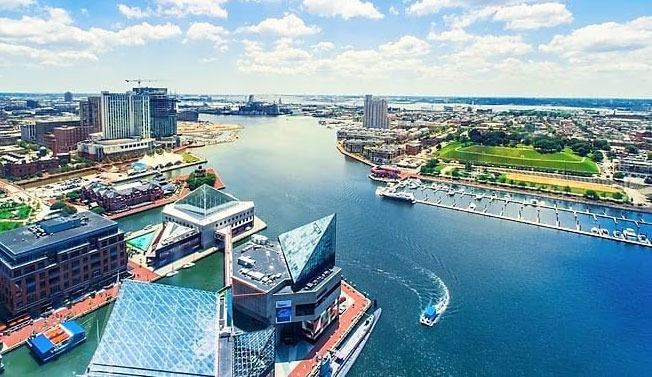
Baltimore was once known as the heart of American industrialization and still plays a crucial role in the Eastern Coast economy.
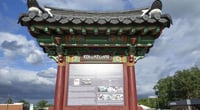
This city is located about an hour north of Washington D.C. and is a core part of the 'Beltway area', closely connected to Washington in terms of transportation, logistics, and culture. Interestingly, this area is home to the third largest Korean community in the United States.
While the city of Baltimore itself is not very large, when combined with the surrounding Washington suburbs, the Korean population is estimated to be around 90,000. Some believe that including mixed-race individuals, the number could reach 100,000. Howard County is particularly the center of the Korean community in Baltimore, with Ellicott City often referred to as 'Baltimore's Koreatown'. Approximately 12,000 Koreans reside there, and it features H Mart, Lotte Plaza, Tous Les Jours, numerous Korean restaurants, beauty salons, hospitals, and law offices, making it quite similar to the environment in Korea.
The state authorities have even officially named Route 40 in this area 'Korean Way', highlighting the significant influence of Korean culture. The Port of Baltimore is one of the leading logistics hubs in the Eastern United States. It is a natural harbor located along the Atlantic coast, with deep waters that do not freeze in winter, allowing for year-round port operations. As a result, the port handles a high volume of automobiles, heavy equipment, agricultural machinery, steel, and petrochemical products in U.S. import and export logistics. It is particularly noted as the number one port for automobile imports in the United States.
According to the Maryland Port Administration, over 800,000 vehicles pass through this port each year, with most of the import volumes from global brands like Hyundai, Kia, Toyota, and BMW going through the Port of Baltimore. For Korean companies, this port serves as a gateway to the Eastern U.S. market. The Port of Baltimore is less congested than the Port of New York, and its taxes and handling fees are relatively low, making it more efficient. Therefore, many Korean logistics and shipping companies use the Port of Baltimore as a major hub.
In fact, the Port of Baltimore has separate terminals for automobiles, containers, bulk cargo, agricultural machinery, and heavy equipment. This separation greatly enhances port logistics efficiency and creates many jobs related to warehousing and transportation.
Thanks to this logistics foundation, Baltimore remains an economically vibrant city. Even after the decline of manufacturing in the urban center, it has diversified its economic structure through the port industry, logistics, marine services, and bio-research complexes. Notably, Johns Hopkins Hospital and its medical research institute are world-renowned, and the growth of related healthcare and biotechnology industries is injecting new vitality into the city's economy.
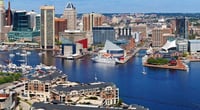
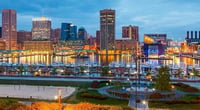
Additionally, the 'Inner Harbor' area, developed through port redevelopment projects, has become a hub for tourism, shopping, and marine leisure. It features the renowned National Aquarium in Baltimore, a maritime museum, and large shopping malls, attracting millions of tourists each year. The restaurants, hotels, and yacht docks along the waterfront have further refined the city's image.
However, issues such as urban safety and population outflow remain challenges for the city. Over 60% of Baltimore's downtown population is Black, while the middle-class white population has largely moved to suburban areas. Ironically, these suburban areas are becoming new driving forces for Baltimore's economy.
Regions like Howard County, Anne Arundel County, and Carroll County boast excellent school districts and stable safety, with Silicon Valley-style office complexes and advanced research institutes emerging. The logistics of the Port of Baltimore, the high-tech industries in the suburbs, and the administrative infrastructure connected to Washington D.C. are the three elements that are revitalizing Baltimore's economy.
Baltimore is still known as the 'City of the Harbor', but it has developed a multi-layered economic structure that goes beyond just being a port. For Koreans, the vibrant Korean business district in Ellicott City and the activities of Korean companies centered around the Port of Baltimore will feel familiar.


 mygoddess blog |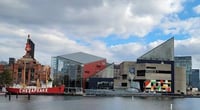
 Information on All Regions of the United States |
  maryland park |
 frostpup |
  US Embassy |
  Korean Mom |
  My NYC |
  moo moo |
  Mr Oh |
  forevergee |
  festival |
  manchester |
  constant |
  Leapfrog Move |
  vibranto |
  Tora Tora |
  yellowbutter |
  Dolly |
  NYC saladbar |
  Finding Superfoods |
  lightyear |
  song bang |
  vexomo |
  Indiana Jones |