

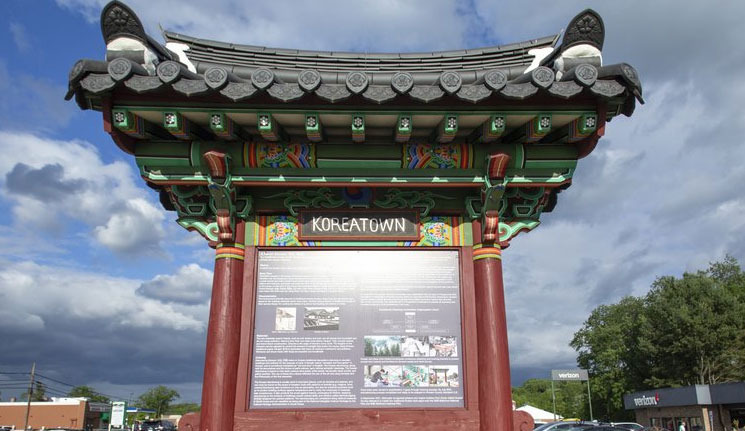
The Baltimore-Washington metropolitan area is one of the rapidly growing regions. Geographically, it encompasses parts of Maryland, Washington D.C., and Northern Virginia, serving as a hub for politics, economy, education, and culture. While Washington D.C. is the center of federal government and diplomacy, Baltimore plays a role as a traditional port city focused on medicine and research.
As these two cities form a single living area, transportation, industry, and population movement are closely interconnected. In fact, it takes less than an hour to drive from Washington D.C. to Baltimore, and using the MARC commuter train or Amtrak high-speed rail, one can travel in under 40 minutes. Therefore, many people work in Washington D.C. while living in the Baltimore suburbs, or vice versa, working in Baltimore while studying or enjoying cultural activities in Washington. The two cities function differently but operate as a single economic zone.
The most significant feature of this area is its high income level and stable infrastructure. Maryland boasts one of the highest average household incomes in the U.S., and when considering the entire metropolitan area including Washington D.C., the average household income exceeds $100,000. This is due to the abundance of jobs in the federal government, defense industry, research institutions, and medical fields. Baltimore is home to Johns Hopkins Hospital and the University of Maryland School of Medicine, while Washington D.C. hosts the Smithsonian, NASA, and defense-related research institutes.
Thanks to this structure, the education level is high, and a stable middle class has formed. The Korean population is also a significant part of this area's growth. The Korean American population in the Baltimore-Washington metropolitan area is about 200,000, making it the third largest Korean community in the U.S., following New York/New Jersey and Los Angeles. About half of this population resides in Northern Virginia, including Fairfax, Annandale, and Centreville, while the rest is concentrated around Baltimore and Howard County.
In particular, Ellicott City, a suburb of Baltimore, is considered a center of the Korean community. It has a concentration of H Mart, Lotte Plaza, Korean restaurants, churches, academies, and hospitals, creating an atmosphere that can be described as a 'Korea Town.' Despite being just 30 minutes from the city center, it has excellent school districts and good safety, making it a preferred area for Korean families who prioritize their children's education. In fact, the Korean population in Howard County is estimated to be around 12,000, accounting for over 5% of the county's total population.
On the other hand, heading south of Washington D.C. changes the atmosphere a bit. The Fairfax and Annandale areas are long-established Korean towns, where restaurants, laundries, and markets set up by the first generation of immigrants from the 1970s and 80s are still thriving. Recently, young IT and government workers have moved in, leading to an increase in trendy cafes, Korean fusion restaurants, and stores selling Korean pop culture products.
The Korean community in the Washington D.C. area is primarily composed of white-collar professionals, while the Korean population in the Baltimore area is more involved in healthcare, small businesses, and logistics/trade, indicating a difference in occupational distribution. Interestingly, the Korean communities in both cities are closely connected. On weekends, congregants from Baltimore churches often participate in Korean cultural festivals in Washington, and young professionals from Washington frequently visit Korean restaurants or cafes in Ellicott City. This mutual exchange positively impacts the local economy.
Moreover, as the second generation of Koreans continues to grow, there are more individuals working as local government officials, teachers, doctors, and lawyers. The economic power of the Korean community is steadily increasing, with the scale of businesses owned by Koreans expanding in real estate, education, healthcare, and IT. The Baltimore-Washington metropolitan area is not just a region where two cities are close together, but a vast living area with complementary characteristics.
If Baltimore is the center of industry and logistics, Washington is the center of administration and culture. As these two cities grow together, the Korean community is also establishing its place within that growth. What was once a settlement area for the first generation of immigrants is now a stage of change where the second and third generations are stepping into the center of society.

 mygoddess blog |
  maryland park |
 Information on All Regions of the United States |
 MMORPG Games |
  Korean Mom |
  My NYC |
  moo moo |
  Mr Oh |
  forevergee |
  festival |
  manchester |
  constant |
  Leapfrog Move |
  vibranto |
  Tora Tora |
  yellowbutter |
  Dolly |
  US Embassy |
  NYC saladbar |
  Finding Superfoods |
  lightyear |
  song bang |
  vexomo |
  Indiana Jones |