

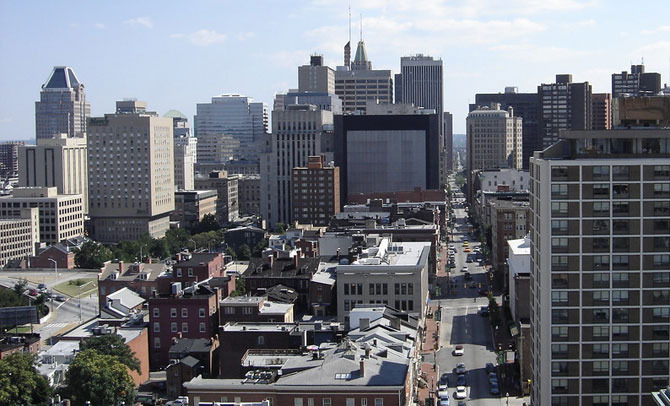
Baltimore has a unique name, created in 1729 after the title of George Calvert, the Baron of Baltimore.
Baltimore, which existed before the American Revolutionary War, is one of the oldest cities and is also the birthplace of the "Star-Spangled Banner."
During the War of 1812, the scene of the American flag flying high at Fort McHenry, which successfully repelled the British attack, inspired Francis Scott Key to write a song about it.
For Americans, Baltimore is not just a port city but also symbolizes the place where the nation's emblem was born.
Another interesting point is the "railroad story." The Baltimore & Ohio Railroad, the first railroad in America, started here in 1830. As this railroad connected to the Pennsylvania coal fields, Baltimore rapidly grew into an industrial hub. Shipbuilding, steel, and trade flourished, and as imports and exports increased through the port, the population exceeded one million.
It was truly a city that symbolized the industrialization of the 19th century. However, it was not all glory. The Great Baltimore Fire of 1904 was a disaster that shook the city's history.
The fire, which started in the John Hurst Building, quickly spread and engulfed the city center. Fire trucks rushed in from Washington D.C., West Virginia, and Pennsylvania, but absurdly, the different hydrant standards in each state prevented them from connecting hoses. As a result, the flames could not be contained for 30 hours, ultimately destroying an area of 570,000 square meters and over 1,500 buildings.
This incident led the U.S. government to realize the importance of standardizing manufactured goods, starting with hydrant sizes and various industrial product specifications. A tragedy in one city became the catalyst for the standardization of American industry.
However, over time, Baltimore faced another change.
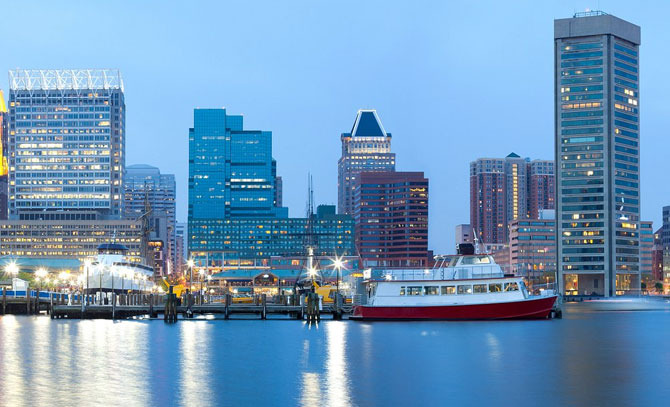
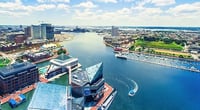
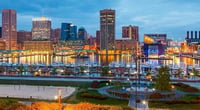
Since the 1960s, as the industrial structure changed and the shipbuilding and steel industries declined, the city center became increasingly dilapidated. People lost their jobs and left the city, and the void was filled by the impoverished, leading to serious security issues. The once vibrant downtown transformed into an image of crime and slums, and the city's face became blurred. But Baltimore did not give up. The city government initiated a redevelopment project that lasted 30 years, resulting in the current Inner Harbor.
Centered around the harbor, large tourist attractions such as shopping malls, restaurants, hotels, the Maritime Museum, and the National Aquarium of Baltimore have emerged. As a result, this area is considered one of the most successful waterfront redevelopment cases in the U.S., bustling with tourists and families on weekends. Of course, the city center has not fully recovered yet. Over 60% of the population is Black, there is a significant wealth gap, and the middle-class white population that moved to the suburbs has not returned to the city.
In contrast, the suburban areas present a completely different atmosphere. Areas like Ellicott City, Towson, and Columbia are only a 20-minute drive from downtown Baltimore, yet they are clean, safe, and have high-quality schools. The white population is high at 57%, and the Asian population is also gradually increasing.
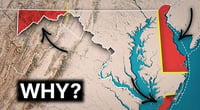
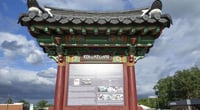
In particular, Ellicott City has a well-established Korean community, making it easy to find Korean restaurants, markets, and churches. Interestingly, Maryland, where Baltimore is located, is one of the wealthiest states in the U.S. Being close to the capital Washington D.C., it has many government employees, healthcare professionals, and researchers, which contributes to high education and income levels nationwide.
Therefore, viewing the city of Baltimore simply as a "dangerous city" is a biased perspective.
A city of old ports and railroads, still preparing for a resurgence. Baltimore is an intriguing stage where America's past and present intersect.

 mygoddess blog |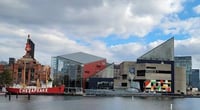
 Information on All Regions of the United States |
  maryland park |
 Korean Mom |
  My NYC |
  moo moo |
  Mr Oh |
  forevergee |
  festival |
  manchester |
  constant |
  Leapfrog Move |
  vibranto |
  Tora Tora |
  yellowbutter |
  Dolly |
  US Embassy |
  NYC saladbar |
  Finding Superfoods |
  lightyear |
  song bang |
  vexomo |
  Indiana Jones |