
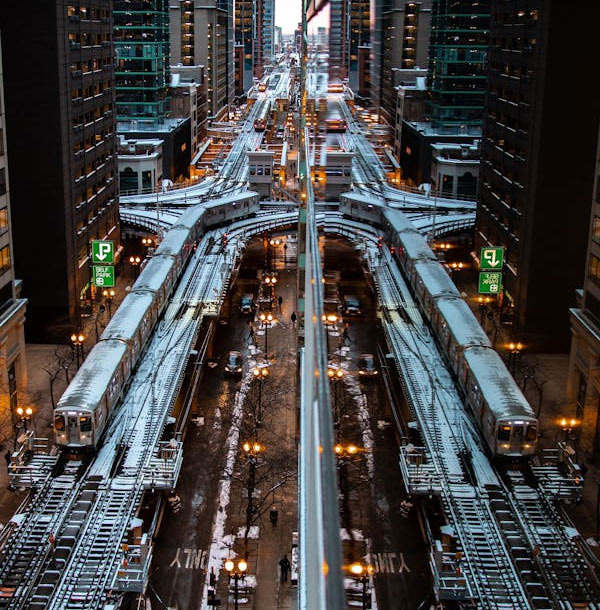
Chicago has been a central hub for the railroad industry and train station history in the United States, serving as a transportation hub that has driven the economic and cultural growth of the city and the nation.
Early Railroad Development (1830s-1850s)- Chicago rapidly grew after being established as a city in 1837.
- In 1848, the Galena and Chicago Union Railroad opened, marking the beginning of Chicago's rise as a railroad hub.
- Due to its strategic location west of Lake Michigan, it became a central point for connecting the eastern and western United States.
The Golden Age of Railroads (1850s-1900s)
- By the mid-1850s, ten major railroad lines connected to Chicago.
- In the 1860s, it became the central city for U.S. railroad lines, and the city's reconstruction after the Great Fire of 1871 was centered around the railroads.
- Chicago developed into a major logistics hub for grain, beef, and lumber in the United States.
The Twilight of Railroads in the 20th Century
- By the 1920s, Chicago was the world's largest railroad intersection, with hundreds of trains passing through daily.
- As the automobile and aviation industries developed, the importance of railroads gradually declined, but Chicago still plays a key role in freight and passenger rail.
Major Train Stations in Chicago
Union Station
- Opened: 1925
- Features: One of the busiest train stations in the U.S., currently serving Amtrak and Metra trains.
- Architecture: A grand building in neoclassical style, famous for its marble-decorated Great Hall.
- Historical Role: It was a center for the growth of the U.S. railroad industry from the late 19th century to the early 20th century.
LaSalle Street Station
- Opened: 1852
- History: One of the oldest train stations in Chicago, playing an important role during the 19th-century railroad era.
- Status: Some train services are still operational, and it has been redeveloped into commercial and residential areas.
Northwestern Terminal (now Ogilvie Transportation Center)
- Opened: 1911
- Features: Primarily serves Metra commuter trains to the Chicago suburbs.
- Modernization: Transformed into a modern transportation hub with extensive renovations in the 1990s.
Grand Central Station
- Opened: 1890
- Features: A Gothic Revival style building, used as a major freight and passenger transport hub.
- Closed: Demolished in 1969 due to a decline in railroad usage.
Chicago and Railroad Culture
- Chicago Board of Trade: Thanks to railroad transportation, Chicago became a center for grain and agricultural trading.
- Railroad Museum: The Illinois Railway Museum, located in the suburbs, preserves and exhibits Chicago's railroad history.
- Railroads and Industry: Railroads developed Chicago's meat processing industry (the famous Union Stockyards), which had a significant impact on the U.S. food industry.
Modern Role and Importance
- Chicago remains the largest railroad intersection in North America, with over 25% of freight transportation passing through here.
- Metra and Amtrak continue to be important modes of transportation for commuting and long-distance travel in Chicago.
Chicago and railroads are a symbolic link connecting the city's past, present, and future.








 Khan Film Blog Production |
 Illinois Mom |
 Rice Shop Uncle BLOG |
 allstar realty |
 Enjoyable American Life Diary |
  Tonky |
  viroma |
  cookie |
  Live and that's it |
  Alright Twain |
  eatontown blog |
  HAWAII Korean Church News |
  Amore |
  linex |
  Balancework |
  laro90 |
  MEDBIO American Doctor Blog |
  SWAT TEAM BLK |
  DREAM BIG |
  frostbite |
  330 Forever My Love |
  El Dorado |
  dralix58 |
  Gorama Round |
  Skydiving |